
 Buy Crypto
- Markets
 Futures
- Spot
- Copy Trade
- Earn
- More
Bloomberg: Power Theft Exceeds $1 Billion as Malaysia Bitcoin Mining Rigs Overwhelm

Original Article Title: Bitcoin Miners Hunted After Stealing $1 Billion of Electricity From Malaysia Grid
Original Article Authors: Ryan Weeks, Kok Leong Chan, Netty Idayu Ismail, Bloomberg
Original Article Translation: Chopper, Foresight News
In Malaysia's notorious illegal cryptocurrency mining hotspots, a crackdown is underway from the air. Drones hover above rows of shops and abandoned houses, searching for abnormal heat signatures, a telltale sign of illicit mining rig operation. On the ground, law enforcement officers use handheld sensors to detect unusual electricity usage. Sometimes, the tracking methods are more primitive: residents would report strange bird calls, only for the police to discover upon arrival that someone was intentionally playing nature sounds to mask the roar of machines behind closed doors.
These tools together form a mobile surveillance web, aiming to eradicate illegal Bitcoin mining.
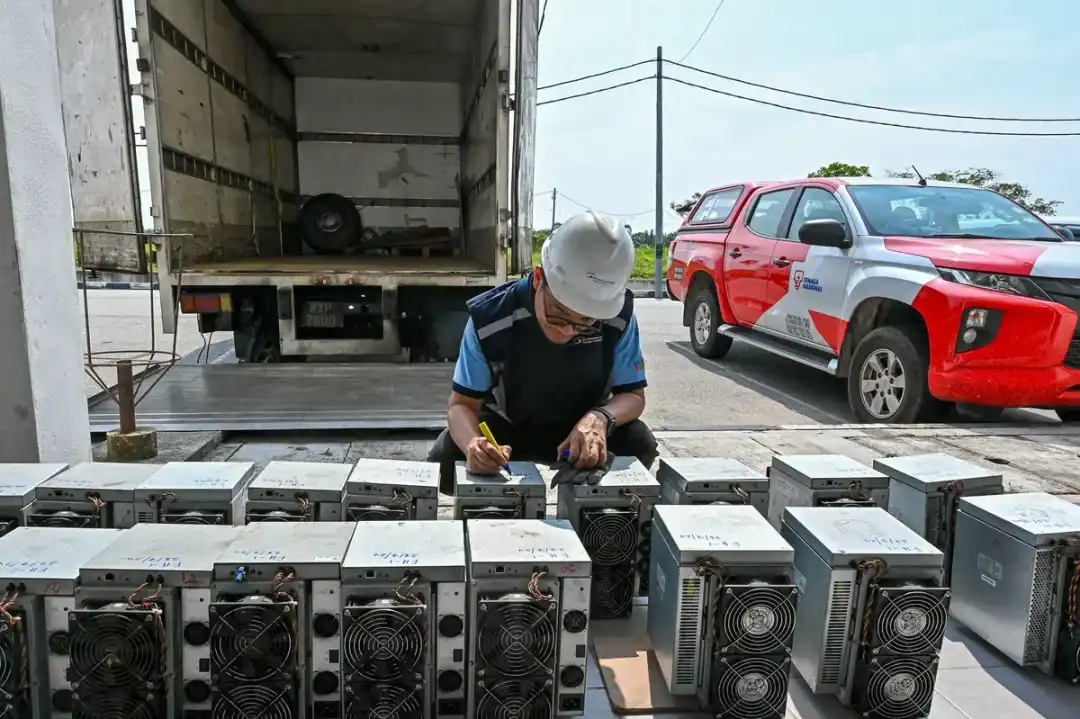
July 2024, an official inspects mining rigs after a Bitcoin mining raid
The tracked mining enterprises act with extreme caution: they frequently move their operations between vacant shop lots and abandoned houses, installing heat insulators to conceal the heat radiation from mining rig operation; at the entrances, they have CCTV cameras, heavy security measures, and broken glass barriers to prevent unauthorized access.
This is the cat-and-mouse game between Malaysian authorities and Bitcoin miners. Over the past five years, Malaysia has uncovered around 14,000 illegal mining hotspots. According to the Ministry of Energy, the state-owned energy company Tenaga Nasional (TNB) has incurred losses of up to $1.1 billion due to electricity theft during this period, and this trend is worsening. In early October of this year, as Bitcoin prices hit a historic high, by that time, authorities had recorded about 3,000 mining-related electricity theft cases.
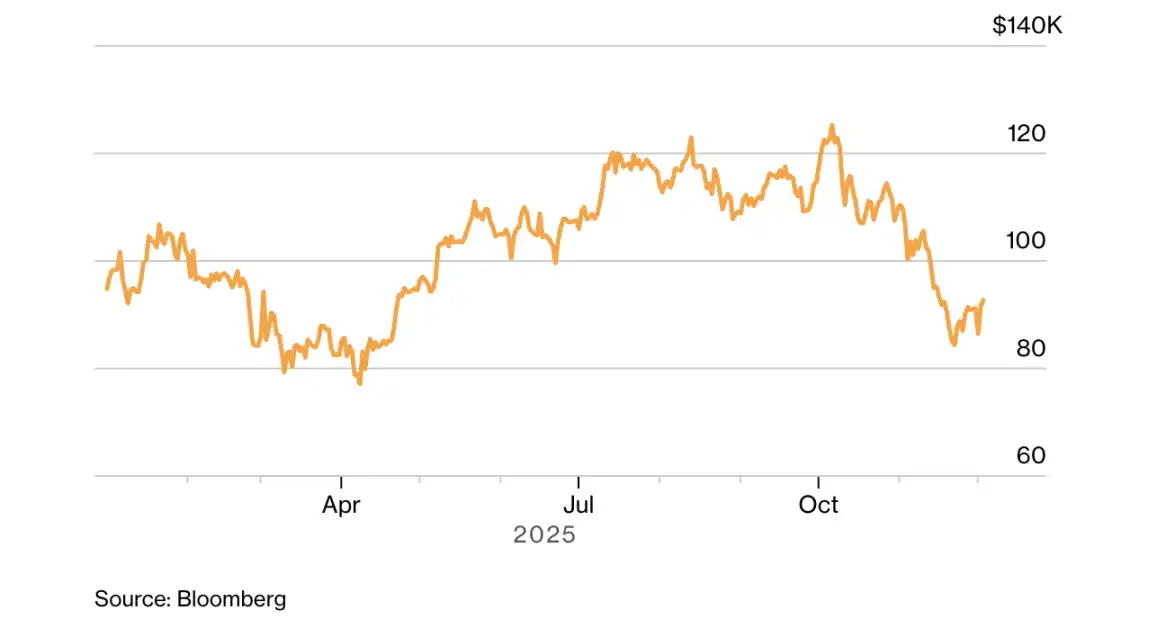
Bitcoin reached a record price of $126,251 in October 2025, after which cryptocurrency prices plummeted
Today, Malaysia is stepping up its enforcement efforts. On November 19, a cross-departmental special committee was established by the government, with members including the Ministry of Finance, the Central Bank of Malaysia, and the National Energy Group, to coordinate a targeted crackdown on illegal mining operators.
「The risk of allowing such behavior is no longer limited to electricity theft,」 said Akmal Nasrullah Mohd Nasir, Deputy Minister of Energy Transition and Water Resources, who also serves as the chairman of the committee, 「These activities may even undermine our power facilities, posing a serious challenge to the power grid system.」
Bitcoin mining is fundamentally a race of computing power: rows of specialized equipment can perform trillions of calculations per second, aiming to successfully validate transactions and earn Bitcoin rewards.
Bitcoin mining is big business. The global electricity consumption of Bitcoin mining now exceeds the total electricity consumption of nations like South Africa or Thailand. According to a report by the Cambridge Centre for Alternative Finance, over 75% of Bitcoin mining activities are currently concentrated in the United States. Malaysia's share in this industry is relatively unclear: as of January 2022, its global hash rate share was 2.5%, but the latest research from the University of Cambridge has not released updated data.
What is evident is that Malaysian miners excel at repurposing various special locations for mining activities.
Overlooking the Strait of Malacca, the ElementX shopping center, a massive complex that was virtually deserted during the COVID-19 pandemic and has since struggled. Today, most of the mall still resembles a construction site, with exposed concrete floors and uncovered wiring. In early 2022, this mall welcomed a peculiar tenant: Bitcoin miners. It wasn't until early 2025 that a TikTok video exposing its mining operation went viral, leading to the eviction of the mining rigs.
Similar covert mining sites also exist in the East Malaysian state of Sarawak, hundreds of miles away. Bloomberg News previously reported that a company named Bityou set up a mining facility in a former logging site. The company did not respond to requests for comment on this article.
In Malaysia, Bitcoin mining is considered legal as long as operators obtain electricity legally and pay taxes as required.
However, Akmal does not agree with this stance. During the first meeting of the special committee on November 25, members discussed "whether to recommend a complete ban on Bitcoin mining."
「Even if the mining operations are compliant, the extreme volatility of the market is still a major challenge,」 he pointed out, 「I believe that currently, there is no mining entity that can be considered a 'successfully operating entity in a legal sense.'」
He further stated that the large number of illegal Bitcoin mining hideouts and the modus operandi of the actors behind the scenes indicate the presence of organized crime.
「These activities are clearly controlled by criminal groups,」 Akmal asserted, 「Based on the mobility of transferring mining rigs between different locations, their modus operandi has formed a fixed pattern.」
btc-miners-hunted-after-stealing-1-billion-power-from-malaysia-grid" target="_blank">Original Article Link
You may also like

The 17-Year Mystery Will Be Solved, Who is Satoshi Nakamoto?

5 Minutes to Make AI Your Second Brain

Uniswap is trapped in an innovation dilemma

What is the key to competition in crypto banking?

The flow of stablecoins and the spillover effects in the foreign exchange market

After two years, Hong Kong's first batch of stablecoin licenses finally issued: HSBC, Standard Chartered make the cut
The person who helped TAO rise by 90% has now single-handedly crashed the price again today

3-Minute Guide to Participating in the SpaceX IPO on Bitget

Top 5 Cryptos to Buy in 2026 Q1: A ChatGPT Deep Dive Analysis
Explore the top 5 cryptos to buy in Q1 2026 including BTC, ETH, SOL, TAO, and ONDO. See price outlooks, key narratives, and institutional catalysts shaping the next market move.

How to Earn $15,000 with Idle USDT Before Altcoin Season 2026
Wondering if altcoin season is coming in 2026? Get the latest market update, and learn how to turn your idle stablecoins waiting for entry into extra rewards up to 15,000 USDT.
Can You Win Joker Returns Without Large Trading Volume? 5 Mistakes New Players Make In WEEX Joker Returns Season 2
Can small traders win WEEX Joker Returns 2026 without huge volume? Yes—if you avoid these 5 costly mistakes. Learn how to maximize card draws, use Jokers wisely, and turn small deposits into 15,000 USDT rewards.

Altcoin Season 2026: 4 Stages to Profit (Before the Crowd FOMO In)
Altcoin Season 2026 is starting — discover the 4 key stages of capital rotation (from ETH to PEPE) and how to position before the peak. Learn which tokens will lead each phase and avoid missing the rally.

Will Alt season come in 2026? 5 Tips to Spot the Next 100x Crypto Opportunities
Will altcoin season arrive in 2026? Discover 5 rotation stages, early signals smart traders watch, and the key crypto sectors where the next 100x altcoin opportunities may emerge.

The bear market has arrived, and cryptocurrency ETF issuers are also getting involved

The richest man had a quarrel with his former boss

BTC Firm Above 70K! Saylor’s "Institutional Logic" vs. Moon’s "Retail Faith": Who is Really Harvesting the Market?
Bitcoin is holding firm above the $70,000 support level following a massive short squeeze that liquidated $427 million. As the "Four-Year Cycle" narrative shifts, the market is split: Michael Saylor’s cold, institutional "indiscriminate stacking" vs. Carl Moon’s high-energy retail "hopium." This article decodes these two polar-opposite strategies for the 2026 bull run and reveals how WEEX’s institutional-grade liquidity and AI trading tools empower every type of investor to convert market volatility into profit.

The Girl Who Created the SBTI Test: A Story of a Doomed Cyber Love, an E-Widow Ratfolk



 App
App