
- Buy Crypto
- Markets
 Futures
- Spot
- Copy Trade
- Earn
- More
Decentralized Identifiers (DID)

Decentralized Identifiers (DID) are a new type of identifier that enables verifiable, self-sovereign digital identities. Unlike traditional identifiers, such as email addresses or social security numbers, which are typically managed by centralized authorities (like governments or corporations), DIDs are created, owned, and controlled by the individual or entity they represent. This decentralization empowers users to manage their identities without relying on third parties, enhancing privacy and security.
The primary feature of DIDs is their ability to function independently of any centralized registry or authority. Each DID is a unique string that can be used to identify a person, organization, or device. DIDs can be associated with various types of verifiable credentials, which are digital statements that can be independently verified and are often issued by trusted entities. This allows individuals to share specific credentials (such as age verification or professional qualifications) without disclosing unnecessary personal information.
DIDs are built on blockchain technology or other decentralized networks, ensuring that the identifiers are tamper-proof and immutable. This enhances trust, as anyone can verify the authenticity of a DID without needing to rely on a central authority. Additionally, DIDs can be resolved to obtain public keys or service endpoints, facilitating secure communication and transactions.
For example, a freelancer might create a DID to represent their professional identity. They could obtain verifiable credentials from clients or platforms that attest to their skills and work history. When applying for new projects, the freelancer can share their DID along with the relevant credentials, allowing potential clients to verify their qualifications without exposing personal details.
DIDs are particularly valuable in scenarios where privacy, security, and user control are paramount, such as in healthcare, finance, and online services. Overall, Decentralized Identifiers represent a significant shift towards more secure and user-centric identity management in the digital age, enabling individuals to take control of their online identities while maintaining privacy and security.
You may also like
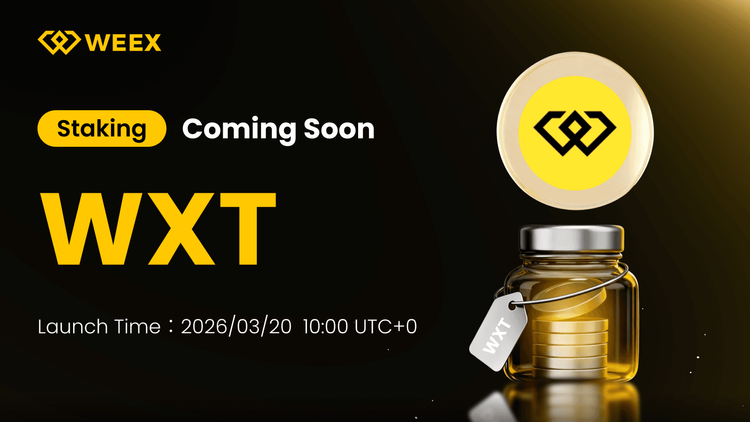
WEEX Launch WXT Staking: What You Need to Know
WXT staking refers to the process of locking your WXT holdings in a staking protocol to earn passive rewards. Unlike Proof-of-Stake networks where staking directly supports blockchain operations, platform-based staking like WEEX Staking allows users to earn yield on their assets through various mechanisms while maintaining flexibility.
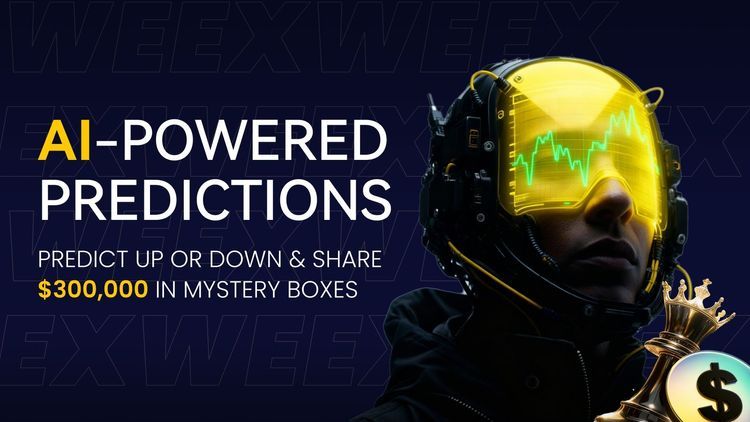
WEEX AI Predictions Event: Win 300,000 USDT with DOGE – Round 9 Now Live
join weex ao-powered predictions now!

Is World Rebuilding Trust (WRT) a Good Investment? 2026 Strategic Market Report
Is World Rebuilding Trust (WRT) a good investment in 2026? Read our 3,000-word deep dive into WRT tokenomics, the Solana RWA narrative, and price predictions. Discover the risks and rewards of tokenized reconstruction aid and learn why trading on WEEX provides the essential security for this high-volatility asset.

WEEX to List SanDisk (SNDK) and Launch SNDK USDT Perpetual Contract
Trade SanDisk (SNDK) Coin and SNDK USDT perpetuals on WEEX Exchange. Explore US stock futures with high leverage on the newly listed SanDisk (SNDK) pair.

What is World Rebuilding Trust (WRT) crypto? 2026 Comprehensive Analysis
What is World Rebuilding Trust (WRT) crypto? Explore our 2026 guide on how to buy WRT, its good investment potential, live price updates, and how to add WRT to Metamask. Learn about Solana-based sovereign rebuilding tokens and how to trade WRT securely on WEEX. Get the latest on mining WRT and future price predictions.
AFC USDT Pair Launches on WEEX: Arsenal Fan Token (AFC) Listing
As a seasoned crypto trader who’s followed fan tokens since their rise, I’m excited about Arsenal Fan Token…

What is edgeX (EDGE) Coin?
The cryptocurrency landscape is continually evolving, with new innovations regularly emerging. Recently, the token pair EDGE/USDT was newly…

Where and How to Buy Arsenal Fan Token (AFC)
Arsenal Fan Token (AFC) just hit a new milestone with its listing on WEEX exchange, where AFC/USDT trading…
EDGE USDT Premiere on WEEX: edgeX (EDGE) Coin Debuts Mar 20
According to CoinMarketCap data, edgeX (EDGE) has surged 68.80% in the past 24 hours, reaching $0.678286 with a…
Where and How to Buy edgeX (EDGE) Coin: Complete Guide
edgeX (EDGE) has caught attention in the crypto world with its recent global exclusive first launch on WEEX,…
ATLA Crypto Guide: Price Outlook and Trading Challenge Perks
With the crypto market buzzing in early 2026, ATLA has emerged as a token drawing attention from traders…
Is Arsenal Fan Token (AFC) a Good Investment?
Arsenal Fan Token (AFC) has caught fresh attention with its recent listing on WEEX exchange, where AFC/USDT trading…
What is Arsenal Fan Token (AFC) Coin?
The Arsenal Fan Token (AFC) is officially the fan token for Arsenal FC, a renowned football club from…
Is edgeX (EDGE) Coin a Good Investment?
edgeX (EDGE) has grabbed attention in the crypto space with its recent listing on WEEX Exchange as a…

edgeX (EDGE) Coin Price Prediction & Forecasts for March 2026: Surging 68.8% in 24 Hours – Can It Maintain the Momentum?
As of March 20, 2026, the current price of edgeX (EDGE) Coin stands at $0.678286 USD, marking a…
Arsenal Fan Token (AFC) Price Prediction & Forecasts for March 2026: Up 8.61% as Fan Engagement Drives Momentum
Arsenal Fan Token (AFC) has seen a solid boost lately, climbing 8.61% in the last 24 hours to…
Where and How to Buy AC Milan Fan Token (ACM) in 2026
AC Milan Fan Token (ACM) has seen fresh momentum with its recent listing on WEEX Exchange, where ACM/USDT…

What is AC Milan Fan Token (ACM) Coin?
With the excitement of a brand new listing buzzing in the crypto air, the AC Milan Fan Token…
WEEX Launch WXT Staking: What You Need to Know
WXT staking refers to the process of locking your WXT holdings in a staking protocol to earn passive rewards. Unlike Proof-of-Stake networks where staking directly supports blockchain operations, platform-based staking like WEEX Staking allows users to earn yield on their assets through various mechanisms while maintaining flexibility.
WEEX AI Predictions Event: Win 300,000 USDT with DOGE – Round 9 Now Live
join weex ao-powered predictions now!
Is World Rebuilding Trust (WRT) a Good Investment? 2026 Strategic Market Report
Is World Rebuilding Trust (WRT) a good investment in 2026? Read our 3,000-word deep dive into WRT tokenomics, the Solana RWA narrative, and price predictions. Discover the risks and rewards of tokenized reconstruction aid and learn why trading on WEEX provides the essential security for this high-volatility asset.
WEEX to List SanDisk (SNDK) and Launch SNDK USDT Perpetual Contract
Trade SanDisk (SNDK) Coin and SNDK USDT perpetuals on WEEX Exchange. Explore US stock futures with high leverage on the newly listed SanDisk (SNDK) pair.
What is World Rebuilding Trust (WRT) crypto? 2026 Comprehensive Analysis
What is World Rebuilding Trust (WRT) crypto? Explore our 2026 guide on how to buy WRT, its good investment potential, live price updates, and how to add WRT to Metamask. Learn about Solana-based sovereign rebuilding tokens and how to trade WRT securely on WEEX. Get the latest on mining WRT and future price predictions.
AFC USDT Pair Launches on WEEX: Arsenal Fan Token (AFC) Listing
As a seasoned crypto trader who’s followed fan tokens since their rise, I’m excited about Arsenal Fan Token…


 App
App