
- Buy Crypto
- Markets
 Futures
- Spot
- Copy Trade
- Earn
- More
Why Is Bitcoin Capped at 21 Million? Unpacking Satoshi Nakamoto's Brilliant Mathematical Design

The total supply of Bitcoin is fixed at 21 million coins—a number that was far from randomly chosen. Its creator, Satoshi Nakamoto, implemented a rigorous mathematical framework to ensure both scarcity and stable operation. To truly understand this design, we must first look at Bitcoin's issuance mechanism.
The Core Principle: How Mining and Halvings Create the 21 Million Cap
Bitcoin is generated through a process called "mining." Miners use computational power to validate transactions and secure the network, and in return for successfully adding a new block to the blockchain, they receive a reward in Bitcoin.
However, this reward is not constant. It is programmed to decrease by 50% every 210,000 blocks—an event known as the "halving."
- When Bitcoin launched in 2009, the block reward was 50 BTC.
- In 2012, the first halving cut it to 25 BTC.
- In 2016, it was halved again to 12.5 BTC.
- In 2020, it became 6.25 BTC.
By design, a new block is mined approximately every 10 minutes. At this rate, 210,000 blocks take roughly four years to mine. Following this mathematical progression, by approximately the year 2140, the total number of bitcoins will approach 21 million, at which point the creation of new coins will cease entirely. The initial reward of 50 BTC, halved roughly 32 times, results in a total sum that mathematically converges on 21 million. This elegant design ensures that Bitcoin's issuance rate gradually slows down before stopping completely.
‘Digital Gold’: Bitcoin's Built-in Deflationary Nature
This finite supply gives Bitcoin its powerful deflationary characteristic. Unlike fiat currencies, which central banks can print indefinitely, Bitcoin's total amount is unchangeably fixed. This contrast became starkly evident after the COVID-19 pandemic began in 2020. Many central banks engaged in massive quantitative easing; the U.S. Federal Reserve's balance sheet, for example, swelled from $4 trillion to $9 trillion, sparking widespread inflation fears.
During this same period, Bitcoin underwent its third halving. Its price subsequently soared from around $5,000 to a peak of $69,000. Scarcity became a primary driver of Bitcoin's value.
This scarcity has earned Bitcoin the label of "digital gold." Like physical gold, its supply is limited. However, Bitcoin offers superior divisibility and portability. While 21 million may not sound like much, each bitcoin can be divided into 100 million smaller units called "satoshis," ensuring it can accommodate a global volume of transactions. In 2021, when El Salvador adopted Bitcoin as legal tender, President Nayib Bukele explicitly cited its fixed supply on Twitter, using scarcity as a core justification for the law.
A Brilliant Incentive Structure: From Block Rewards to Transaction Fees
Another stroke of genius in Satoshi's design is its incentive mechanism.
- Early Stages: High block rewards attracted early miners, providing the necessary computational power to secure and launch the network.
- Maturity: As the network grows and block rewards diminish, transaction fees paid by users become the primary source of income for miners.
This transition is designed to unfold over decades, giving the ecosystem ample time to adapt. In 2017, when the Bitcoin network experienced severe congestion, transaction fees briefly spiked above $50. However, with technological optimizations and changing user habits, fees have since returned to more reasonable levels, demonstrating the system's flexibility.
The Store of Value Debate: Criticisms of a Fixed Supply
Of course, this limited-supply model is not without its critics. Nobel laureate in economics Paul Krugman has repeatedly criticized Bitcoin's deflationary nature, arguing that it encourages hoarding rather than circulation, which is detrimental to a currency.
On-chain data appears to support this observation. According to analytics firm Glassnode, over 60% of all Bitcoin has not moved in at least a year. However, proponents counter that serving as a store of value is one of Bitcoin's most important functions, much like physical gold, which is also rarely used for daily purchases.
Can the 21 Million Limit Be Changed? The Role of Consensus
Bitcoin's code is open-source, meaning it is theoretically possible to alter the 21 million cap. In practice, this is virtually impossible. Any change to Bitcoin's core rules requires overwhelming consensus from the global community of users and miners.
The 2017 network split, which created Bitcoin Cash (BCH) over a disagreement on block size, serves as a powerful example. Even in this contentious fork, neither side dared to propose altering the total supply limit, as doing so would destroy the very foundation of its value. As NYU Stern School of Business professor Nouriel Roubini bluntly put it: "Change the cap? You might as well just invent a new coin."
Conclusion: A Monetary Experiment in Code
To understand the volatile swings of the Bitcoin market, one must first grasp its fundamental logic. Price movements are a result of complex interactions between supply and demand, market sentiment, and macroeconomic factors.
In 2024, Bitcoin experienced its fourth halving, cutting the block reward from 6.25 to 3.125 BTC. Historical data suggests that a bull market often follows in the 12-18 months after a halving. However, past performance is not indicative of future results, and whether this pattern repeats will depend on the prevailing market conditions.
Satoshi's design showcases a masterful fusion of economics and cryptography. It uses mathematical rules to enforce scarcity and replaces the need for trust with immutable code, elegantly solving the double-spending problem for digital assets. The invention of Bitcoin is more than a technological breakthrough; it is a grand monetary experiment. While its final outcome remains to be seen, it has proven one thing: a sound monetary policy doesn't necessarily require a central bank—a well-designed algorithm can also do the job.
You may also like

What is EdgeX? $EDGE is available on WEEX Pre-Market
EdgeX is building a parallel, modular execution app-specific execution layer with Ethereum-level security. Now $EDGE is available for pre-market trading on WEEX.
Where and How to Buy SanDisk (SNDK) Crypto in 2026
SanDisk (SNDK), a tokenized derivative of the well-known storage technology company, has caught fresh attention in the crypto…

What is SanDisk (SNDK) Coin? Everything You Need to Know
SanDisk Corporation (Derivatives), identified by the token ticker SNDK, recently made its debut on the WEEX Exchange. As…

What is BitMine Immersion Technologies Tokenized Stock (Ondo) (BMNRon) Coin
BitMine Immersion Technologies Tokenized Stock (Ondo) (BMNRon) has recently garnered attention as it was newly listed on WEEX…

Is SanDisk (SNDK) Coin a Good Investment?
SanDisk (SNDK) has caught attention in the crypto space as a tokenized derivative of the traditional SanDisk Corporation…
Is BMNRon Coin a Good Investment in 2026?
BitMine Immersion Technologies Tokenized Stock (Ondo), known by its token symbol BMNRon, has been making waves in the…
Where and How to Buy BMNRon Coin: A Beginner’s Guide
BitMine Immersion Technologies Tokenized Stock (Ondo), known by its ticker BMNRon, has caught attention in the crypto space…

BMNRon Price Prediction & Forecasts for March 2026: Up 3% Today, Eyes on $25 Rally
As of March 23, 2026, the current price of BMNRon stands at $20.03 USD, according to data from…

Natural Gas (NG) Coin Price Prediction & Forecasts for March 2026: Rallying Toward $4 Amid Market Volatility?
As of March 23, 2026, the current price of Natural Gas (NG) stands at $3.22050 USD, with a…

Micron Technology Tokenized Stock (Ondo) (MUon) Price Prediction & Forecasts for March 2026: Up 8.6% with Strong Momentum
As of March 23, 2026, the Micron Technology Tokenized Stock (Ondo) (MUon)) is trading at $431.30 USD, according…
What Is Billions (BILL)? The AI Identity Crypto & How to Buy in 2026
Learn what Billions (BILL) crypto is, how it works as an AI identity layer, and how to buy BILL tokens. A simple guide to BILL token utility and tokenomics.
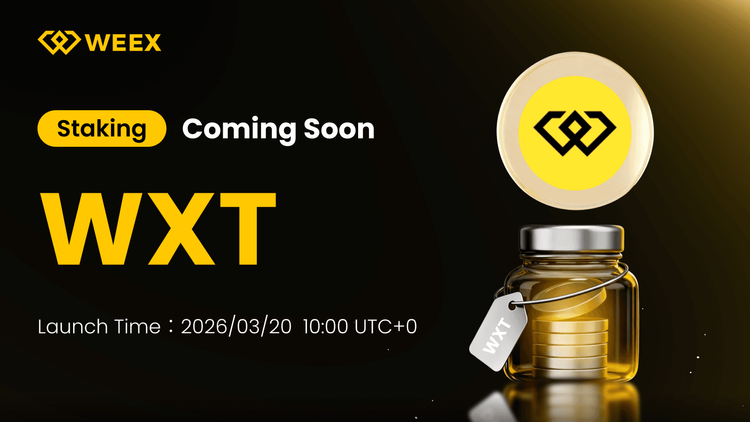
WEEX Launch WXT Staking: What You Need to Know
WXT staking refers to the process of locking your WXT holdings in a staking protocol to earn passive rewards. Unlike Proof-of-Stake networks where staking directly supports blockchain operations, platform-based staking like WEEX Staking allows users to earn yield on their assets through various mechanisms while maintaining flexibility.
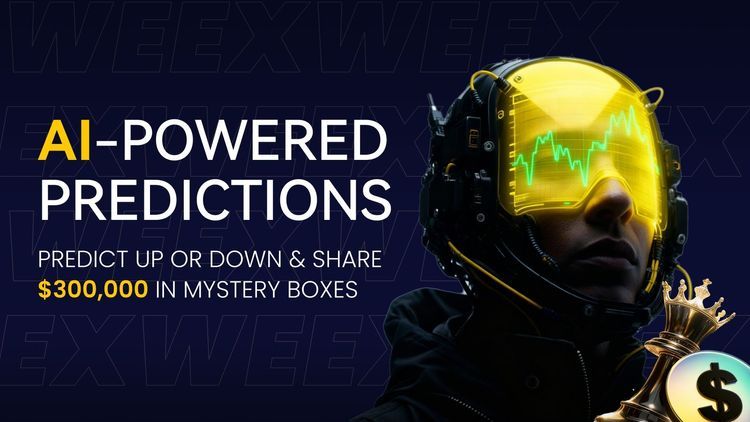
WEEX AI Predictions Event: Win 300,000 USDT with DOGE – Round 9 Now Live
join weex ao-powered predictions now!

Is World Rebuilding Trust (WRT) a Good Investment? 2026 Strategic Market Report
Is World Rebuilding Trust (WRT) a good investment in 2026? Read our 3,000-word deep dive into WRT tokenomics, the Solana RWA narrative, and price predictions. Discover the risks and rewards of tokenized reconstruction aid and learn why trading on WEEX provides the essential security for this high-volatility asset.

WEEX Futures Lists BMNRon USDT Perpetual Contract
Trade BitMine Immersion Technologies Tokenized Stock (BMNRon) on WEEX. The BMNR USDT perpetual contract launches Mar 19 with 24/7 access to US stock markets.

WEEX to List SanDisk (SNDK) and Launch SNDK USDT Perpetual Contract
Trade SanDisk (SNDK) Coin and SNDK USDT perpetuals on WEEX Exchange. Explore US stock futures with high leverage on the newly listed SanDisk (SNDK) pair.

WEEX to List MUon and Launch MUon USDT Perpetual Contract
WEEX lists Micron Technology Tokenized Stock (Ondo) (MUon). Trade MUon USDT perpetual contracts on WEEX Exchange with up to 24/7 market access and high liquidity.
ATLA Trading Competition: Earn Rewards with 0-Fee Trading on WEEX
Join the Atleta Network (ATLA) trading competition on WEEX to earn rewards. Discover how new users can claim free bonuses and benefit from zero-fee trading during this exclusive modular Layer 1 event.
What is EdgeX? $EDGE is available on WEEX Pre-Market
EdgeX is building a parallel, modular execution app-specific execution layer with Ethereum-level security. Now $EDGE is available for pre-market trading on WEEX.
Where and How to Buy SanDisk (SNDK) Crypto in 2026
SanDisk (SNDK), a tokenized derivative of the well-known storage technology company, has caught fresh attention in the crypto…
What is SanDisk (SNDK) Coin? Everything You Need to Know
SanDisk Corporation (Derivatives), identified by the token ticker SNDK, recently made its debut on the WEEX Exchange. As…
What is BitMine Immersion Technologies Tokenized Stock (Ondo) (BMNRon) Coin
BitMine Immersion Technologies Tokenized Stock (Ondo) (BMNRon) has recently garnered attention as it was newly listed on WEEX…
Is SanDisk (SNDK) Coin a Good Investment?
SanDisk (SNDK) has caught attention in the crypto space as a tokenized derivative of the traditional SanDisk Corporation…
Is BMNRon Coin a Good Investment in 2026?
BitMine Immersion Technologies Tokenized Stock (Ondo), known by its token symbol BMNRon, has been making waves in the…


 App
App