
- Buy Crypto
- Markets
 Futures
- Spot
- Copy Trade
- Earn
- More
What is USDC.e? Bridged vs. Native USDC and How to Swap

If you've spent time in the world of DeFi, you've likely come across both USDC and a slightly different version called USDC.e. While both are stablecoins pegged to the U.S. dollar, they aren't the same. Understanding the difference is key to navigating different blockchain ecosystems safely and efficiently.
This guide breaks down exactly what USDC.e is, how it compares to native USDC, and what you need to know about using it.
What is USD Coin Bridged (USDC.e)?
USD Coin Bridged, or USDC.e, is a wrapped version of USDC that has been "bridged" from the Ethereum blockchain to another network. The ".e" in its name typically signifies that it originated on Ethereum.
Think of it like this: Native USDC is issued directly by its creator, Circle, on various blockchains like Solana, Avalanche, and Polygon. However, before Circle officially launched native USDC on these networks, there was still a high demand for a dollar-pegged stablecoin.
To fill this gap, cross-chain bridges were used. These bridges lock up USDC on the Ethereum network and then mint an equivalent amount of a wrapped version—USDC.e—on the destination chain (e.g., Avalanche, Arbitrum). This allowed users to access the utility of USDC on other blockchains, but it comes with a few important distinctions.
USDC.e vs. USDC: Key Differences Explained
While both aim to maintain a $1 price, USDC.e and native USDC have fundamental differences in how they work, their liquidity, and their official support. The UDC.e VS USDC distinction is crucial for any DeFi user.
Origin and Support
- USDC: Native USDC is issued and fully backed by Circle. It's directly integrated with Circle's services, meaning you can easily convert it to and from fiat currency (like U.S. dollars) through a Circle Account.
- USDC.e: This is an unofficial, bridged version and is not directly supported by Circle. You cannot redeem USDC.e for dollars using Circle's platform. To off-ramp, you must first bridge or swap it back to native USDC.
Liquidity and Compatibility
- USDC: As the official version, native USDC has much higher liquidity and is the standard on most major decentralized applications (dApps) like Aave and Uniswap.
- USDC.e: Liquidity for USDC.e is lower and shrinking. As more blockchains adopt native USDC, USDC.e is being phased out, which can make it harder to trade without affecting the price.
Security
- Security: Native USDC is generally considered safer. USDC.e carries additional risk because it depends on the security of the third-party bridge used to create it. If that bridge were to be compromised, the USDC.e could lose its backing.
How to Get and Swap USDC.e
As native USDC becomes the standard, the most common question is not how to get USDC.e, but "How to transfer USDC.e to USDC?" However, if you do need to acquire USDC.e, the process can be done through both centralized and decentralized exchanges. While many users turn to DEXs, some centralized platforms also offer support; for example, you can find guides on how to buy USD Coin Bridged on WEEX.
Here is a step-by-step guide to acquiring USDC.e:
- Get a Crypto Wallet : Download and set up a compatible crypto wallet, such as MetaMask .
- Buy USDT on an Exchange: Purchase a stablecoin like USDT on an exchange like WEEX using your preferred payment method.
- Send USDT to Your Wallet: Withdraw the USDT from the exchange to your wallet address, making sure you select the correct network that matches your wallet.
- Connect Your Wallet to a DEX: Choose a decentralized exchange (DEX) like Uniswap or PancakeSwap and connect your wallet.
- Swap USDT for USDC.e: Select the USDT/USDC.e trading pair, enter the amount, review the transaction details and fees, and confirm the swap.
The Bottom Line
In short, the USDC.e Meaning is simple: it's a bridged version of USDC from Ethereum, created to bring dollar-stable value to other chains before native support was available.
Today, native USDC is the industry standard, offering better security, higher liquidity, and direct support from Circle. While USDC.e played an important role in the growth of DeFi, it is now a legacy asset. If you currently hold USDC.e, swapping it for native USDC is a smart move for better flexibility, security, and integration with the broader crypto ecosystem.
You may also like
What is EdgeX? $EDGE is available on WEEX Pre-Market
EdgeX is building a parallel, modular execution app-specific execution layer with Ethereum-level security. Now $EDGE is available for pre-market trading on WEEX.

Where and How to Buy SanDisk (SNDK) Crypto in 2026
SanDisk (SNDK), a tokenized derivative of the well-known storage technology company, has caught fresh attention in the crypto…

What is SanDisk (SNDK) Coin? Everything You Need to Know
SanDisk Corporation (Derivatives), identified by the token ticker SNDK, recently made its debut on the WEEX Exchange. As…

What is BitMine Immersion Technologies Tokenized Stock (Ondo) (BMNRon) Coin
BitMine Immersion Technologies Tokenized Stock (Ondo) (BMNRon) has recently garnered attention as it was newly listed on WEEX…

Is SanDisk (SNDK) Coin a Good Investment?
SanDisk (SNDK) has caught attention in the crypto space as a tokenized derivative of the traditional SanDisk Corporation…
Is BMNRon Coin a Good Investment in 2026?
BitMine Immersion Technologies Tokenized Stock (Ondo), known by its token symbol BMNRon, has been making waves in the…
Where and How to Buy BMNRon Coin: A Beginner’s Guide
BitMine Immersion Technologies Tokenized Stock (Ondo), known by its ticker BMNRon, has caught attention in the crypto space…

BMNRon Price Prediction & Forecasts for March 2026: Up 3% Today, Eyes on $25 Rally
As of March 23, 2026, the current price of BMNRon stands at $20.03 USD, according to data from…

Natural Gas (NG) Coin Price Prediction & Forecasts for March 2026: Rallying Toward $4 Amid Market Volatility?
As of March 23, 2026, the current price of Natural Gas (NG) stands at $3.22050 USD, with a…

Micron Technology Tokenized Stock (Ondo) (MUon) Price Prediction & Forecasts for March 2026: Up 8.6% with Strong Momentum
As of March 23, 2026, the Micron Technology Tokenized Stock (Ondo) (MUon)) is trading at $431.30 USD, according…
What Is Billions (BILL)? The AI Identity Crypto & How to Buy in 2026
Learn what Billions (BILL) crypto is, how it works as an AI identity layer, and how to buy BILL tokens. A simple guide to BILL token utility and tokenomics.
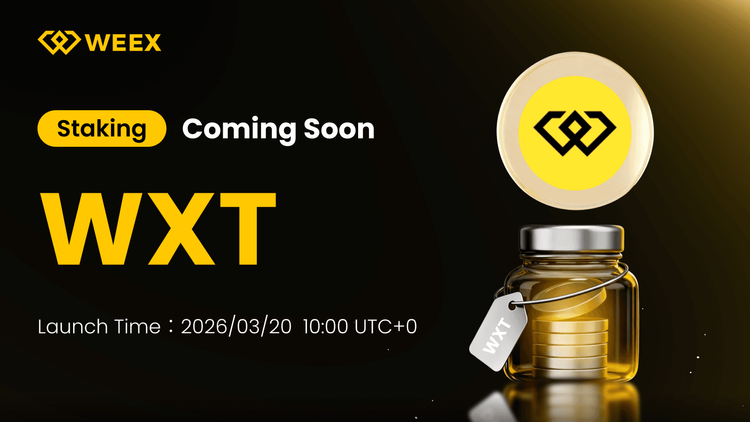
WEEX Launch WXT Staking: What You Need to Know
WXT staking refers to the process of locking your WXT holdings in a staking protocol to earn passive rewards. Unlike Proof-of-Stake networks where staking directly supports blockchain operations, platform-based staking like WEEX Staking allows users to earn yield on their assets through various mechanisms while maintaining flexibility.

WEEX AI Predictions Event: Win 300,000 USDT with DOGE – Round 9 Now Live
join weex ao-powered predictions now!

Is World Rebuilding Trust (WRT) a Good Investment? 2026 Strategic Market Report
Is World Rebuilding Trust (WRT) a good investment in 2026? Read our 3,000-word deep dive into WRT tokenomics, the Solana RWA narrative, and price predictions. Discover the risks and rewards of tokenized reconstruction aid and learn why trading on WEEX provides the essential security for this high-volatility asset.

WEEX Futures Lists BMNRon USDT Perpetual Contract
Trade BitMine Immersion Technologies Tokenized Stock (BMNRon) on WEEX. The BMNR USDT perpetual contract launches Mar 19 with 24/7 access to US stock markets.

WEEX to List SanDisk (SNDK) and Launch SNDK USDT Perpetual Contract
Trade SanDisk (SNDK) Coin and SNDK USDT perpetuals on WEEX Exchange. Explore US stock futures with high leverage on the newly listed SanDisk (SNDK) pair.

WEEX to List MUon and Launch MUon USDT Perpetual Contract
WEEX lists Micron Technology Tokenized Stock (Ondo) (MUon). Trade MUon USDT perpetual contracts on WEEX Exchange with up to 24/7 market access and high liquidity.
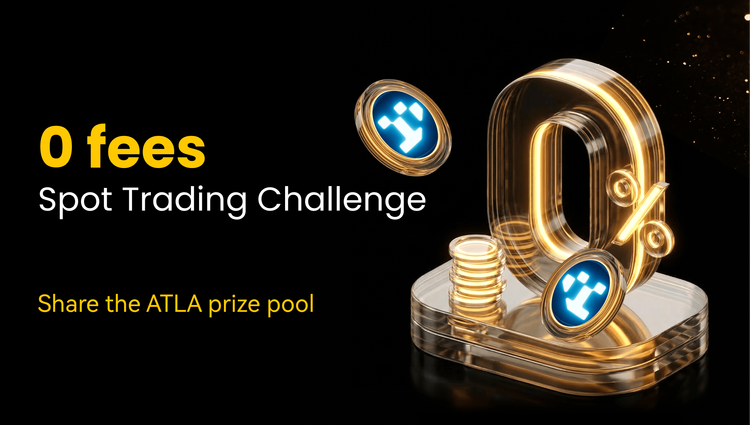
ATLA Trading Competition: Earn Rewards with 0-Fee Trading on WEEX
Join the Atleta Network (ATLA) trading competition on WEEX to earn rewards. Discover how new users can claim free bonuses and benefit from zero-fee trading during this exclusive modular Layer 1 event.
What is EdgeX? $EDGE is available on WEEX Pre-Market
EdgeX is building a parallel, modular execution app-specific execution layer with Ethereum-level security. Now $EDGE is available for pre-market trading on WEEX.
Where and How to Buy SanDisk (SNDK) Crypto in 2026
SanDisk (SNDK), a tokenized derivative of the well-known storage technology company, has caught fresh attention in the crypto…
What is SanDisk (SNDK) Coin? Everything You Need to Know
SanDisk Corporation (Derivatives), identified by the token ticker SNDK, recently made its debut on the WEEX Exchange. As…
What is BitMine Immersion Technologies Tokenized Stock (Ondo) (BMNRon) Coin
BitMine Immersion Technologies Tokenized Stock (Ondo) (BMNRon) has recently garnered attention as it was newly listed on WEEX…
Is SanDisk (SNDK) Coin a Good Investment?
SanDisk (SNDK) has caught attention in the crypto space as a tokenized derivative of the traditional SanDisk Corporation…
Is BMNRon Coin a Good Investment in 2026?
BitMine Immersion Technologies Tokenized Stock (Ondo), known by its token symbol BMNRon, has been making waves in the…


 App
App