
- Buy Crypto
- Markets
 Futures
- Spot
- Copy Trade
- Earn
- More
USDT vs. USDC: Which Stablecoin Is Better for Trading?

In the ever-evolving world of cryptocurrency, stablecoins have become a vital bridge between fiat currencies and digital assets. Among the most popular choices are USDT (Tether) and USDC (USD Coin)—two stablecoins pegged to the US dollar that dominate trading volumes and decentralized finance platforms. If you're deciding which one to use, understanding the advantages of USDT vs. USDC can help you make a more informed decision when trading, investing, or transferring crypto.
What is USDT?
USDT, or Tether, is a stablecoin launched in 2014 by the Hong Kong-based company Tether Limited. It was the first stablecoin to gain widespread adoption in the crypto market and remains the most traded stablecoin today.
Key Features:
- Pegged to the US Dollar: 1 USDT ≈ 1 USD
- Available on Multiple Blockchains: Ethereum, Tron (TRC-20), Solana, Polygon, BNB Chain, and more
- Issuer: Tether Limited
- Market Capitalization: Over $110 billion (as of April 2025)
- Use Cases: Trading, remittances, Decentralized Finance (DeFi) , peer-to-peer transactions
Despite past concerns about its transparency, USDT has maintained its position as the most liquid and accessible stablecoin globally.
What is USDC?
USDC, or USD Coin, was launched in 2018 and is managed by the Centre Consortium, a partnership between two well-known and regulated US companies: Circle and Coinbase.
Key Features:
- Pegged to the US Dollar: 1 USDC ≈ 1 USD
- Available on Blockchains: Ethereum, Solana, Avalanche, Algorand, and others
- Audited Monthly: Attestations are provided by Grant Thornton, LLP
- Market Capitalization: Over $32 billion (as of April 2025)
- Use Cases: Institutional trading, Decentralized Finance (DeFi), NFT marketplaces
USDC is often favored by regulated financial platforms and institutional users due to its transparency and compliance with US regulations.
The Advantages of USDT Over USDC
When comparing USDT and USDC, several advantages set USDT apart in how and where it can be used:
1. Broader Exchange and Wallet Support
USDT is available on virtually every centralized exchange (CEX) and decentralized exchange (DEX). Whether you are on Binance, Bybit, Uniswap, or PancakeSwap, you will almost always find USDT trading pairs. USDT is also integrated into more crypto wallets and payment services, giving it greater real-world utility.
2. Higher Liquidity
USDT consistently ranks first in daily trading volume, even surpassing Bitcoin on multiple occasions. This makes it the ideal choice for traders who need instant execution, tighter spreads, and high-volume orders.
3. Wider Blockchain Availability
Compared to USDC, USDT supports a greater number of blockchain networks. Most notably:
- Ethereum (ERC-20 )
- Tron (TRC-20) — Known for its low fees and fast transactions
- Solana, Polkadot, Arbitrum, and more
This diversity gives users more options to avoid high gas fees and optimize for speed.
4. Greater Global Adoption
USDT has found a strong use case in emerging markets where local currencies are unstable. It is frequently used for:
- Remittances
- Peer-to-peer transfers
- Hedging against currency devaluation
In countries like Argentina, Nigeria, and Turkey, USDT has become a lifeline for financial stability.
5. More DeFi and Trading Bot Integrations
Thanks to its liquidity and speed, USDT is often the default stablecoin in trading bots, algorithmic strategies, and lending platforms. It is especially popular in margin and futures trading.
Where USDC Has the Advantage
While USDT leads in liquidity and adoption, USDC excels in the following areas:
- Regulatory Clarity: Being US-based gives it a stronger compliance framework.
- Monthly Audits: Provides greater transparency and confidence in its reserves.
- Institutional Trust: It is the preferred choice for banks, fintech apps, and corporate treasuries.
If you are looking for a compliant and fully audited stablecoin, USDC may be a better fit for your needs—especially for long-term holding or enterprise solutions.
Comparison Summary: USDT vs. USDC
| Feature | USDT (Tether) | USDC (USD Coin) |
|---|---|---|
| Liquidity | Higher (Top trading volume) | Lower |
| Exchange Support | Wider (Nearly universal) | Wide, but less than USDT |
| Blockchain Support | More Networks (incl. Tron TRC-20) | Fewer Networks |
| Global Adoption | Higher (Especially in emerging markets) | Growing, mainly in regulated markets |
| Transparency | Good (Regular reserve reports) | Excellent (Monthly audits) |
| Regulation | Less regulated | Highly Regulated (US-based) |
Both USDT and USDC offer stability and utility in the crypto space, but the advantages of USDT over USDC lie in its global accessibility, deep liquidity, and flexible blockchain support.
- Choose USDT for active trading, cross-border use, or low-fee transactions on fast chains like Tron or Polygon.
- Choose USDC if you value regulatory transparency, audited reserves, or operate on regulated platforms.
For many users, a mix of both provides the best of both worlds.
Frequently Asked Questions (FAQ)
1. Is USDT or USDC safer to use?
USDC is generally considered safer due to its full US audits and stricter regulatory oversight. However, USDT has a longer track record in the market.
2. USDT vs. USDC: Which is better for trading?
USDT typically offers more trading pairs and deeper liquidity, making it more efficient for fast-paced trading.
3. Which is cheaper to transfer?
USDT on Tron (TRC-20) is one of the cheapest options available, with near-zero fees and fast confirmation times.
4. Can I hold both USDT and USDC?
Yes! Many users diversify their holdings to benefit from both liquidity (USDT) and transparency (USDC).
5. Will USDT or USDC dominate the stablecoin market?
USDT currently leads in trading volume and adoption, but regulatory trends could favor USDC's growth—especially in institutional settings.
You may also like
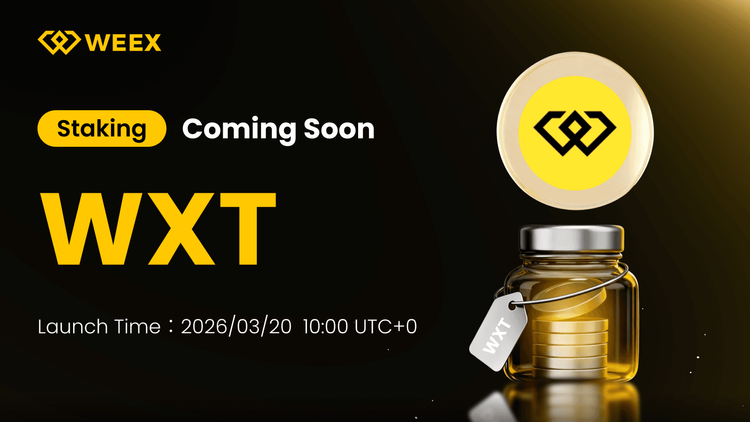
WEEX Launch WXT Staking: What You Need to Know
WXT staking refers to the process of locking your WXT holdings in a staking protocol to earn passive rewards. Unlike Proof-of-Stake networks where staking directly supports blockchain operations, platform-based staking like WEEX Staking allows users to earn yield on their assets through various mechanisms while maintaining flexibility.

WEEX AI Predictions Event: Win 300,000 USDT with DOGE – Round 9 Now Live
join weex ao-powered predictions now!

Is World Rebuilding Trust (WRT) a Good Investment? 2026 Strategic Market Report
Is World Rebuilding Trust (WRT) a good investment in 2026? Read our 3,000-word deep dive into WRT tokenomics, the Solana RWA narrative, and price predictions. Discover the risks and rewards of tokenized reconstruction aid and learn why trading on WEEX provides the essential security for this high-volatility asset.

WEEX to List SanDisk (SNDK) and Launch SNDK USDT Perpetual Contract
Trade SanDisk (SNDK) Coin and SNDK USDT perpetuals on WEEX Exchange. Explore US stock futures with high leverage on the newly listed SanDisk (SNDK) pair.

What is World Rebuilding Trust (WRT) crypto? 2026 Comprehensive Analysis
What is World Rebuilding Trust (WRT) crypto? Explore our 2026 guide on how to buy WRT, its good investment potential, live price updates, and how to add WRT to Metamask. Learn about Solana-based sovereign rebuilding tokens and how to trade WRT securely on WEEX. Get the latest on mining WRT and future price predictions.
AFC USDT Pair Launches on WEEX: Arsenal Fan Token (AFC) Listing
As a seasoned crypto trader who’s followed fan tokens since their rise, I’m excited about Arsenal Fan Token…

What is edgeX (EDGE) Coin?
The cryptocurrency landscape is continually evolving, with new innovations regularly emerging. Recently, the token pair EDGE/USDT was newly…
Where and How to Buy Arsenal Fan Token (AFC)
Arsenal Fan Token (AFC) just hit a new milestone with its listing on WEEX exchange, where AFC/USDT trading…
EDGE USDT Premiere on WEEX: edgeX (EDGE) Coin Debuts Mar 20
According to CoinMarketCap data, edgeX (EDGE) has surged 68.80% in the past 24 hours, reaching $0.678286 with a…
Where and How to Buy edgeX (EDGE) Coin: Complete Guide
edgeX (EDGE) has caught attention in the crypto world with its recent global exclusive first launch on WEEX,…
ATLA Crypto Guide: Price Outlook and Trading Challenge Perks
With the crypto market buzzing in early 2026, ATLA has emerged as a token drawing attention from traders…

Is Arsenal Fan Token (AFC) a Good Investment?
Arsenal Fan Token (AFC) has caught fresh attention with its recent listing on WEEX exchange, where AFC/USDT trading…
What is Arsenal Fan Token (AFC) Coin?
The Arsenal Fan Token (AFC) is officially the fan token for Arsenal FC, a renowned football club from…
Is edgeX (EDGE) Coin a Good Investment?
edgeX (EDGE) has grabbed attention in the crypto space with its recent listing on WEEX Exchange as a…

edgeX (EDGE) Coin Price Prediction & Forecasts for March 2026: Surging 68.8% in 24 Hours – Can It Maintain the Momentum?
As of March 20, 2026, the current price of edgeX (EDGE) Coin stands at $0.678286 USD, marking a…
Arsenal Fan Token (AFC) Price Prediction & Forecasts for March 2026: Up 8.61% as Fan Engagement Drives Momentum
Arsenal Fan Token (AFC) has seen a solid boost lately, climbing 8.61% in the last 24 hours to…
Where and How to Buy AC Milan Fan Token (ACM) in 2026
AC Milan Fan Token (ACM) has seen fresh momentum with its recent listing on WEEX Exchange, where ACM/USDT…

What is AC Milan Fan Token (ACM) Coin?
With the excitement of a brand new listing buzzing in the crypto air, the AC Milan Fan Token…
WEEX Launch WXT Staking: What You Need to Know
WXT staking refers to the process of locking your WXT holdings in a staking protocol to earn passive rewards. Unlike Proof-of-Stake networks where staking directly supports blockchain operations, platform-based staking like WEEX Staking allows users to earn yield on their assets through various mechanisms while maintaining flexibility.
WEEX AI Predictions Event: Win 300,000 USDT with DOGE – Round 9 Now Live
join weex ao-powered predictions now!
Is World Rebuilding Trust (WRT) a Good Investment? 2026 Strategic Market Report
Is World Rebuilding Trust (WRT) a good investment in 2026? Read our 3,000-word deep dive into WRT tokenomics, the Solana RWA narrative, and price predictions. Discover the risks and rewards of tokenized reconstruction aid and learn why trading on WEEX provides the essential security for this high-volatility asset.
WEEX to List SanDisk (SNDK) and Launch SNDK USDT Perpetual Contract
Trade SanDisk (SNDK) Coin and SNDK USDT perpetuals on WEEX Exchange. Explore US stock futures with high leverage on the newly listed SanDisk (SNDK) pair.
What is World Rebuilding Trust (WRT) crypto? 2026 Comprehensive Analysis
What is World Rebuilding Trust (WRT) crypto? Explore our 2026 guide on how to buy WRT, its good investment potential, live price updates, and how to add WRT to Metamask. Learn about Solana-based sovereign rebuilding tokens and how to trade WRT securely on WEEX. Get the latest on mining WRT and future price predictions.
AFC USDT Pair Launches on WEEX: Arsenal Fan Token (AFC) Listing
As a seasoned crypto trader who’s followed fan tokens since their rise, I’m excited about Arsenal Fan Token…


 App
App