
- Buy Crypto
- Markets
 Futures
- Spot
- Copy Trade
- Earn
- More
How Does Adjusting Your Margin Impact Your Liquidation Price in Leveraged Trading?

Trading with leverage might sound complicated at first, but don’t worry—it’s much simpler than it seems! One of the most important things to understand is your liquidation price. This is the price at which your trade automatically closes if the market moves against you, to prevent further losses. Sounds serious, right? But here’s the good news: you can adjust it by tweaking your margin.
So, what happens when you add or withdraw funds (your margin)? Adjusting your margin directly changes your liquidation price, giving you more room to breathe in those unpredictable markets. And with tools like WEEX Crypto Futures Calculator, you can easily calculate how these adjustments impact your trades and make informed decisions.
Let’s break it down step by step so you can confidently manage your margin and liquidation price—even if you’re brand new to this!
What is the Liquidation Price?
Think of your liquidation price as a safety net. If the market moves too far against your trade, and your margin can no longer cover potential losses, the exchange will automatically close your position to protect you from losing more money.
But here’s the key: you can adjust this safety net!
- Adding more funds (margin) gives you a bigger safety cushion, moving the liquidation price further away.
- Withdrawing funds brings the liquidation price closer, increasing your risk.
Understanding this is a big step in mastering leveraged trading.
Why Adjust Your Margin?
- To Avoid Liquidation: Adding more funds lowers the risk of hitting the liquidation price.
- To Free Up Capital: Withdrawing excess margin can free up funds for other trades, though it increases the risk of liquidation.
- To Manage Risks: Adjusting margin lets you control how much is at stake in a single trade.
How Margin Adjustments Affect Liquidation Price?
The relationship between your margin and liquidation price is straightforward:
Adding Margin: Lowers the liquidation price for long positions (or raises it for short positions). This means more breathing room before the market hits your liquidation price.
Reducing Margin: Raises the liquidation price for long positions (or lowers it for short positions), increasing your risk of liquidation.
Liquidation Price Formula (Simplified)
If you want to know the liquidation price formulas, here’s how to calculate your new liquidation price after adjusting your margin:
For long positions:
New Liquidation Price = (Initial Margin + Added Margin − (Position Size × Entry Price)) ÷ Position Size
For short positions:
New Liquidation Price = (Initial Margin + Added Margin + (Position Size × Entry Price)) ÷ Position Size
A Real Example: Adjusting Margin for a Long Position
Let’s walk through a simple example to see how adjusting your margin affects your liquidation price.
Scenario:
- You open a long position with $1,000 margin.
- You use 10x leverage, which gives you a total position size of $10,000.
- You enter the trade at $30,000 per Bitcoin.
Now, let’s calculate your liquidation price step by step.
Step 1: Calculate Initial Liquidation Price
To find the initial liquidation price, we use this formula:
Liquidation Price = (Margin − (Position Size ÷ Entry Price)) ÷ Position Size
Plugging in the numbers:
- Liquidation Price = ($1,000 − ($10,000 ÷ $30,000)) ÷ $10,000
⬇️ - Liquidation Price = ($1,000 − $0.33) ÷ $10,000
⬇️ - Liquidation Price = $27,000
So, your initial liquidation price is $27,000. If Bitcoin’s price drops to $27,000, your position will be liquidated.
Step 2: Add Margin
Now, you decide to add $500 to your margin. This increases your margin from $1,000 to $1,500.
Step 3: Recalculate Liquidation Price
With the new margin, we recalculate the liquidation price using the same formula:
Liquidation Price = (Margin − (Position Size ÷ Entry Price)) ÷ Position Size
Here’s the math:
- New Liquidation Price = ($1,500 − ($10,000 ÷ $30,000)) ÷ $10,000
⬇️ - New Liquidation Price = ($1,500 − $0.33) ÷ $10,000
⬇️ - New Liquidation Price = $26,500
By adding $500 to your margin, your liquidation price drops from $27,000 to $26,500. This gives you more room for the market to move without hitting your liquidation price.
It means that: by increasing your margin, you’ve lowered your liquidation price, reducing the risk of being liquidated. This adjustment gives you more flexibility and a better chance to ride out market fluctuations.
A Real Example: Adjusting Margin for a Short Position
Let’s look at how adjusting your margin impacts your liquidation price when you’re in a short position.
Scenario:
- You open a short position with $1,000 margin.
- You use 10x leverage, meaning your total position size is $10,000.
- The entry price is $30,000 per Bitcoin.
Now, let’s calculate the liquidation price step by step.
Step 1: Calculate Initial Liquidation Price
For short positions, the formula to calculate the liquidation price is:
Liquidation Price = (Margin + (Position Size ÷ Entry Price)) ÷ Position Size
Here’s the calculation:
- Liquidation Price = ($1,000 + ($10,000 ÷ $30,000)) ÷ $10,000
⬇️ - Liquidation Price = ($1,000 + $0.33) ÷ $10,000
⬇️ - Liquidation Price = $33,000
So, your initial liquidation price is $33,000. If Bitcoin’s price rises to $33,000, your position will be liquidated.
Step 2: Add Margin
Now, you decide to add $500 to your margin. This increases your margin from $1,000 to $1,500.
Step 3: Recalculate Liquidation Price
With the new margin, we recalculate the liquidation price using the same formula:
Liquidation Price = (Margin + (Position Size ÷ Entry Price)) ÷ Position Size
Here’s the updated calculation:
- New Liquidation Price = ($1,500 + ($10,000 ÷ $30,000)) ÷ $10,000
⬇️ - New Liquidation Price = ($1,500 + $0.33) ÷ $10,000
⬇️ - New Liquidation Price = $33,500
By adding $500 to your margin, your liquidation price increases from $33,000 to $33,500, giving you more room to stay in the trade.
Tips for Managing Liquidation Price
Monitor Your Margin Levels: Always keep track of your margin and understand how adjustments affect your liquidation price.
Use Stop-Loss Orders: Protect yourself by setting stop-loss orders to exit trades before the market reaches your liquidation price.
Avoid Over-Leverage: Using high leverage can increase the risk of liquidation. Be cautious and only use leverage you’re comfortable with.
Plan for Volatility: Cryptocurrencies are highly volatile, so ensure you maintain enough margin to handle sudden price swings.
Why Adjusting Margin Matters?
By increasing your margin, you lower the risk of liquidation and give yourself more flexibility to manage your trade. Always recalculate your liquidation price after adjusting your margin to stay in control of your position.
Related article:
How to Use Liquidation Prices to Boost Your Trading Strategy
You may also like

What is EdgeX? $EDGE is available on WEEX Pre-Market
EdgeX is building a parallel, modular execution app-specific execution layer with Ethereum-level security. Now $EDGE is available for pre-market trading on WEEX.
Where and How to Buy SanDisk (SNDK) Crypto in 2026
SanDisk (SNDK), a tokenized derivative of the well-known storage technology company, has caught fresh attention in the crypto…

What is SanDisk (SNDK) Coin? Everything You Need to Know
SanDisk Corporation (Derivatives), identified by the token ticker SNDK, recently made its debut on the WEEX Exchange. As…

What is BitMine Immersion Technologies Tokenized Stock (Ondo) (BMNRon) Coin
BitMine Immersion Technologies Tokenized Stock (Ondo) (BMNRon) has recently garnered attention as it was newly listed on WEEX…

Is SanDisk (SNDK) Coin a Good Investment?
SanDisk (SNDK) has caught attention in the crypto space as a tokenized derivative of the traditional SanDisk Corporation…
Is BMNRon Coin a Good Investment in 2026?
BitMine Immersion Technologies Tokenized Stock (Ondo), known by its token symbol BMNRon, has been making waves in the…
Where and How to Buy BMNRon Coin: A Beginner’s Guide
BitMine Immersion Technologies Tokenized Stock (Ondo), known by its ticker BMNRon, has caught attention in the crypto space…

BMNRon Price Prediction & Forecasts for March 2026: Up 3% Today, Eyes on $25 Rally
As of March 23, 2026, the current price of BMNRon stands at $20.03 USD, according to data from…

Natural Gas (NG) Coin Price Prediction & Forecasts for March 2026: Rallying Toward $4 Amid Market Volatility?
As of March 23, 2026, the current price of Natural Gas (NG) stands at $3.22050 USD, with a…

Micron Technology Tokenized Stock (Ondo) (MUon) Price Prediction & Forecasts for March 2026: Up 8.6% with Strong Momentum
As of March 23, 2026, the Micron Technology Tokenized Stock (Ondo) (MUon)) is trading at $431.30 USD, according…
What Is Billions (BILL)? The AI Identity Crypto & How to Buy in 2026
Learn what Billions (BILL) crypto is, how it works as an AI identity layer, and how to buy BILL tokens. A simple guide to BILL token utility and tokenomics.
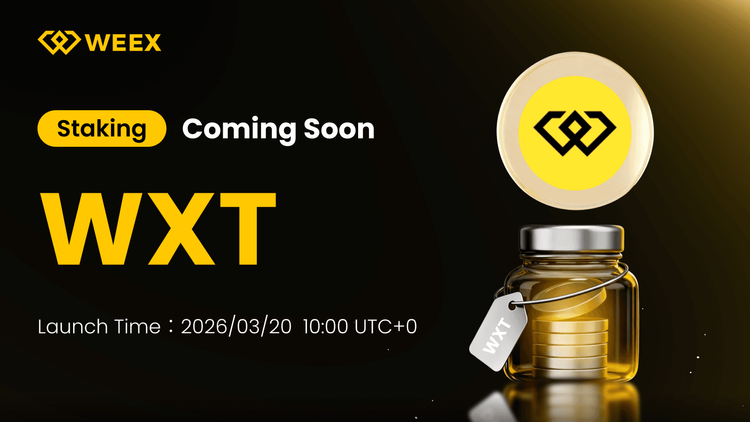
WEEX Launch WXT Staking: What You Need to Know
WXT staking refers to the process of locking your WXT holdings in a staking protocol to earn passive rewards. Unlike Proof-of-Stake networks where staking directly supports blockchain operations, platform-based staking like WEEX Staking allows users to earn yield on their assets through various mechanisms while maintaining flexibility.
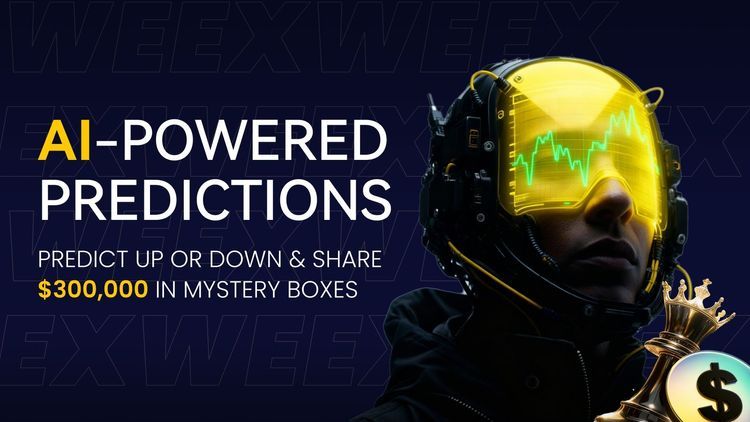
WEEX AI Predictions Event: Win 300,000 USDT with DOGE – Round 9 Now Live
join weex ao-powered predictions now!

Is World Rebuilding Trust (WRT) a Good Investment? 2026 Strategic Market Report
Is World Rebuilding Trust (WRT) a good investment in 2026? Read our 3,000-word deep dive into WRT tokenomics, the Solana RWA narrative, and price predictions. Discover the risks and rewards of tokenized reconstruction aid and learn why trading on WEEX provides the essential security for this high-volatility asset.

WEEX Futures Lists BMNRon USDT Perpetual Contract
Trade BitMine Immersion Technologies Tokenized Stock (BMNRon) on WEEX. The BMNR USDT perpetual contract launches Mar 19 with 24/7 access to US stock markets.

WEEX to List SanDisk (SNDK) and Launch SNDK USDT Perpetual Contract
Trade SanDisk (SNDK) Coin and SNDK USDT perpetuals on WEEX Exchange. Explore US stock futures with high leverage on the newly listed SanDisk (SNDK) pair.

WEEX to List MUon and Launch MUon USDT Perpetual Contract
WEEX lists Micron Technology Tokenized Stock (Ondo) (MUon). Trade MUon USDT perpetual contracts on WEEX Exchange with up to 24/7 market access and high liquidity.
ATLA Trading Competition: Earn Rewards with 0-Fee Trading on WEEX
Join the Atleta Network (ATLA) trading competition on WEEX to earn rewards. Discover how new users can claim free bonuses and benefit from zero-fee trading during this exclusive modular Layer 1 event.
What is EdgeX? $EDGE is available on WEEX Pre-Market
EdgeX is building a parallel, modular execution app-specific execution layer with Ethereum-level security. Now $EDGE is available for pre-market trading on WEEX.
Where and How to Buy SanDisk (SNDK) Crypto in 2026
SanDisk (SNDK), a tokenized derivative of the well-known storage technology company, has caught fresh attention in the crypto…
What is SanDisk (SNDK) Coin? Everything You Need to Know
SanDisk Corporation (Derivatives), identified by the token ticker SNDK, recently made its debut on the WEEX Exchange. As…
What is BitMine Immersion Technologies Tokenized Stock (Ondo) (BMNRon) Coin
BitMine Immersion Technologies Tokenized Stock (Ondo) (BMNRon) has recently garnered attention as it was newly listed on WEEX…
Is SanDisk (SNDK) Coin a Good Investment?
SanDisk (SNDK) has caught attention in the crypto space as a tokenized derivative of the traditional SanDisk Corporation…
Is BMNRon Coin a Good Investment in 2026?
BitMine Immersion Technologies Tokenized Stock (Ondo), known by its token symbol BMNRon, has been making waves in the…


 App
App