
- Buy Crypto
- Markets
 Futures
- Spot
- Copy Trade
- Earn
- More
Decentralized Physical Infrastructure Network (DePIN)

Decentralized Physical Infrastructure Network (DePIN) is an innovative framework that integrates decentralized technologies, such as blockchain and distributed ledgers, with physical infrastructure systems. The goal of DePIN is to create a more efficient, resilient, and user-centric ecosystem for managing physical assets, including energy grids, transportation networks, and supply chains. By leveraging decentralization, DePIN aims to enhance transparency, security, and community involvement in the operation and governance of critical infrastructure.
One of the defining characteristics of DePIN is its emphasis on decentralization. Traditional infrastructure systems are often controlled by centralized entities, leading to vulnerabilities and inefficiencies. In contrast, DePIN allows multiple stakeholders—such as individuals, organizations, and communities—to participate in the management and decision-making processes. This decentralized governance model reduces the risk of single points of failure and promotes greater resilience in the face of disruptions.
Transparency is another key feature of DePIN. By utilizing blockchain technology, all transactions and interactions within the network are recorded on a secure and immutable ledger. This transparency fosters trust among participants, as they can independently verify the integrity of data and actions related to the infrastructure. It also enables better accountability, as stakeholders can track the performance and maintenance of physical assets in real-time.
Community participation is a fundamental aspect of DePIN. By empowering local communities to engage in the management of infrastructure, DePIN ensures that the needs and preferences of users are taken into account. This participatory approach can lead to more effective and tailored solutions, as communities can collaborate on initiatives that directly impact their quality of life.
Examples of DePIN applications include decentralized energy grids, where users can generate, share, and trade renewable energy directly with one another, and decentralized transportation networks that facilitate peer-to-peer vehicle sharing and logistics. These applications illustrate how DePIN can transform traditional infrastructure models into more sustainable and user-driven systems.
Overall, a Decentralized Physical Infrastructure Network (DePIN) represents a significant shift in how physical assets are managed and operated. By leveraging the principles of decentralization, transparency, and community engagement, DePIN has the potential to create more resilient and efficient infrastructure systems that better serve the needs of individuals and communities in an increasingly interconnected world.
You may also like

What is EdgeX? $EDGE is available on WEEX Pre-Market
EdgeX is building a parallel, modular execution app-specific execution layer with Ethereum-level security. Now $EDGE is available for pre-market trading on WEEX.

Where and How to Buy SanDisk (SNDK) Crypto in 2026
SanDisk (SNDK), a tokenized derivative of the well-known storage technology company, has caught fresh attention in the crypto…

What is SanDisk (SNDK) Coin? Everything You Need to Know
SanDisk Corporation (Derivatives), identified by the token ticker SNDK, recently made its debut on the WEEX Exchange. As…

What is BitMine Immersion Technologies Tokenized Stock (Ondo) (BMNRon) Coin
BitMine Immersion Technologies Tokenized Stock (Ondo) (BMNRon) has recently garnered attention as it was newly listed on WEEX…

Is SanDisk (SNDK) Coin a Good Investment?
SanDisk (SNDK) has caught attention in the crypto space as a tokenized derivative of the traditional SanDisk Corporation…
Is BMNRon Coin a Good Investment in 2026?
BitMine Immersion Technologies Tokenized Stock (Ondo), known by its token symbol BMNRon, has been making waves in the…
Where and How to Buy BMNRon Coin: A Beginner’s Guide
BitMine Immersion Technologies Tokenized Stock (Ondo), known by its ticker BMNRon, has caught attention in the crypto space…

BMNRon Price Prediction & Forecasts for March 2026: Up 3% Today, Eyes on $25 Rally
As of March 23, 2026, the current price of BMNRon stands at $20.03 USD, according to data from…

Natural Gas (NG) Coin Price Prediction & Forecasts for March 2026: Rallying Toward $4 Amid Market Volatility?
As of March 23, 2026, the current price of Natural Gas (NG) stands at $3.22050 USD, with a…

Micron Technology Tokenized Stock (Ondo) (MUon) Price Prediction & Forecasts for March 2026: Up 8.6% with Strong Momentum
As of March 23, 2026, the Micron Technology Tokenized Stock (Ondo) (MUon)) is trading at $431.30 USD, according…
What Is Billions (BILL)? The AI Identity Crypto & How to Buy in 2026
Learn what Billions (BILL) crypto is, how it works as an AI identity layer, and how to buy BILL tokens. A simple guide to BILL token utility and tokenomics.
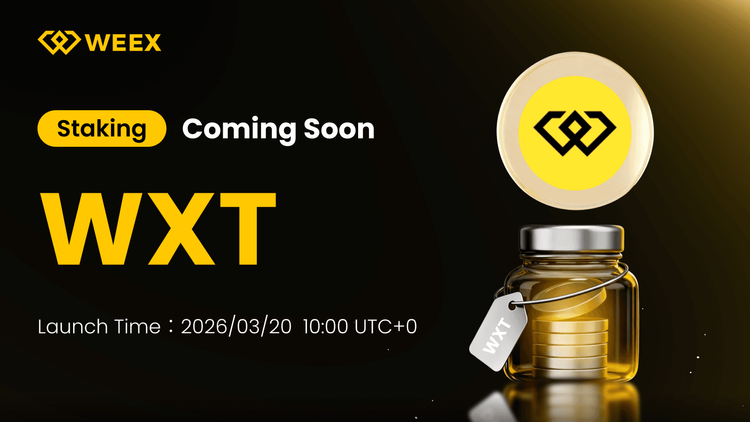
WEEX Launch WXT Staking: What You Need to Know
WXT staking refers to the process of locking your WXT holdings in a staking protocol to earn passive rewards. Unlike Proof-of-Stake networks where staking directly supports blockchain operations, platform-based staking like WEEX Staking allows users to earn yield on their assets through various mechanisms while maintaining flexibility.

WEEX AI Predictions Event: Win 300,000 USDT with DOGE – Round 9 Now Live
join weex ao-powered predictions now!

Is World Rebuilding Trust (WRT) a Good Investment? 2026 Strategic Market Report
Is World Rebuilding Trust (WRT) a good investment in 2026? Read our 3,000-word deep dive into WRT tokenomics, the Solana RWA narrative, and price predictions. Discover the risks and rewards of tokenized reconstruction aid and learn why trading on WEEX provides the essential security for this high-volatility asset.

WEEX Futures Lists BMNRon USDT Perpetual Contract
Trade BitMine Immersion Technologies Tokenized Stock (BMNRon) on WEEX. The BMNR USDT perpetual contract launches Mar 19 with 24/7 access to US stock markets.

WEEX to List SanDisk (SNDK) and Launch SNDK USDT Perpetual Contract
Trade SanDisk (SNDK) Coin and SNDK USDT perpetuals on WEEX Exchange. Explore US stock futures with high leverage on the newly listed SanDisk (SNDK) pair.

WEEX to List MUon and Launch MUon USDT Perpetual Contract
WEEX lists Micron Technology Tokenized Stock (Ondo) (MUon). Trade MUon USDT perpetual contracts on WEEX Exchange with up to 24/7 market access and high liquidity.
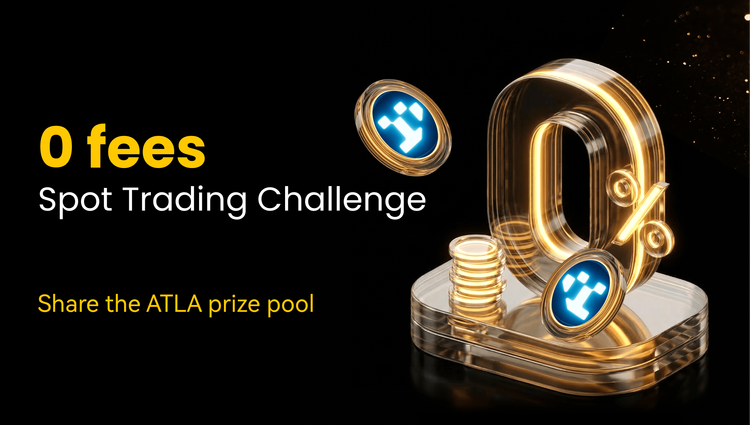
ATLA Trading Competition: Earn Rewards with 0-Fee Trading on WEEX
Join the Atleta Network (ATLA) trading competition on WEEX to earn rewards. Discover how new users can claim free bonuses and benefit from zero-fee trading during this exclusive modular Layer 1 event.
What is EdgeX? $EDGE is available on WEEX Pre-Market
EdgeX is building a parallel, modular execution app-specific execution layer with Ethereum-level security. Now $EDGE is available for pre-market trading on WEEX.
Where and How to Buy SanDisk (SNDK) Crypto in 2026
SanDisk (SNDK), a tokenized derivative of the well-known storage technology company, has caught fresh attention in the crypto…
What is SanDisk (SNDK) Coin? Everything You Need to Know
SanDisk Corporation (Derivatives), identified by the token ticker SNDK, recently made its debut on the WEEX Exchange. As…
What is BitMine Immersion Technologies Tokenized Stock (Ondo) (BMNRon) Coin
BitMine Immersion Technologies Tokenized Stock (Ondo) (BMNRon) has recently garnered attention as it was newly listed on WEEX…
Is SanDisk (SNDK) Coin a Good Investment?
SanDisk (SNDK) has caught attention in the crypto space as a tokenized derivative of the traditional SanDisk Corporation…
Is BMNRon Coin a Good Investment in 2026?
BitMine Immersion Technologies Tokenized Stock (Ondo), known by its token symbol BMNRon, has been making waves in the…


 App
App