
 Buy Crypto
- Markets
 Futures
- Spot
- Copy Trade
- Earn
- More
The Ongoing Evolution of Cryptocurrency Exchanges

Key Takeaways
- Cryptocurrency exchanges continue to adapt, striving to meet growing user expectations and regulatory pressures.
- Technological advancements are at the forefront, enhancing security and user experience.
- Regulatory landscapes create both challenges and opportunities for the industry.
- Emerging trends such as decentralized exchanges and enhanced interoperability are reshaping the market.
WEEX Crypto News, 2025-12-11 14:47:14
In today’s rapidly advancing digital world, cryptocurrency exchanges are at the heart of the financial revolution, constantly evolving to meet the demands of an ever-expanding market. This growth trajectory has been marked by technological innovation, regulatory shifts, and a broader array of services catering to diverse investor needs. This article delves into the significant trends reshaping the cryptocurrency exchange landscape, providing insights into their impact and the future direction of this dynamic industry.
The Impact of Technological Advancements
Cryptocurrency exchanges have seen remarkable technological progress, which has been pivotal in shaping their operations and enhancing user experiences. At the core of these advancements is the deployment of cutting-edge blockchain technology, which ensures transparency, security, and efficiency in transactions. As a result, exchanges have become more robust, reducing the risk of fraud and improving overall trust among users.
Enhanced Security Protocols
One of the foremost areas where technological innovation has made a substantial impact is in security protocols. Given the high-profile nature of digital assets, ensuring the safety of funds and personal information is paramount. Advances such as multi-signature wallets, biometric authentication, and sophisticated encryption methods have fortified exchanges against cyber threats. Additionally, the implementation of advanced machine learning algorithms has enabled exchanges to detect fraudulent activity in real time, thereby safeguarding users’ assets.
Improved User Experience
Technological advancements have also significantly improved the user experience on cryptocurrency exchanges. Modern trading platforms are more intuitive, providing features like real-time data analytics, customizable dashboards, and a smoother user interface. Such enhancements cater to both novice and experienced traders by simplifying the trading process and offering tools that assist in making informed investment decisions.
Furthermore, the integration of artificial intelligence (AI) and machine learning (ML) into exchange platforms has personalized user experiences by offering insights based on historical trading patterns and preferences. This fusion of technology with finance not only streamlines operations but also empowers users with data-driven strategies.
Navigating the Regulatory Landscape
The regulatory environment for cryptocurrency exchanges is continually evolving, presenting both challenges and opportunities. While regulations can impose constraints, they also lend credibility and legitimacy to the market, paving the way for mainstream adoption.
Legal Compliance and Global Standards
Compliance with regulatory standards is essential for exchanges to operate legally within different jurisdictions. This compliance often involves adhering to anti-money laundering (AML) and know-your-customer (KYC) protocols, which help prevent illicit activities. Exchanges that proactively align with global regulatory standards are more likely to gain trust from both investors and regulators, thus facilitating smoother operations and expansion into new markets.
Challenges in Regulatory Enforcement
Despite the benefits of regulation, exchanges often face challenges in adapting to different legal frameworks, particularly as these frameworks can vary significantly between countries. This inconsistency makes it difficult for exchanges to operate seamlessly across borders, impacting their ability to offer services on a global scale. However, many exchanges are overcoming these hurdles by seeking licenses in key jurisdictions and engaging with regulatory bodies to shape future policies.
Emergence of Decentralized Exchanges
A noteworthy trend in the cryptocurrency space is the rise of decentralized exchanges (DEXs). These platforms facilitate peer-to-peer trading without intermediaries, offering users greater control over their assets and enhancing privacy. The growing popularity of DEXs reflects a broader shift towards decentralization and self-sovereignty in the crypto community.
Advantages of Decentralized Exchanges
Decentralized exchanges bring several advantages to the table. Without a central authority, they reduce the risk of server downtime and hacking incidents associated with centralized exchanges. Additionally, DEXs often impose lower fees, as they eliminate the need for complex infrastructures required by centralized platforms.
Moreover, the architecture of DEXs enhances user privacy, as they often do not require extensive personal information for transactions. This aligns with the core philosophy of cryptocurrencies, emphasizing anonymity and the democratization of financial services.
Challenges and Limitations
Despite their advantages, decentralized exchanges face several challenges, primarily related to liquidity and user experience. They generally struggle with limited trading volumes compared to their centralized counterparts, which can lead to higher slippage during transactions. Additionally, the technical complexity of using DEXs can pose a barrier to entry for new users, although ongoing development efforts aim to streamline these processes.
Interoperability and Integrated Services
As the number of digital assets and trading platforms increases, the demand for interoperability between different blockchain networks is rising. Interoperability facilitates seamless asset transfers and transactions across different ecosystems, enhancing the overall utility and value of digital currencies.
Cross-Platform Innovations
Several exchange platforms are pioneering interoperability solutions. By utilizing protocols like atomic swaps and blockchain-agnostic technologies, these platforms allow users to trade assets across different chains without relying on centralized intermediaries. This level of integration not only broadens the trading possibilities for users but also fosters innovation within the industry by encouraging collaboration across platforms.
Integrated Financial Services
In addition to interoperability, cryptocurrency exchanges are expanding their services beyond simple trading. Many platforms now offer a suite of financial products, including lending, borrowing, staking, and yield farming. By diversifying their offerings, exchanges cater to a wider audience, blending traditional financial models with innovative blockchain-based solutions.
Looking Ahead: The Future of Exchanges
The future of cryptocurrency exchanges is poised for continued transformation. As these platforms evolve, they are likely to see further integration with traditional financial systems, fostering broader acceptance and use of digital currencies. Key areas of focus will include enhancing user accessibility, improving security standards, and refining regulatory compliance strategies.
Integration with Traditional Finance
A significant development within the exchange landscape is the potential integration with traditional financial systems. This merging of worlds could lead to improved liquidity, wider acceptance of cryptocurrencies as legitimate financial instruments, and a gradual blurring of boundaries between digital and fiat currencies.
Sustainability and Environmental Concerns
As the industry grows, it will increasingly focus on sustainable practices. The environmental impact of blockchain technology, particularly in relation to energy consumption, has become a critical issue. Exchanges and blockchain networks are investing in more efficient consensus mechanisms and exploring renewable energy sources to mitigate their environmental footprint.
Conclusion
Cryptocurrency exchanges remain central to the burgeoning digital economy, continually adapting to new technological advancements and regulatory environments. By embracing innovation and aligning with global standards, exchanges are set to play an integral role in facilitating the next wave of financial inclusion and economic transformation.
FAQs
What are the main types of cryptocurrency exchanges?
Cryptocurrency exchanges can be broadly categorized into centralized and decentralized exchanges. Centralized exchanges (CEXs) are run by a central entity and typically offer higher liquidity and a more user-friendly experience. Decentralized exchanges (DEXs) operate without intermediaries, offering greater privacy and control over assets.
How do cryptocurrency exchanges ensure the security of user funds?
Exchanges employ a variety of security measures to protect user funds, including multi-signature wallets, two-factor authentication (2FA), and advanced encryption protocols. Additionally, many platforms implement real-time monitoring to detect suspicious activities and prevent breaches.
How are cryptocurrency exchanges regulated?
Regulation varies by jurisdiction but generally involves compliance with standards such as anti-money laundering (AML) and know-your-customer (KYC) requirements. Some exchanges obtain licenses to operate legally across different markets, which helps in gaining regulatory approval and customer trust.
What is the difference between a centralized and a decentralized exchange?
The main difference lies in the control of assets and the presence of intermediaries. Centralized exchanges manage trading operations and custody of funds, whereas decentralized exchanges facilitate peer-to-peer transactions without central oversight, allowing users more control over their assets.
What should I consider when choosing a cryptocurrency exchange?
When choosing an exchange, consider factors such as security features, range of available cryptocurrencies, user interface, fees, and regulatory compliance. Additionally, it’s important to research the exchange’s reputation and past performance to ensure reliability and trustworthiness.
You may also like

The flow of stablecoins and the spillover effects in the foreign exchange market

After two years, Hong Kong's first batch of stablecoin licenses finally issued: HSBC, Standard Chartered make the cut
The person who helped TAO rise by 90% has now single-handedly crashed the price again today

3-Minute Guide to Participating in the SpaceX IPO on Bitget

Top 5 Cryptos to Buy in 2026 Q1: A ChatGPT Deep Dive Analysis
Explore the top 5 cryptos to buy in Q1 2026 including BTC, ETH, SOL, TAO, and ONDO. See price outlooks, key narratives, and institutional catalysts shaping the next market move.

How to Earn $15,000 with Idle USDT Before Altcoin Season 2026
Wondering if altcoin season is coming in 2026? Get the latest market update, and learn how to turn your idle stablecoins waiting for entry into extra rewards up to 15,000 USDT.
Can You Win Joker Returns Without Large Trading Volume? 5 Mistakes New Players Make In WEEX Joker Returns Season 2
Can small traders win WEEX Joker Returns 2026 without huge volume? Yes—if you avoid these 5 costly mistakes. Learn how to maximize card draws, use Jokers wisely, and turn small deposits into 15,000 USDT rewards.

Altcoin Season 2026: 4 Stages to Profit (Before the Crowd FOMO In)
Altcoin Season 2026 is starting — discover the 4 key stages of capital rotation (from ETH to PEPE) and how to position before the peak. Learn which tokens will lead each phase and avoid missing the rally.

Will Alt season come in 2026? 5 Tips to Spot the Next 100x Crypto Opportunities
Will altcoin season arrive in 2026? Discover 5 rotation stages, early signals smart traders watch, and the key crypto sectors where the next 100x altcoin opportunities may emerge.

The bear market has arrived, and cryptocurrency ETF issuers are also getting involved

The richest man had a quarrel with his former boss
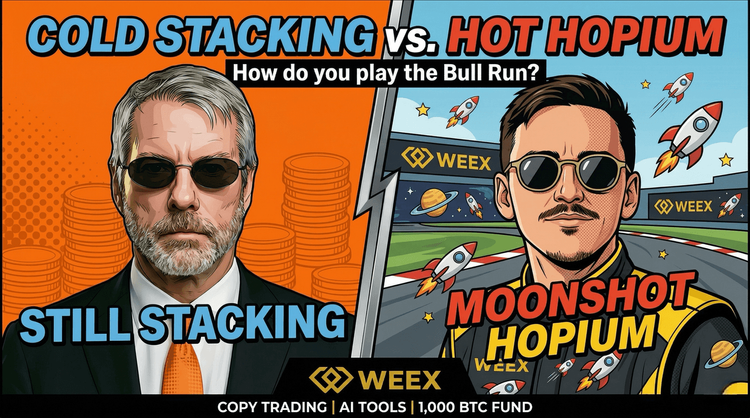
BTC Firm Above 70K! Saylor’s "Institutional Logic" vs. Moon’s "Retail Faith": Who is Really Harvesting the Market?
Bitcoin is holding firm above the $70,000 support level following a massive short squeeze that liquidated $427 million. As the "Four-Year Cycle" narrative shifts, the market is split: Michael Saylor’s cold, institutional "indiscriminate stacking" vs. Carl Moon’s high-energy retail "hopium." This article decodes these two polar-opposite strategies for the 2026 bull run and reveals how WEEX’s institutional-grade liquidity and AI trading tools empower every type of investor to convert market volatility into profit.

The Girl Who Created the SBTI Test: A Story of a Doomed Cyber Love, an E-Widow Ratfolk

B.AI Officially Launched: Building AI Agent Financial Bedrock Platform, Driving AGI Era Business Underlying Logic

B.AI Officially Launched: Breaking Down A2A Collaboration Barriers to Unlock the Smart Body Economy's Full Potential
We helped Xu Mingxing write a book called "<OK Life>".

Rare APY of 400%, is TradeXYZ handing out money to oil bulls?
a16z: Perpetual Contracts are Rewriting Global Trading Rules
The flow of stablecoins and the spillover effects in the foreign exchange market
After two years, Hong Kong's first batch of stablecoin licenses finally issued: HSBC, Standard Chartered make the cut
The person who helped TAO rise by 90% has now single-handedly crashed the price again today
3-Minute Guide to Participating in the SpaceX IPO on Bitget
Top 5 Cryptos to Buy in 2026 Q1: A ChatGPT Deep Dive Analysis
Explore the top 5 cryptos to buy in Q1 2026 including BTC, ETH, SOL, TAO, and ONDO. See price outlooks, key narratives, and institutional catalysts shaping the next market move.
How to Earn $15,000 with Idle USDT Before Altcoin Season 2026
Wondering if altcoin season is coming in 2026? Get the latest market update, and learn how to turn your idle stablecoins waiting for entry into extra rewards up to 15,000 USDT.


 App
App