
- Buy Crypto
- Markets
 Futures
- Spot
- Copy Trade
 Earn
Earn- More
SignalPlus Macro Analysis Special Edition: How High the Bounce?

Original Title: "SignalPlus Macro Analysis Special Edition: How High the Bounce?"
Original Source: SignalPlus Chinese
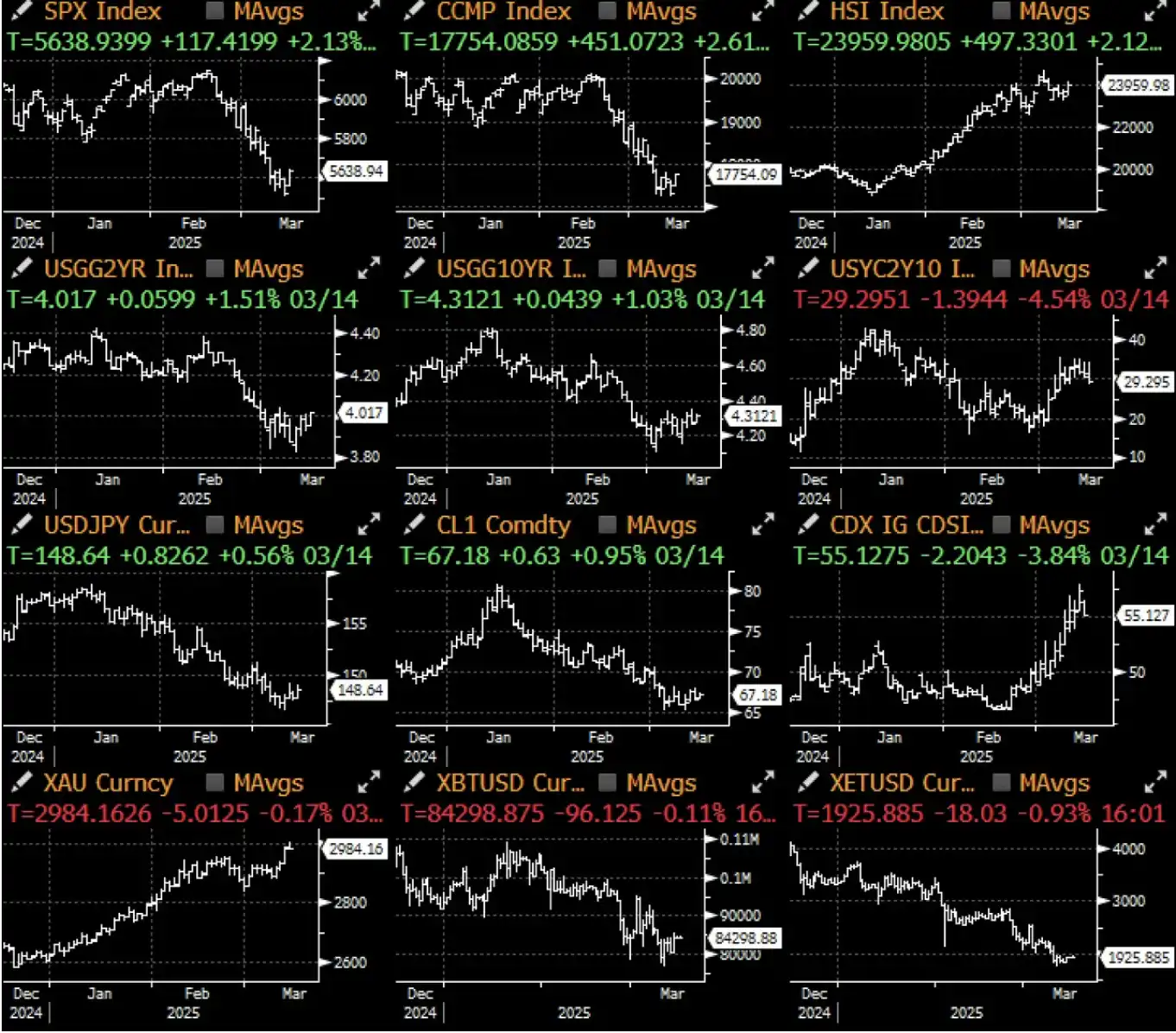
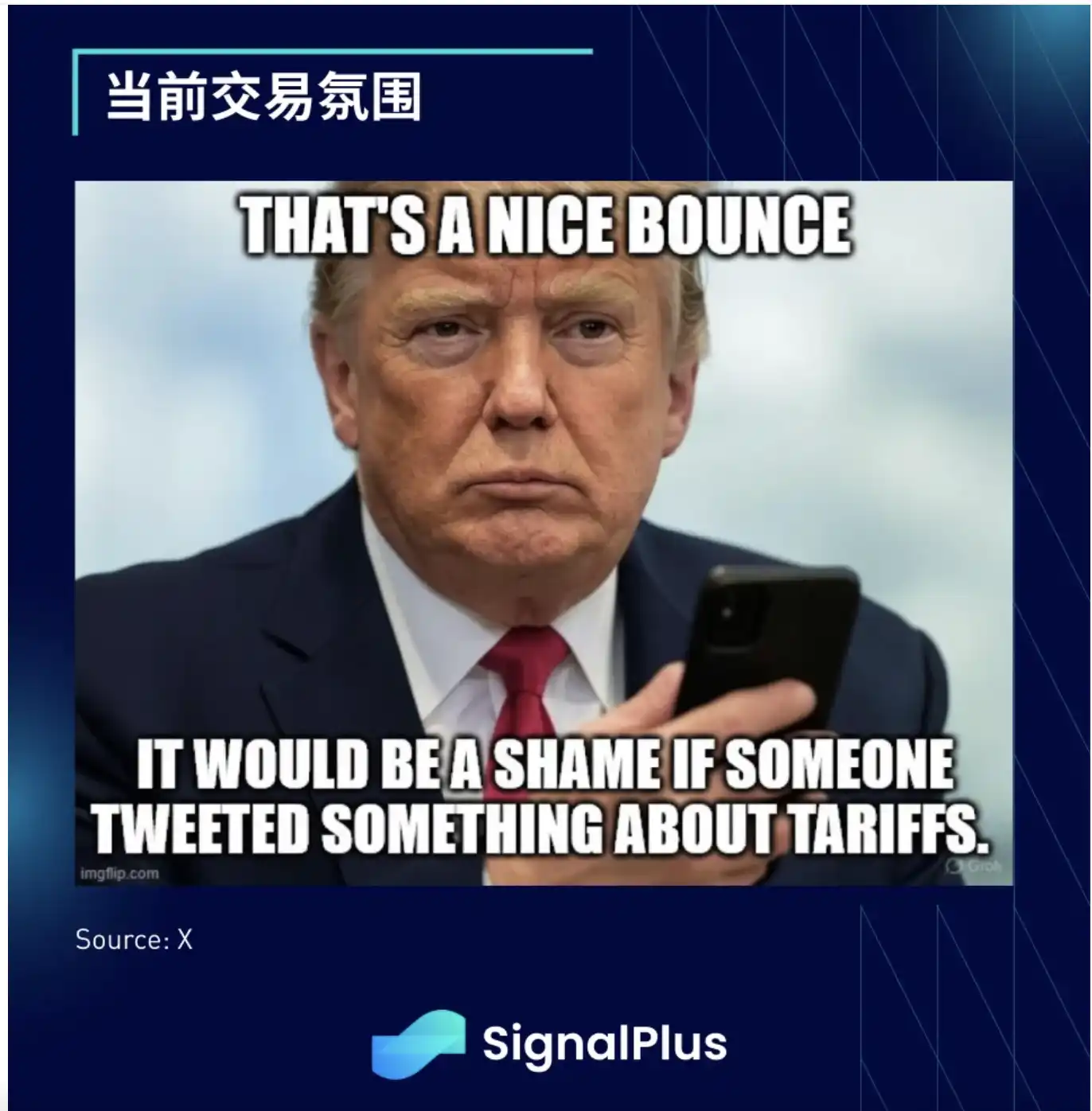
Last week, the asset market once again experienced a roller-coaster-like volatility. However, in the face of various technical indicators (such as the CBOE put/call ratio rising to its highest level since last summer), indicating an extreme oversold condition, the market saw a decent rebound on Thursday/Friday. With no new tariff or geopolitical news, the resolution of the U.S. government shutdown risk, and the U.S. stock market being in an extremely oversold state, the momentum was provided for the over 2% rebound in the market last Friday, although the trading volume remained low.
According to Bloomberg, due to the prevalence of automated trading systems and strict risk control mechanisms, the SPX index took only 16 days to drop more than 10% from its recent high. With technological advances, the speed of market corrections is getting faster, with the last three major sell-offs (2018, 2020, and 2025) being among the sharpest corrections on record.
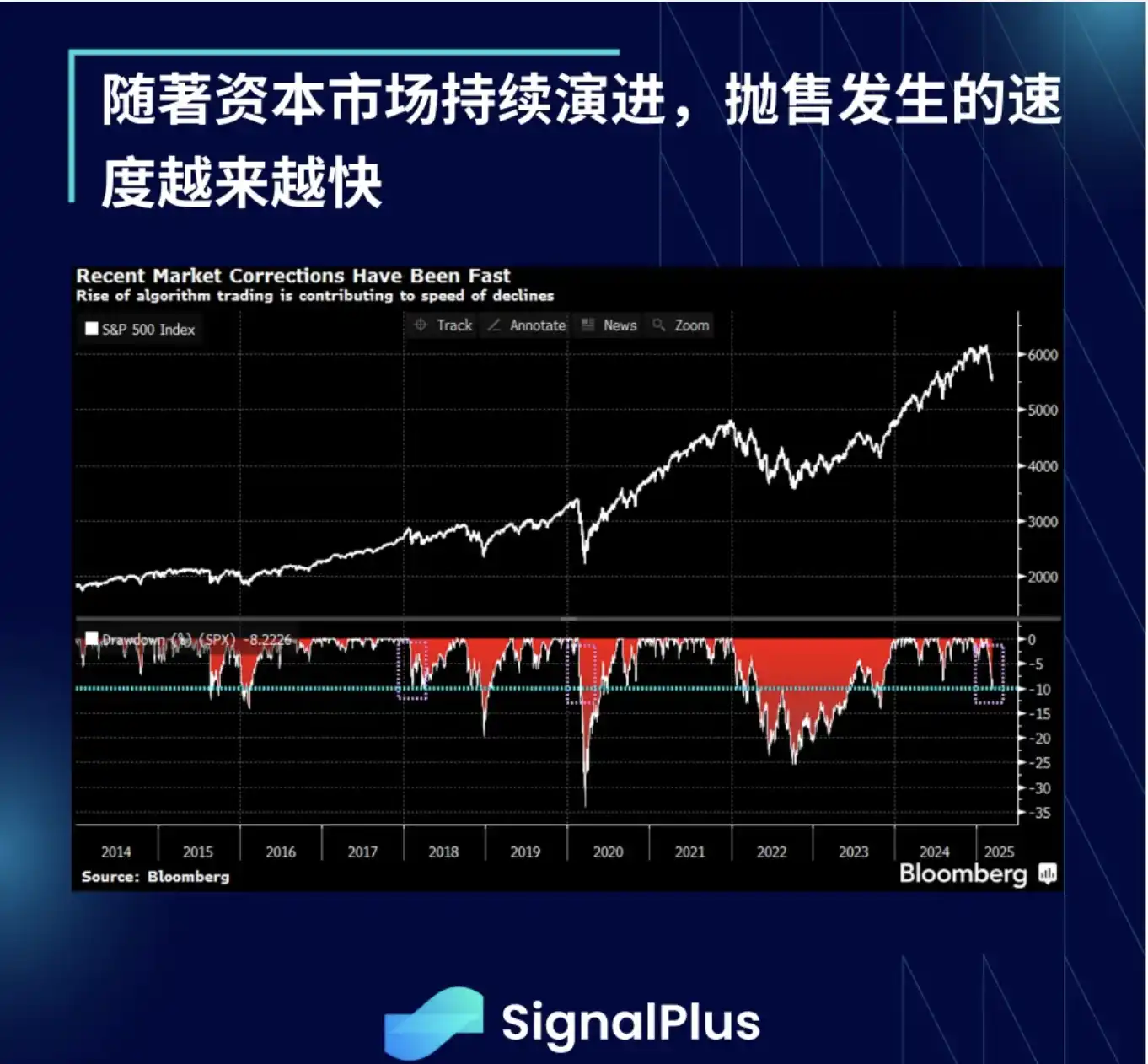
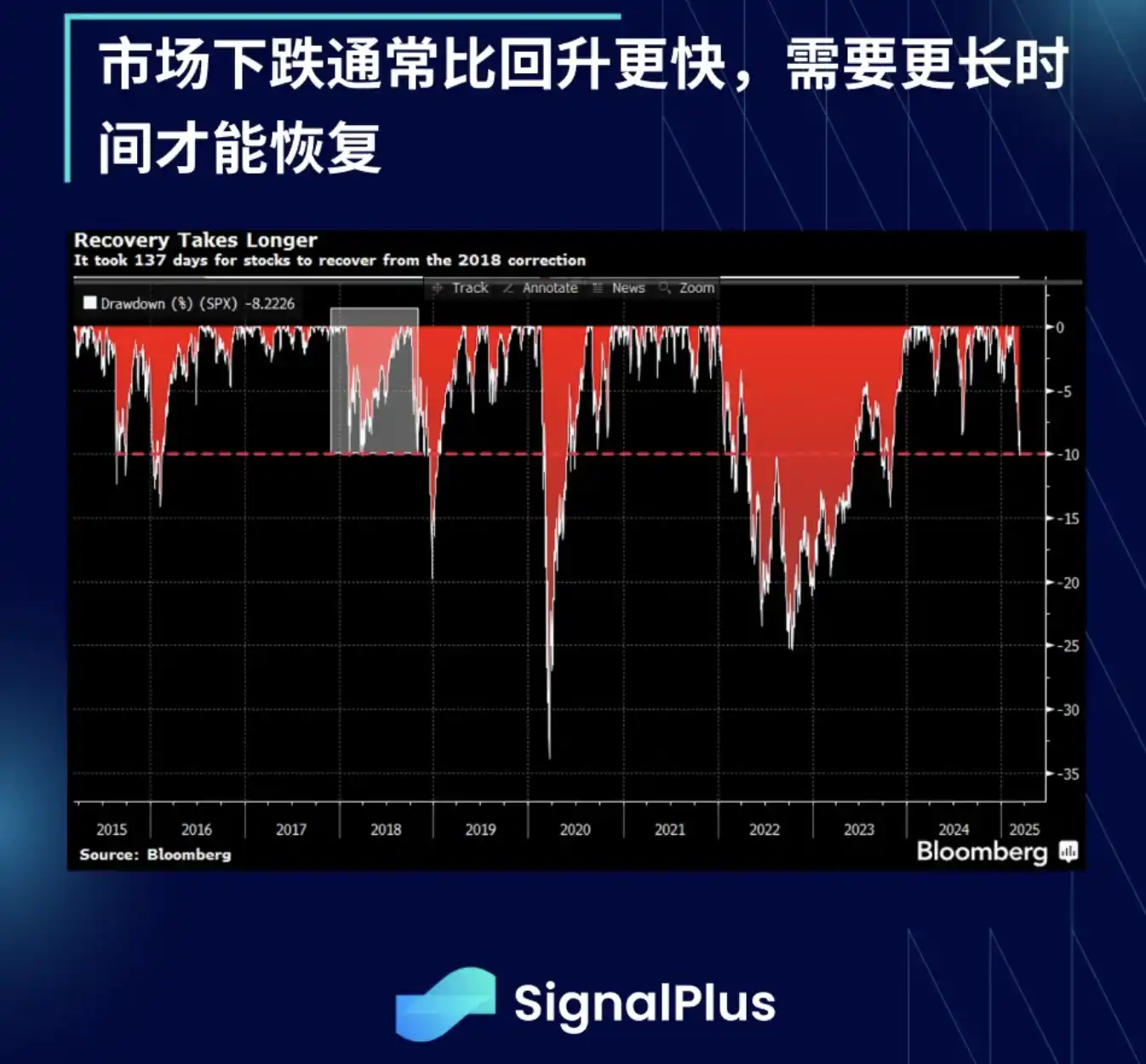
In contrast, market recoveries often take longer as contemporary fund managers are subject to strict risk control constraints. In 2018, the SPX fell by 10% in just two weeks but took nearly 4.5 months to fully recover. Bloomberg pointed out that in the past 24 instances when the market fell by over 10%, the average recovery time was about 8 months, reflecting that the market usually "rises slowly and falls rapidly."
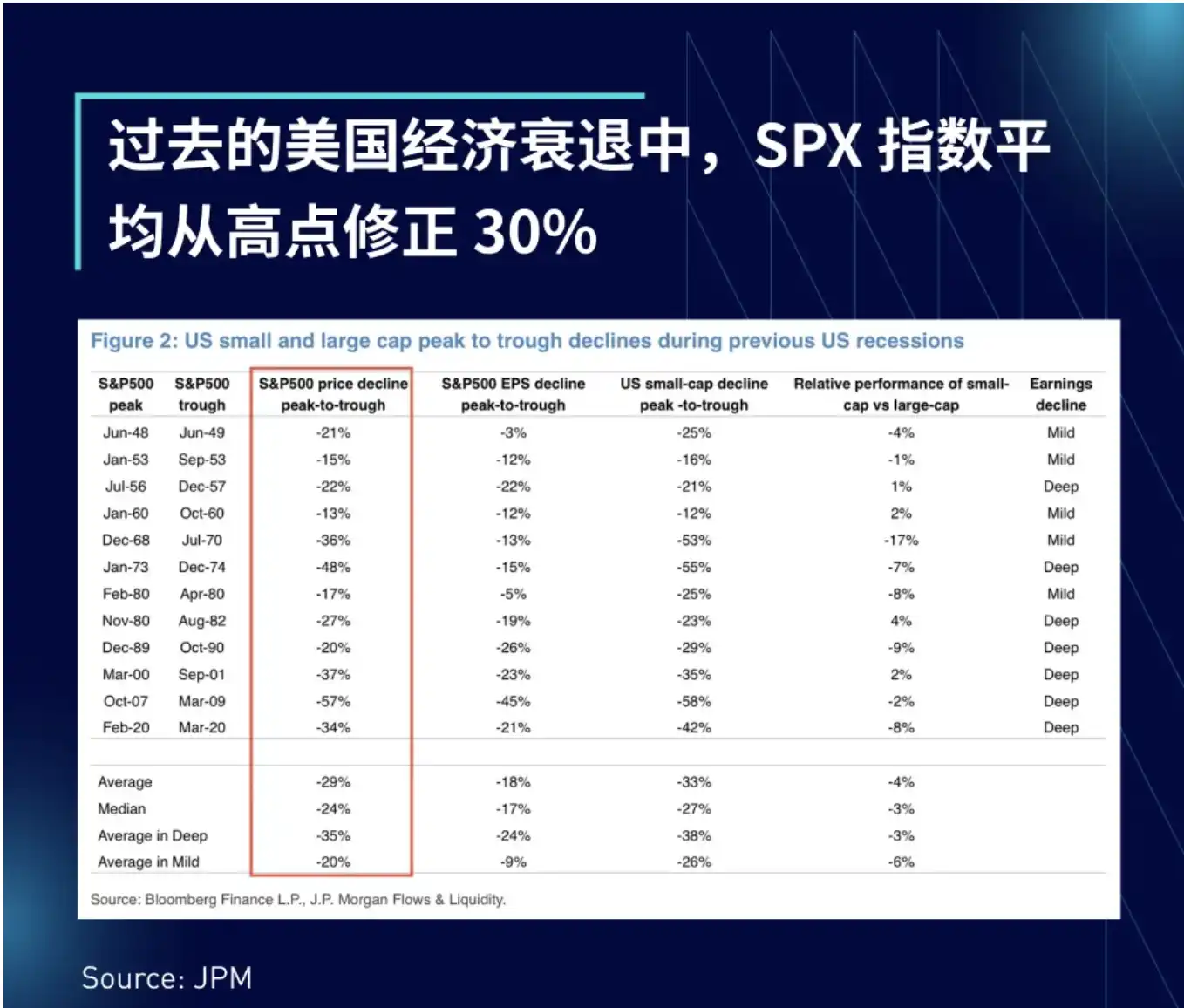
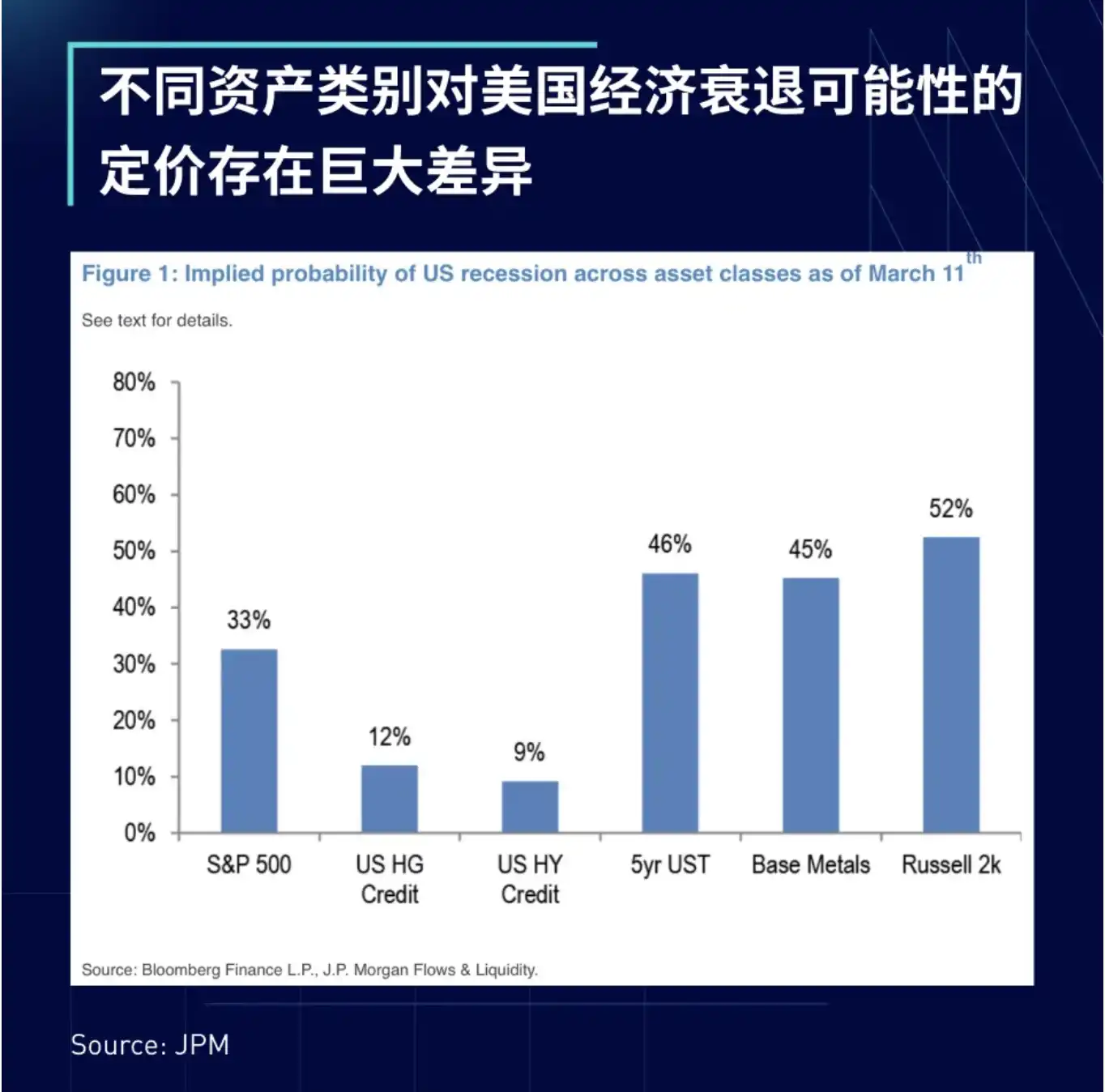
According to J.P. Morgan's data, in the past 12 U.S. economic recessions, the average decline of the U.S. stock market from peak to trough was about 30%, while the current adjustment of the SPX is only 9.5%. A simple calculation suggests that the implied probability of an economic recession in the stock market is around 33%, close to 50% in the commodity and U.S. bond markets, and only 10% in the credit market.
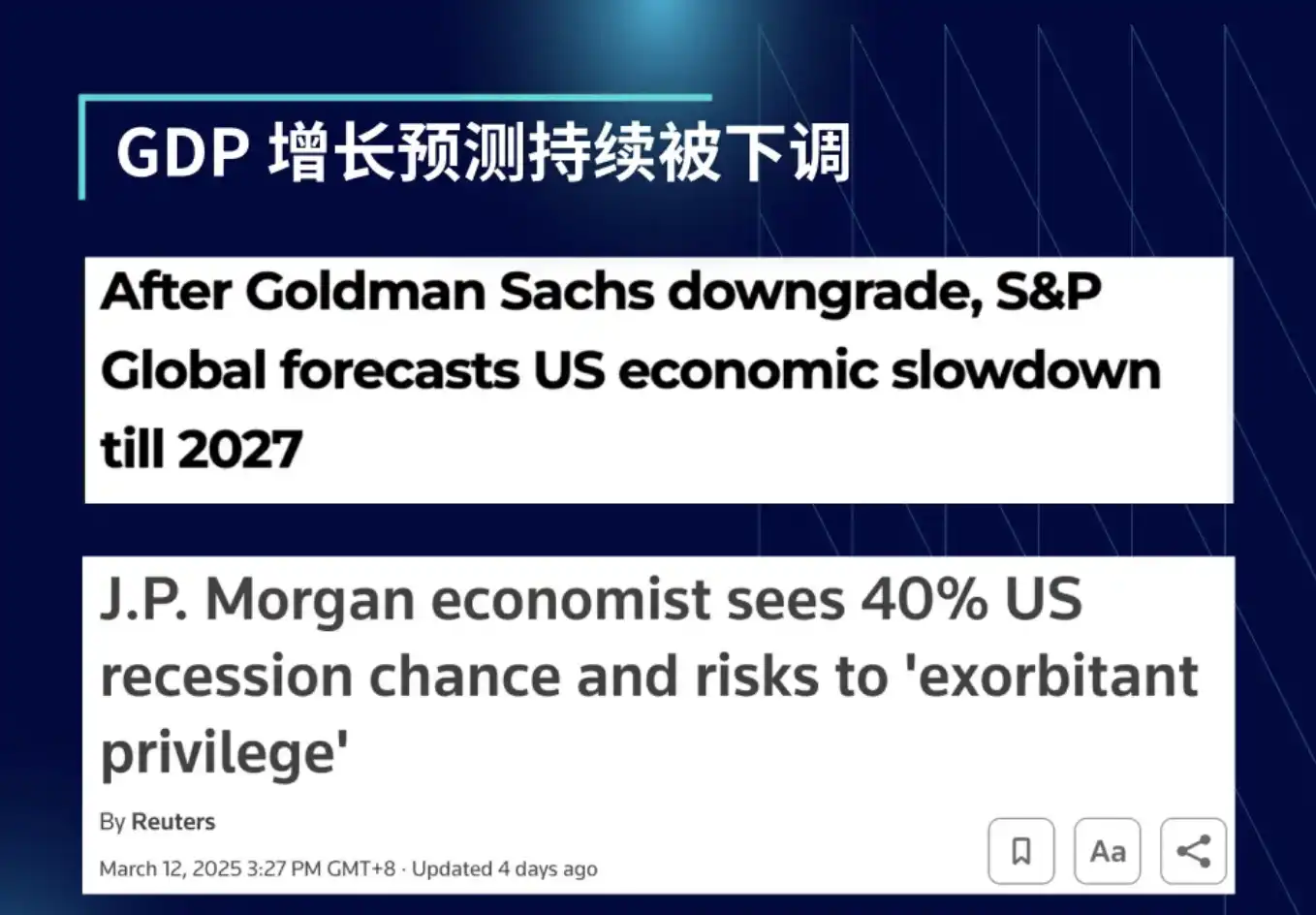
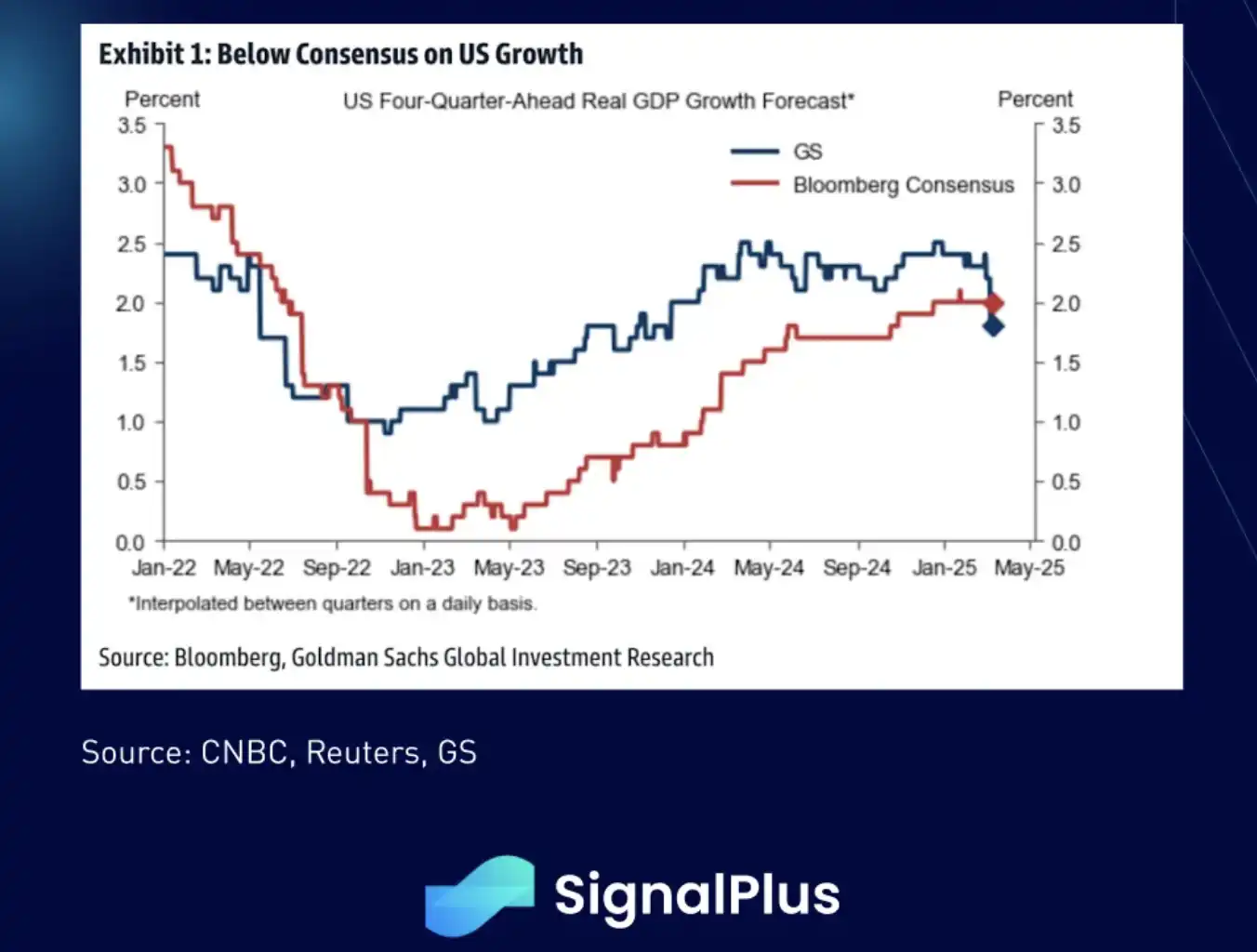
Although the market is still trying to stabilize, Wall Street economists have already reacted proactively. Goldman Sachs became the first major investment bank to significantly cut its U.S. 2025 GDP growth forecast, reducing the growth expectation from 2.4% to 1.7%, and pointed out that due to the increased impact of tariffs, "the major reason for the downgrade is that the assumption about trade policy has become more unfavorable." Meanwhile, J.P. Morgan raised the likelihood of a U.S. economic recession to 40%, noting that its reliance on low financing rates, high capital inflows, and attractive U.S. dollar assets to support the continuously rising fiscal deficit's "exorbitant privilege" is facing risks.
In addition, as the Democratic Party almost entirely conceded to Trump in the government shutdown negotiations, this paved the way for DOGE to continue its aggressive cost-cutting initiatives at least until September.

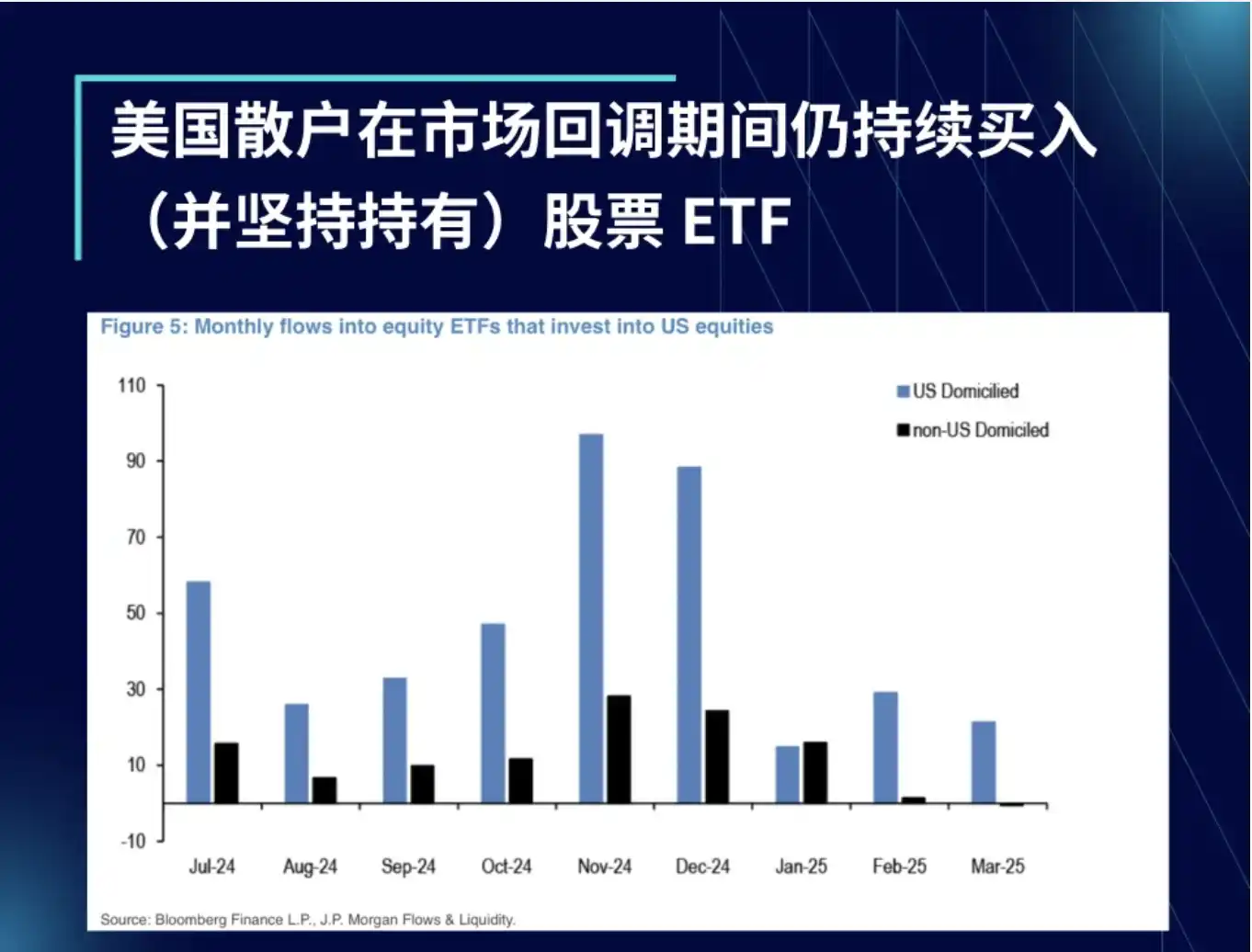
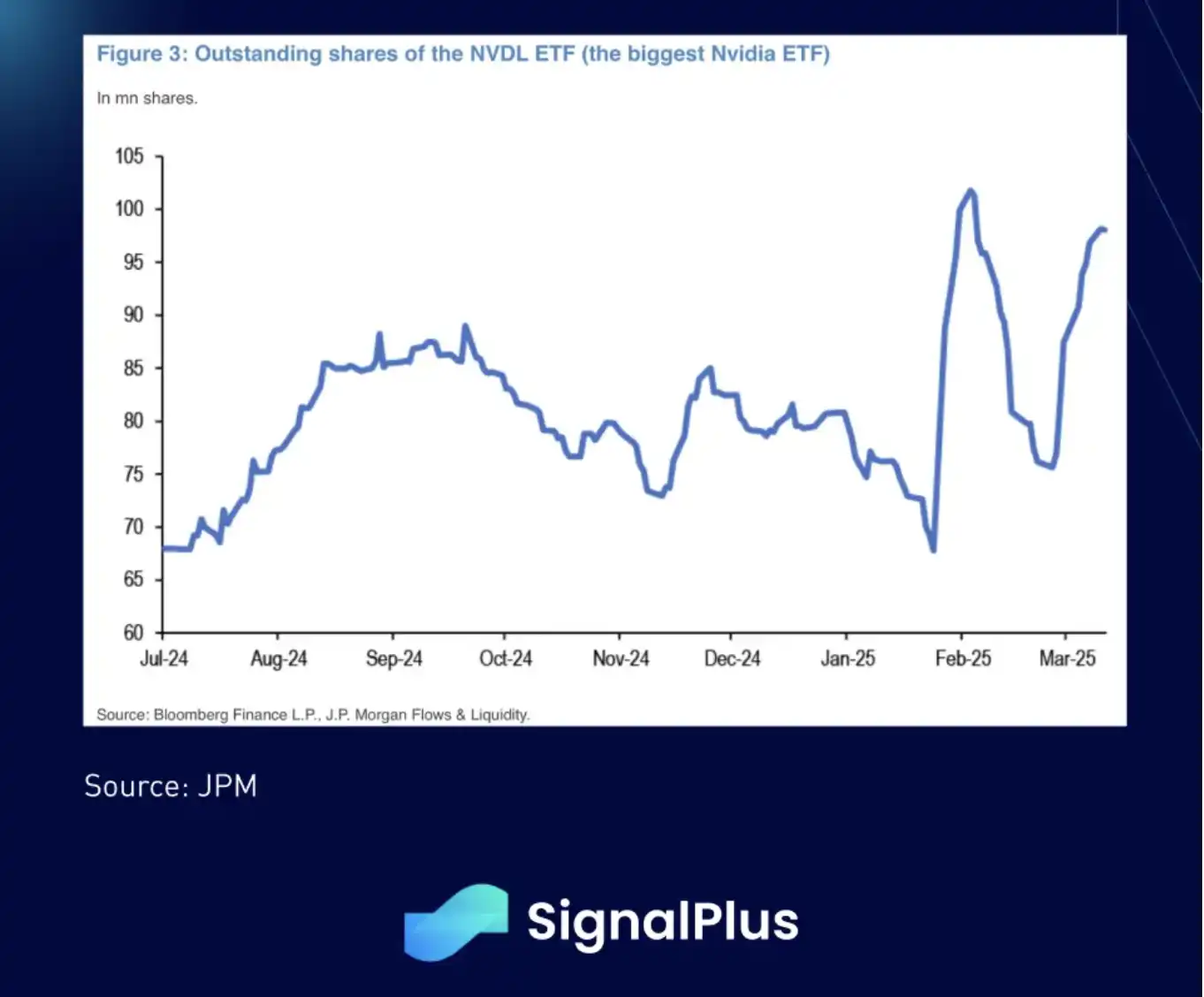
From a data perspective, retail investors seem to have not preemptively adjusted to the economic slowdown. US stock ETFs have seen net inflows almost every day since the peak in February, and holdings in growth ETFs (such as Nvidia) have rebounded to near historic highs.
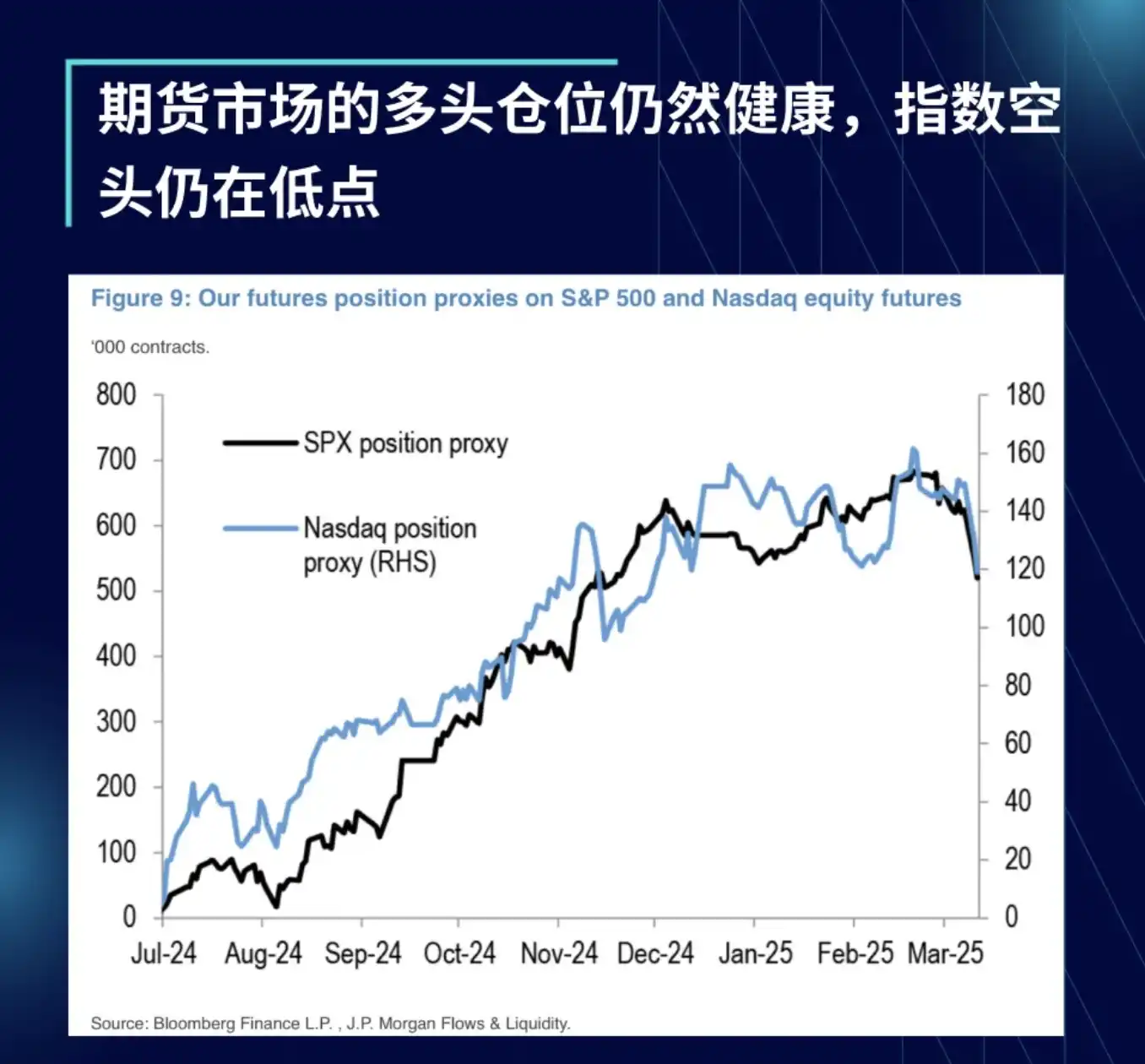
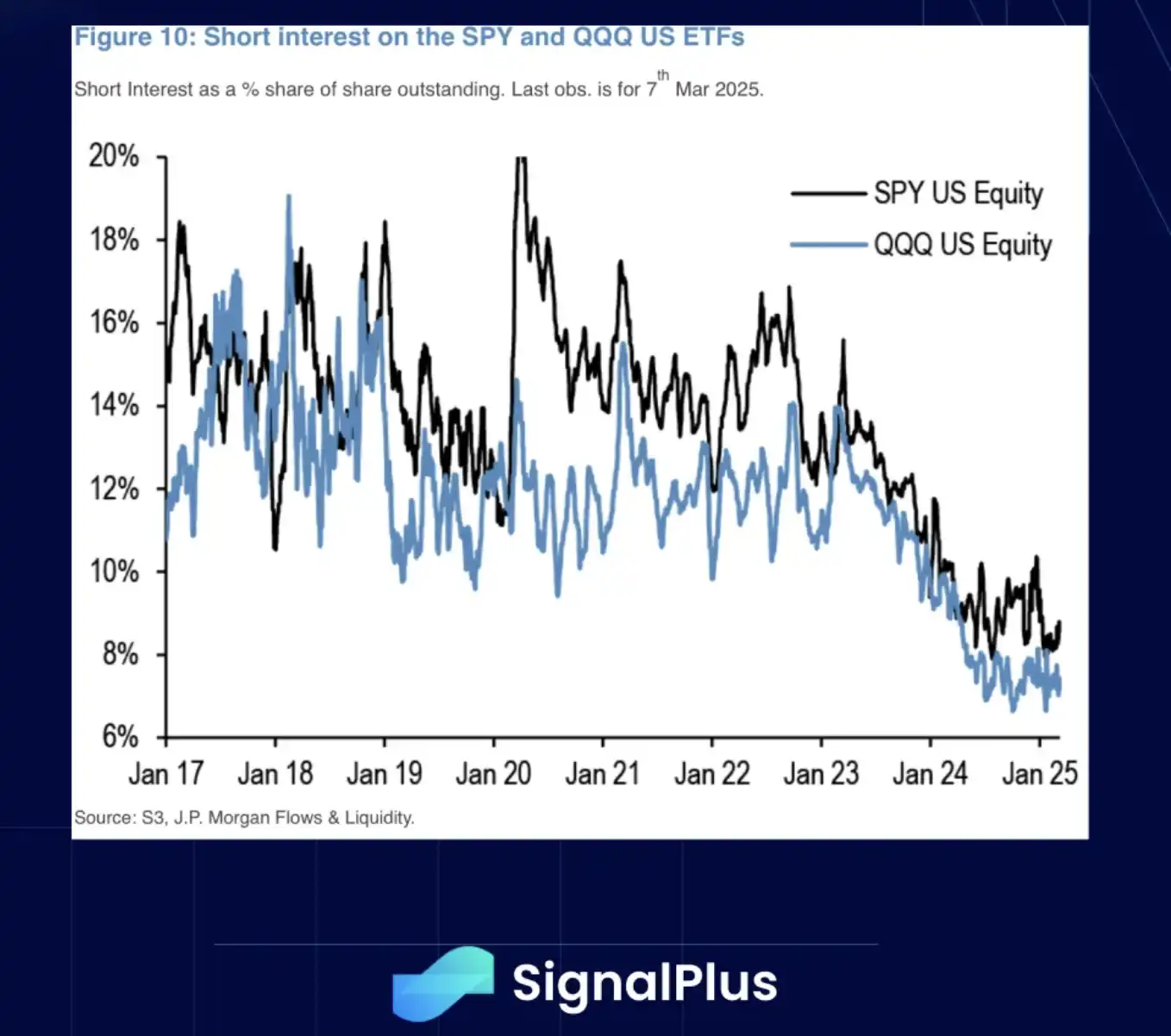
Meanwhile, although long positions in futures have retreated somewhat, they remain elevated relative to historical levels. Additionally, short positions in SPX and Nasdaq are still at lows, indicating a lack of bearish pressure in the market.
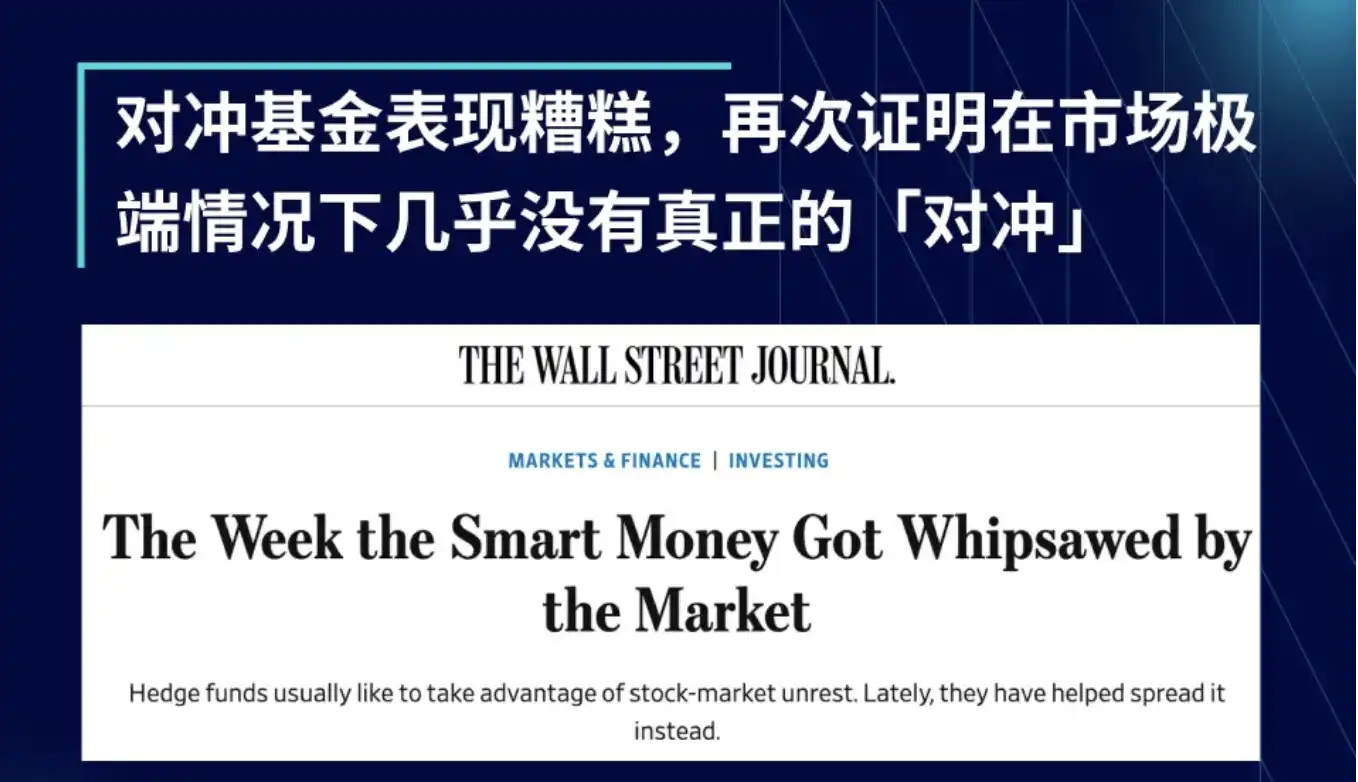
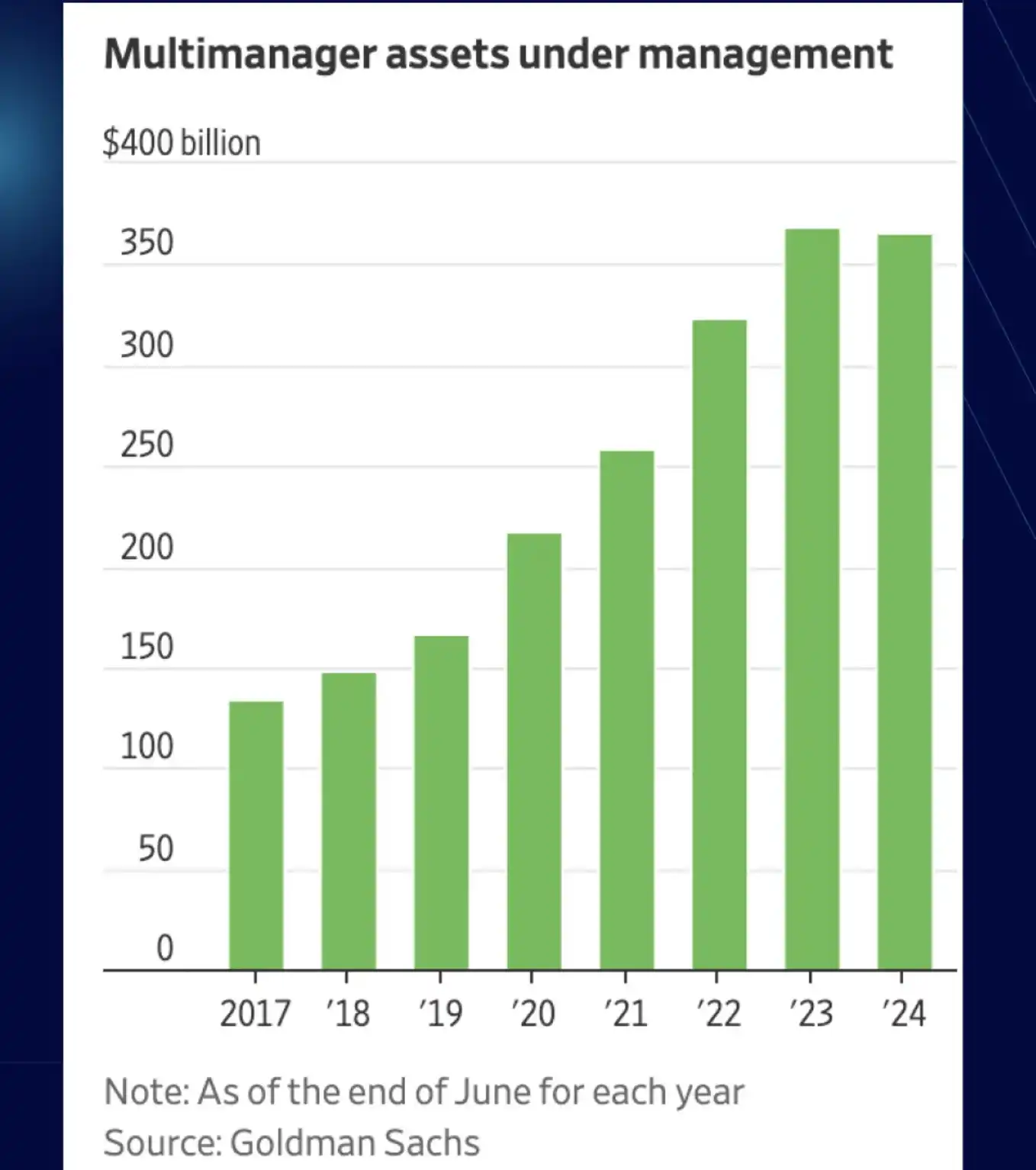
The market believes this selloff primarily originated from the "multi-strategy" hedge funds that dominate the entire macro trading market. The Wall Street Journal reported that top hedge funds (Millennium, Point 72, Citadel, among others) experienced rare multi-standard deviation drawdowns and stop-outs in February and March, which are extremely unusual in their long trading history.
"Tuesday markets remain volatile. Goldman Sachs sent a report to clients stating that long/short equity funds just experienced their worst 14-day performance since May 2022. Millennium Fund dropped 1.3% in February, and in the first 6 days of March, it has already fallen 1.4%, with its two index-rebalancing-focused trading teams having lost about $900 million this year." —WSJ
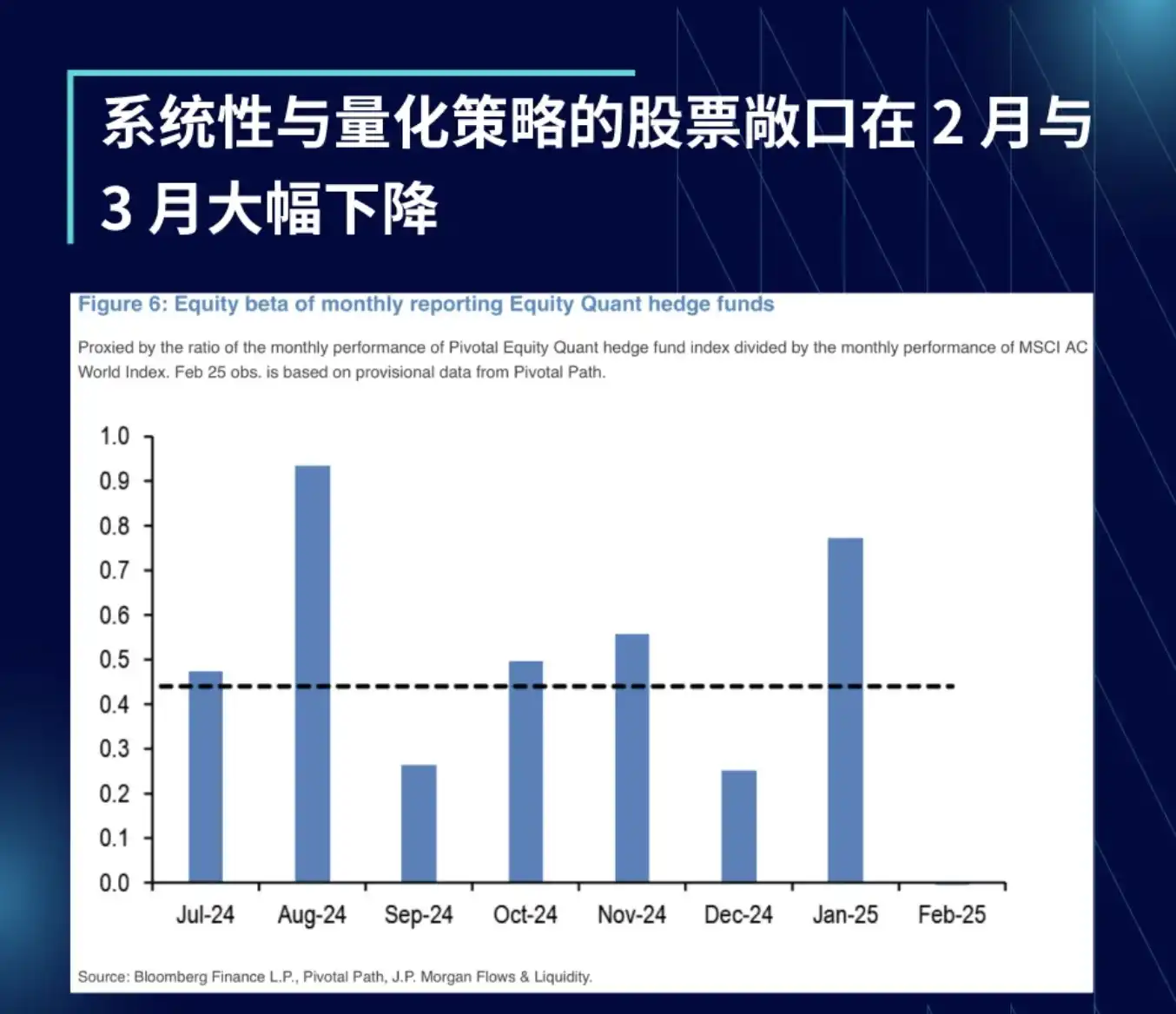
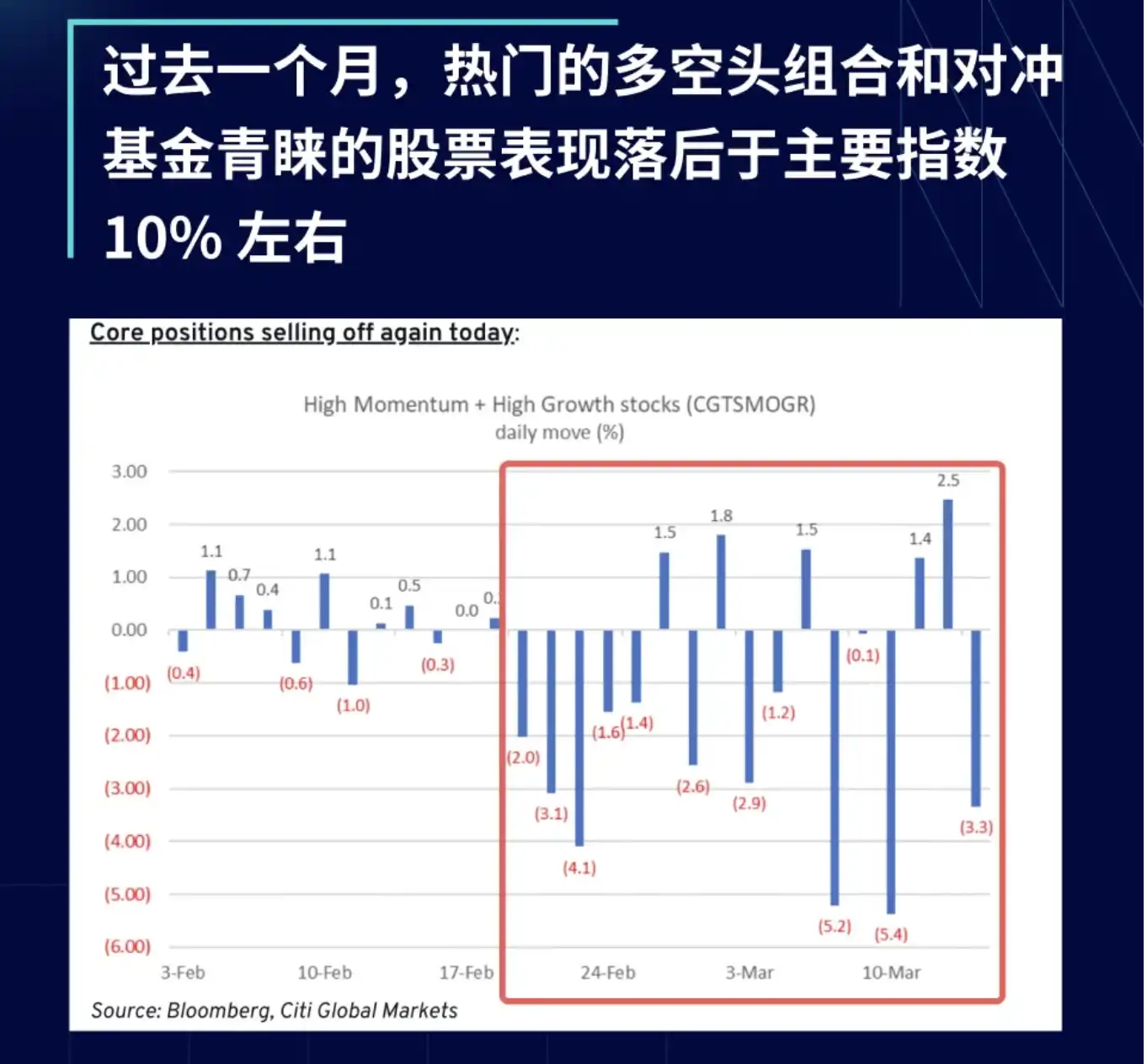
JPMorgan's data further supports this view, showing that stock quant hedge funds' stock risk exposure has significantly dropped, popular long/short pair strategies in growth and momentum trading have been severely impacted, and funds tracking stocks favored by hedge funds have underperformed the SPX by about 10% in the past month.
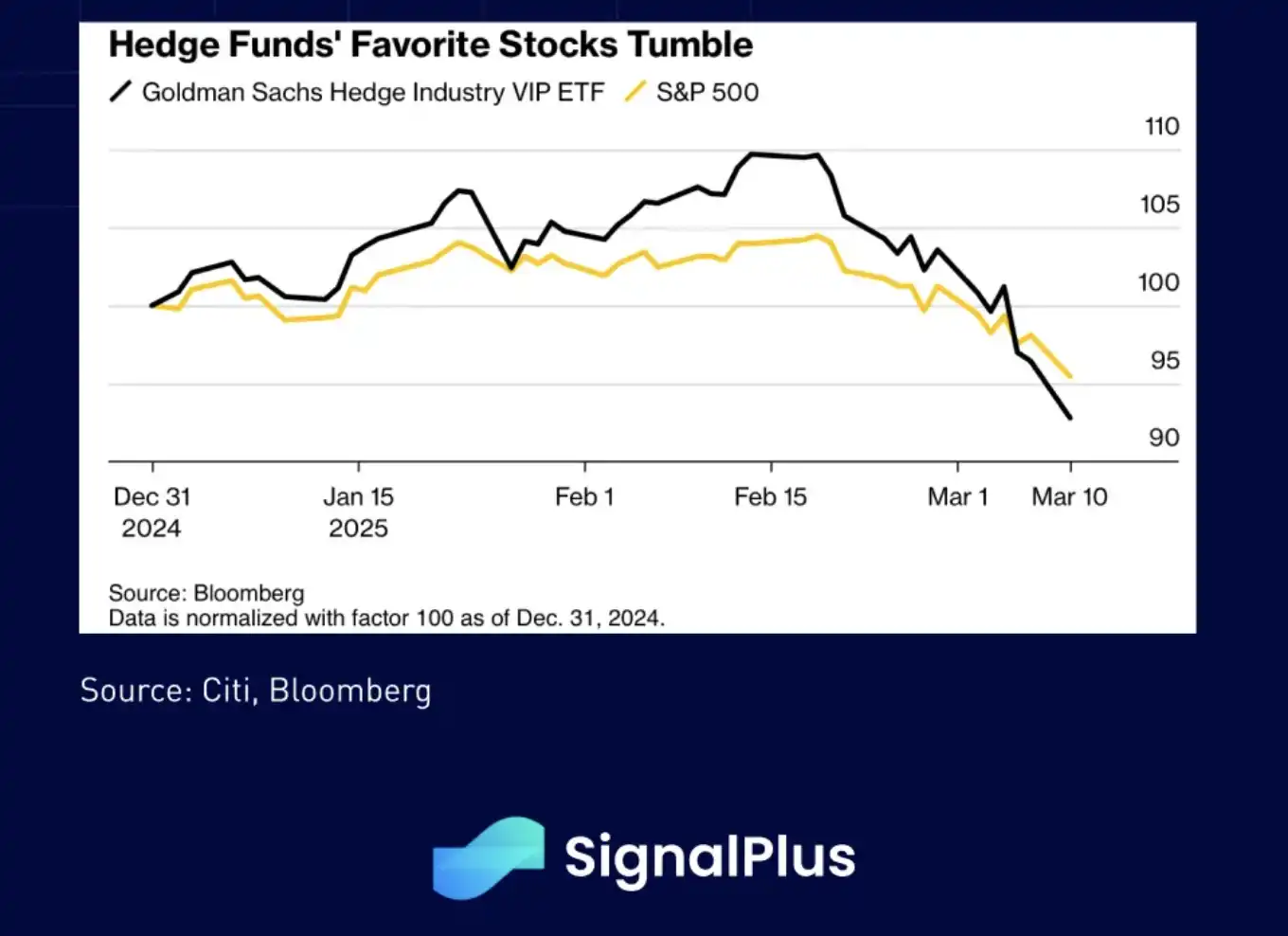
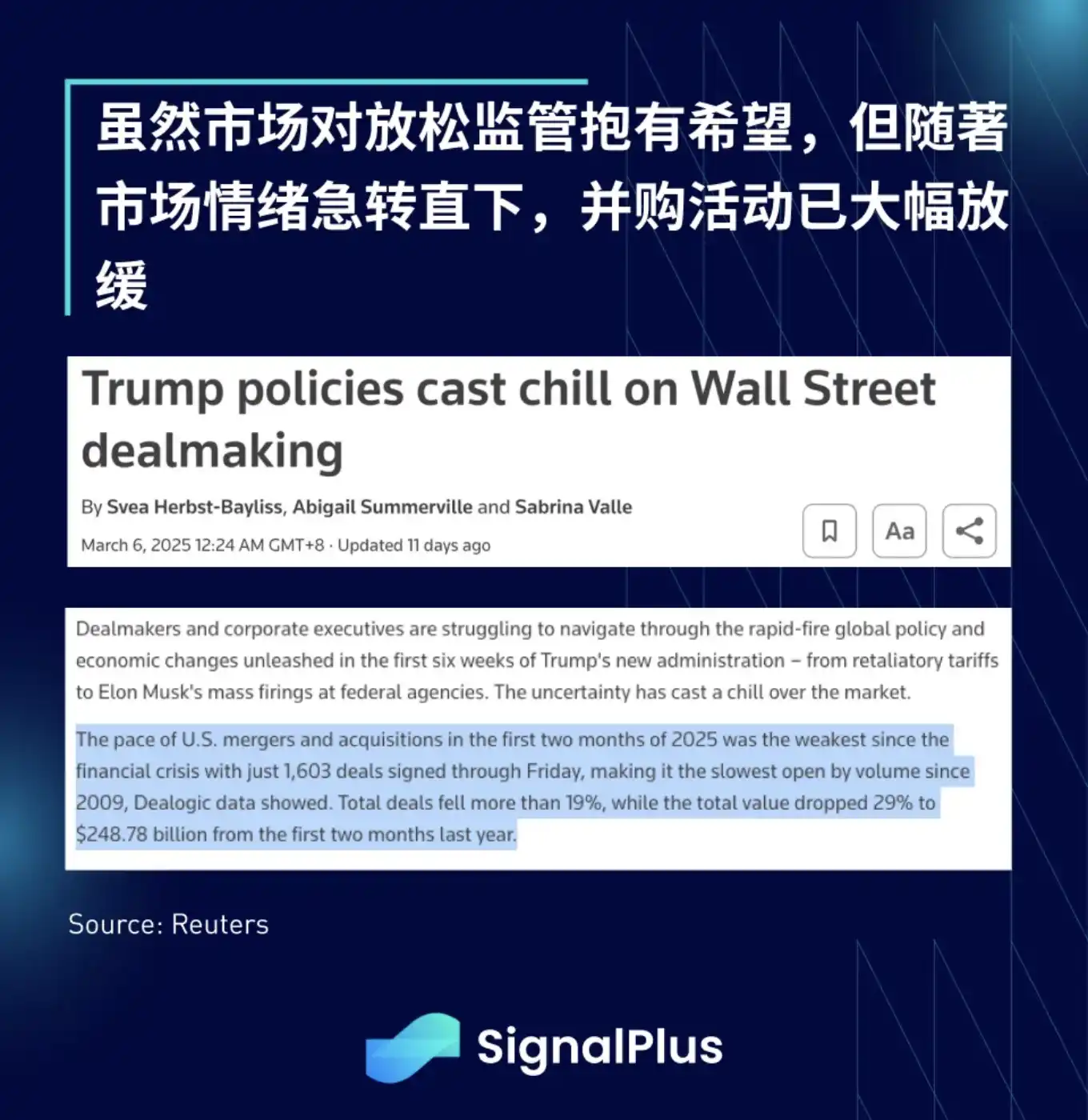
Unfortunately, the market's pain is not limited to public markets, as investment banking activities have also been severely affected, with M&A activity slowing to its worst levels in over 20 years due to tariff uncertainties.
“According to Dealogic data, M&A activity in the United States during the first two months of this year hit the lowest level in over 20 years, with only 1,172 deals completed as of last Friday, totaling $226.8 billion. Compared to the same period last year, both the number and value of transactions have dropped by about one-third, marking the slowest start to a year in terms of deal volume since 2003.” —Reuters
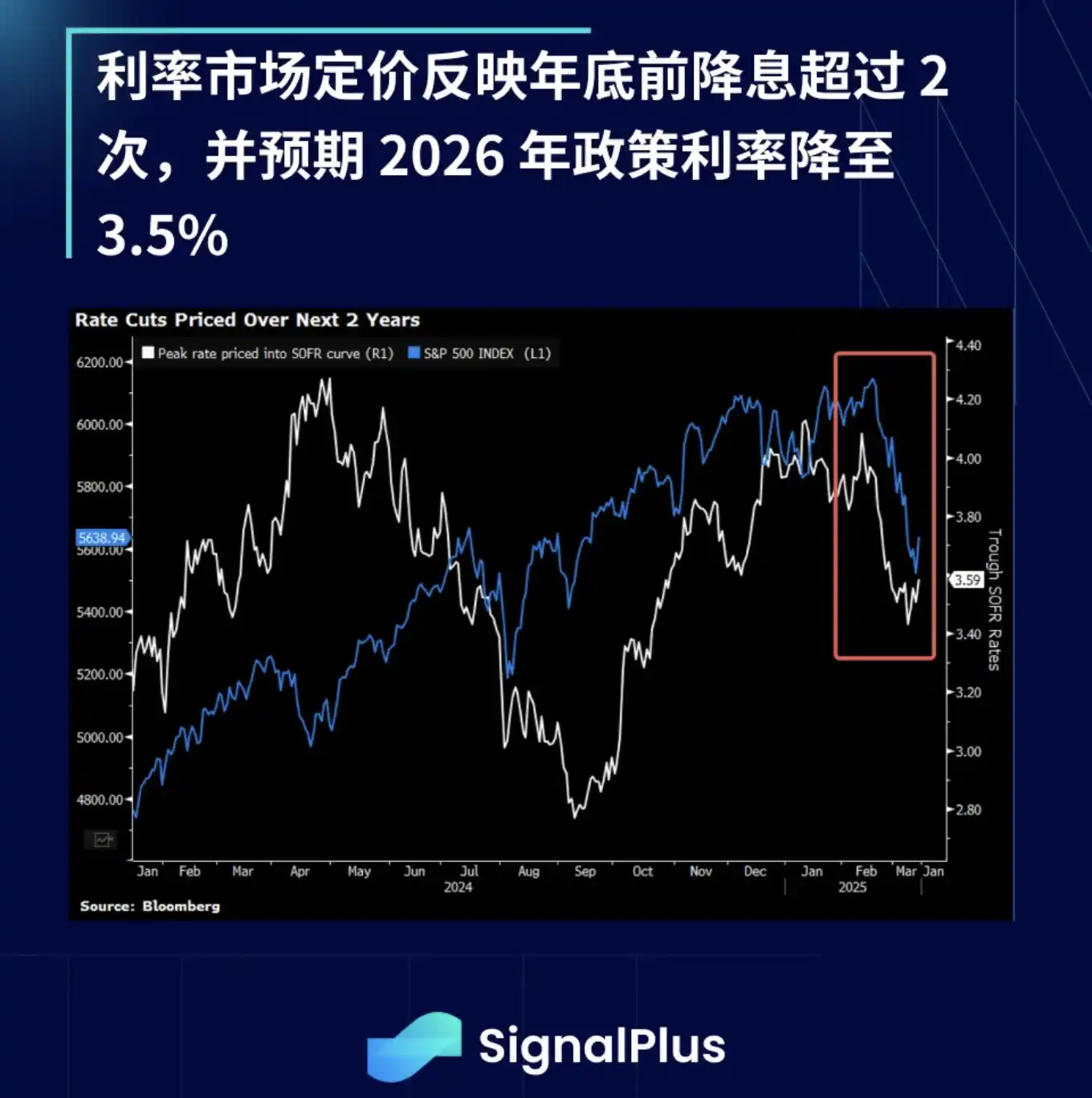
On the other hand, aside from gold, (short-term) fixed income is another major beneficiary of this wave of economic growth anxiety. The futures market is once again repricing, predicting more than 2 rate cuts by year-end, with overnight rates expected to drop to around 3.5% by the end of next year.
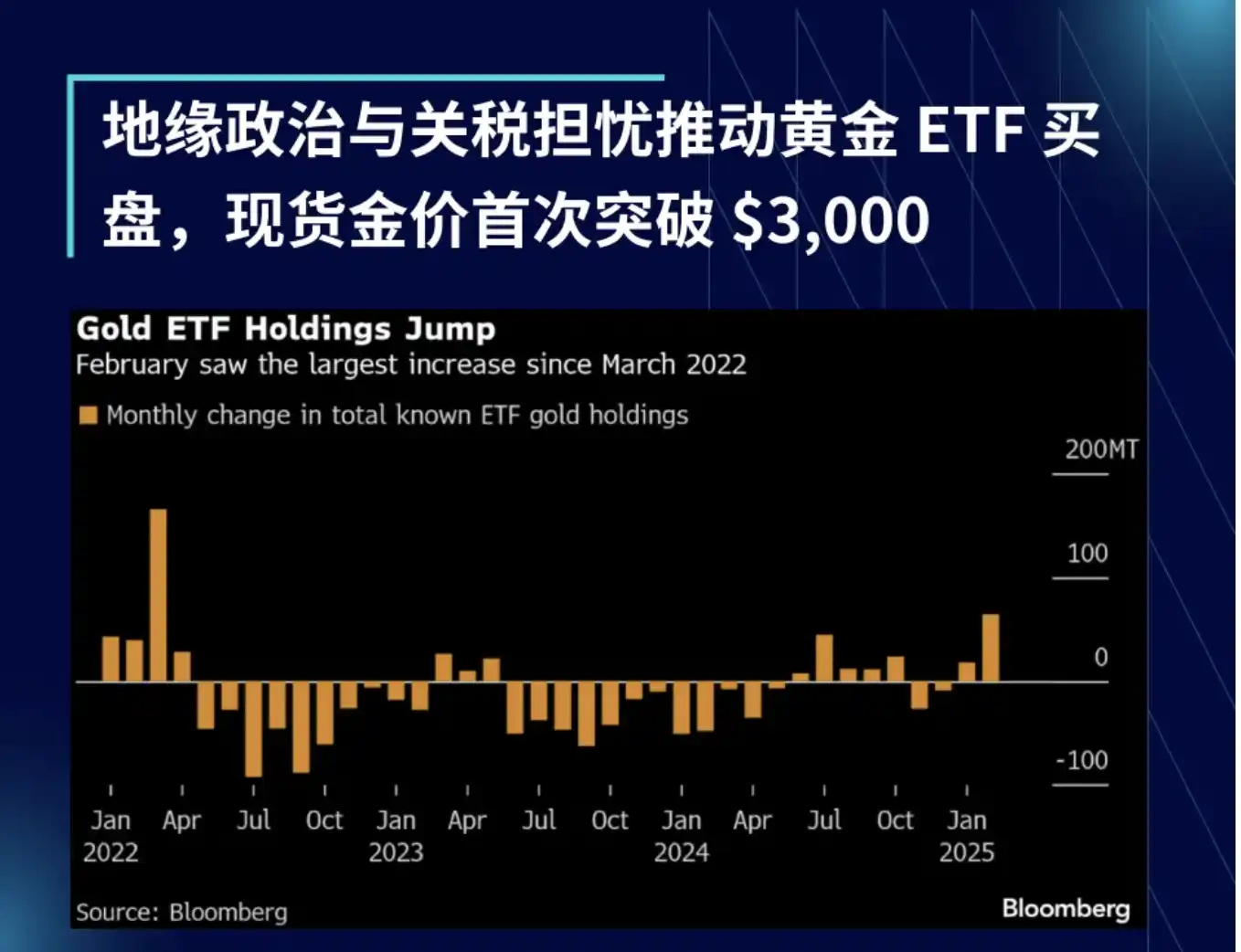
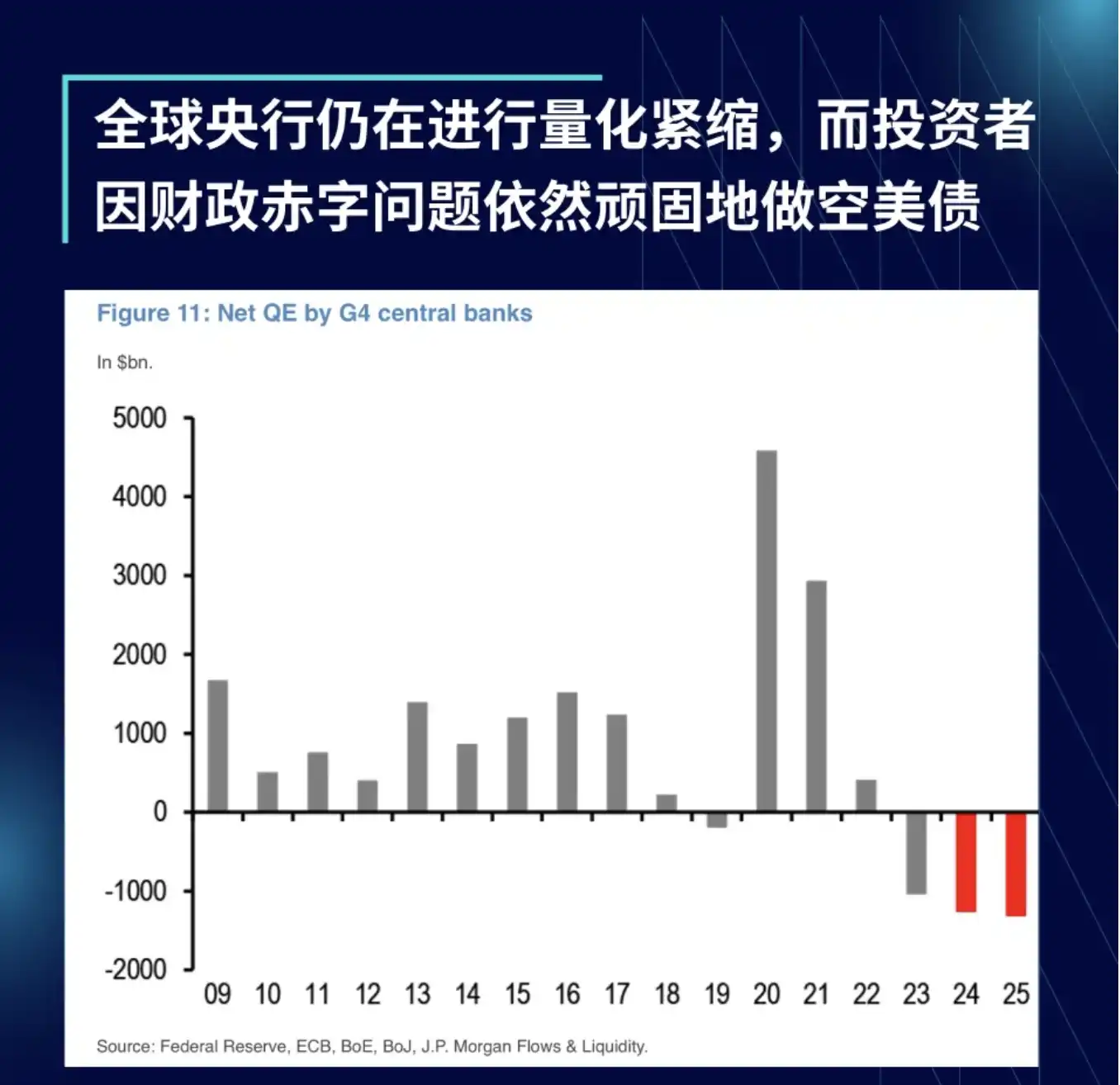
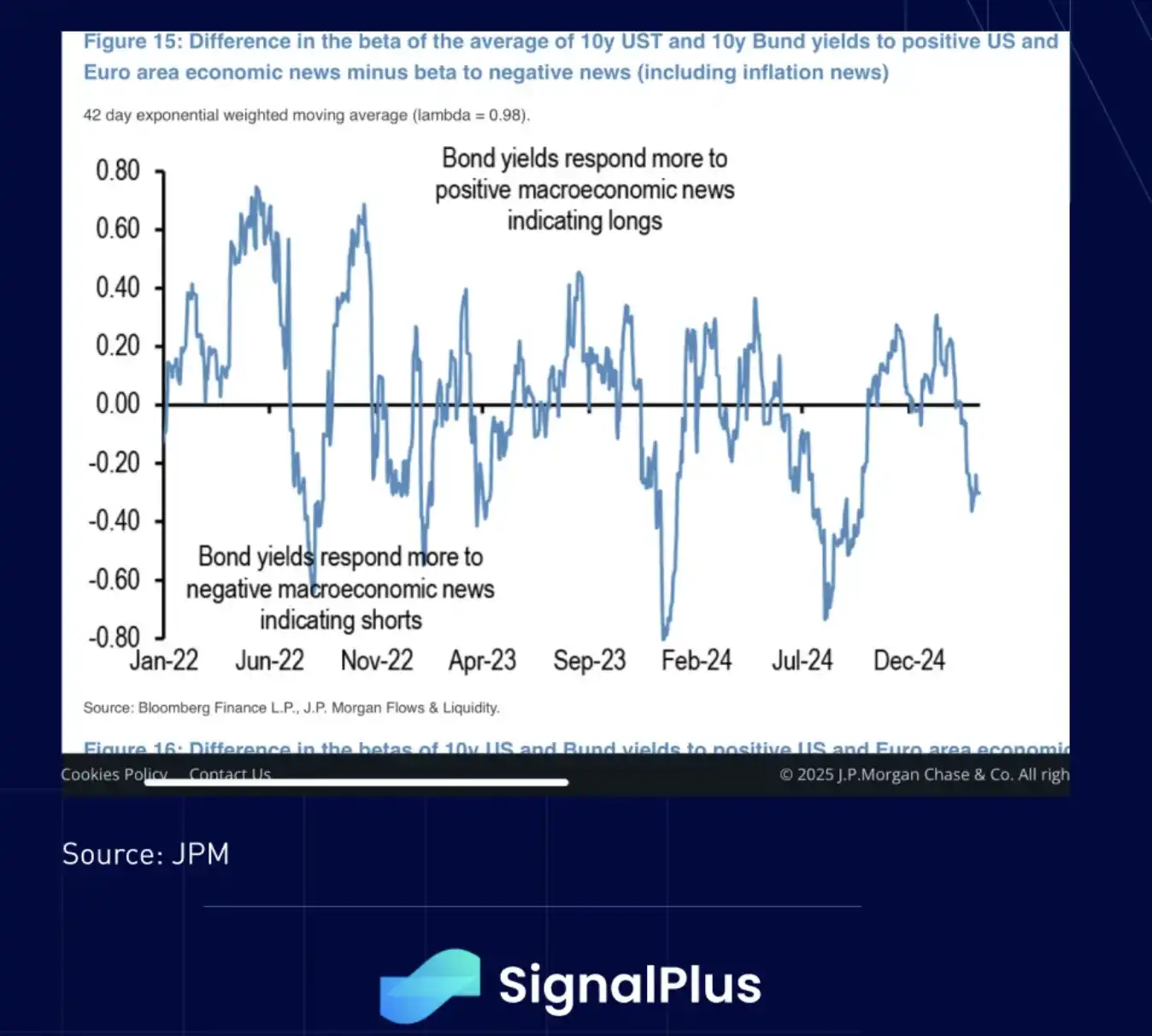
Undoubtedly, global central banks continue their quantitative tightening to withdraw liquidity, coupled with market concerns about the U.S. fiscal deficit leading to a significant short position in the U.S. bond market. Both factors have further fueled the recent rebound in the bond market.
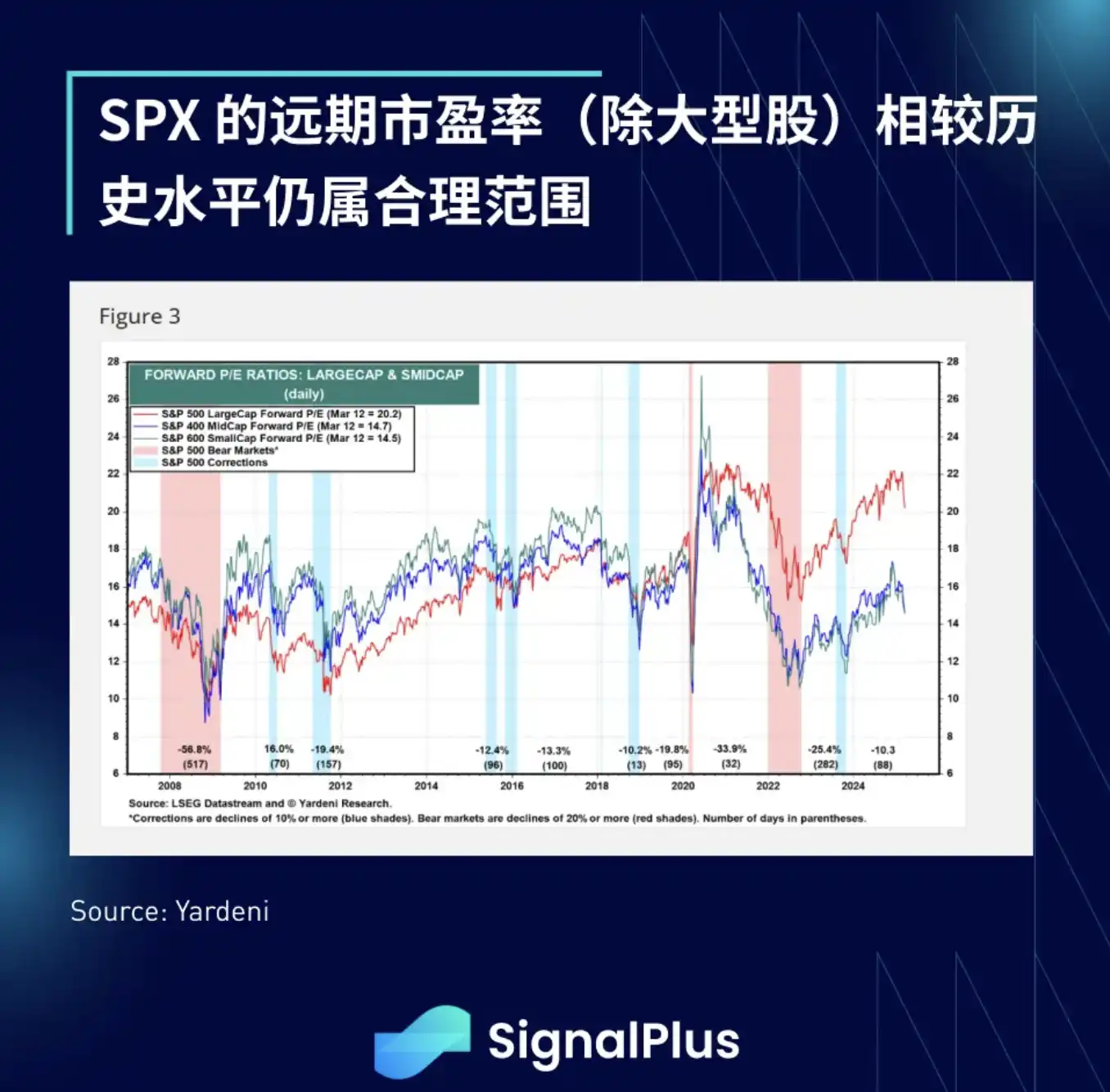
Compared to historical averages, stock valuations outside of major large-cap stocks remain relatively controlled, and the performance of hard economic data may outperform rapidly deteriorating soft data. Therefore, the market generally believes that amidst our handling of tariff uncertainty, this is still a ‘buy the dip’ market.
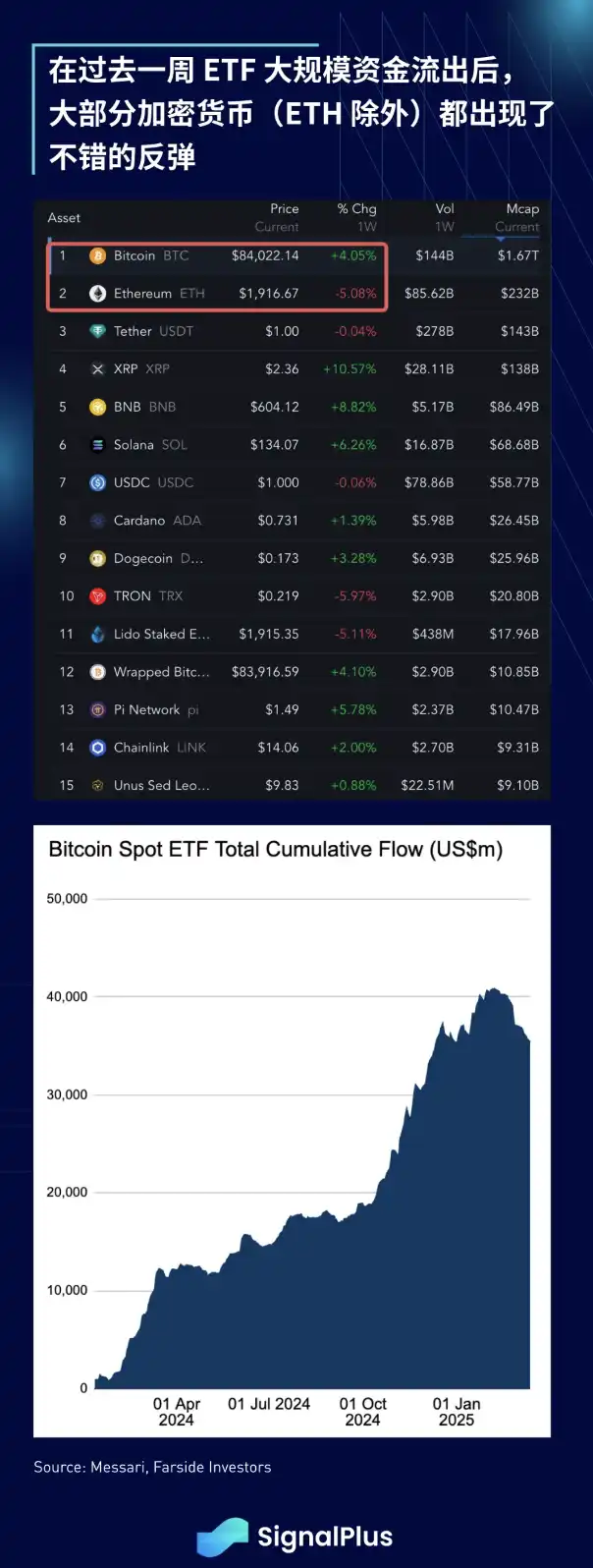
In the cryptocurrency field, market sentiment remains low, with the disappointing U.S. strategic petroleum reserve release. The BTC price hovers around $80,000, but as market risk sentiment warmed up last week, altcoins performed better, with Solana (SOL), Chainlink (LINK), and XRP seeing around a 10% increase in the past week.
A record outflow of funds was seen from BTC ETFs last week, and in the short term, the market seems to have entered a consolidation phase, with traders starting to hedge downside risk through bearish options.
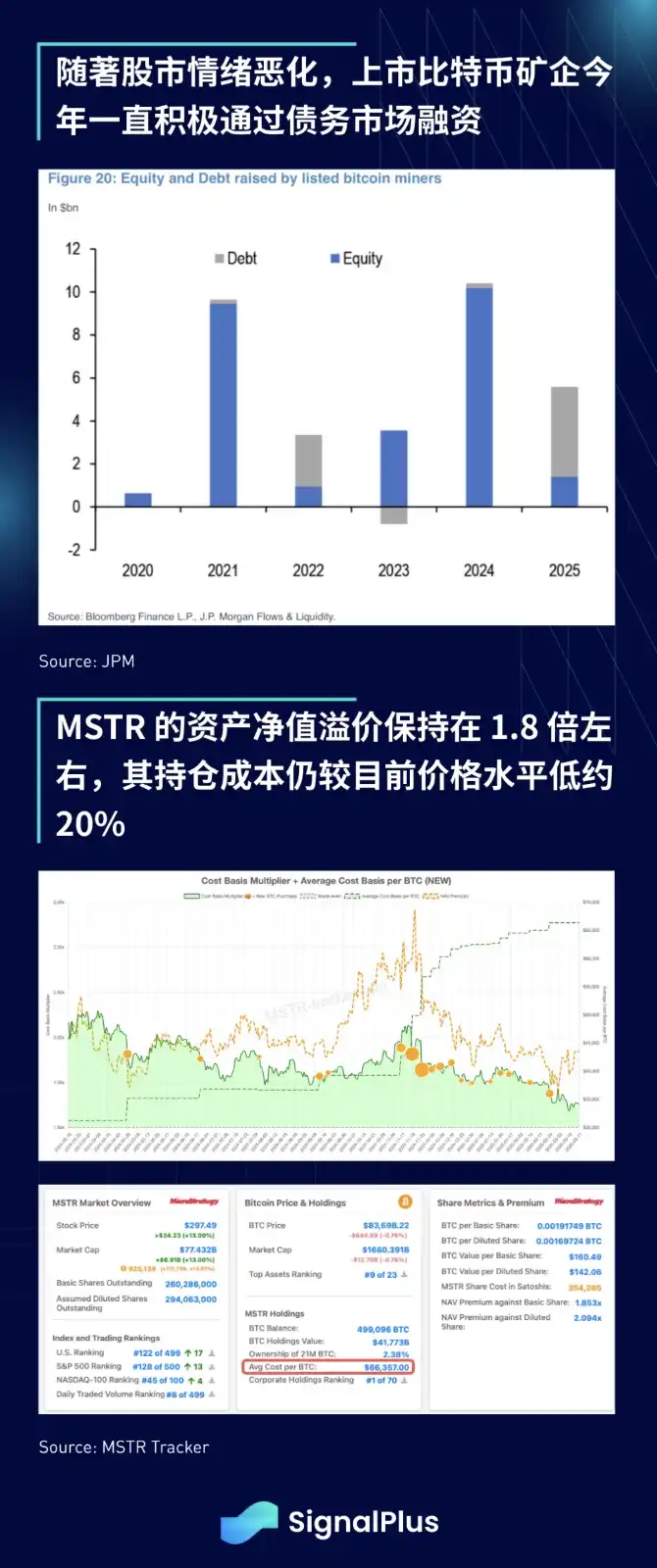
Due to the impact on market sentiment, publicly-listed Bitcoin mining companies have begun turning to the debt market to meet their capital expenditure financing needs. Currently, as long as the financing channels remain open, mining companies should be able to sustain operations without the need for large-scale BTC sell-offs to control market selling pressure. However, this area still warrants close attention. Currently, MSTR’s net asset value premium remains around 1.8 times, and the weighted average BTC holding cost is around $67,000, providing a 15–20% price cushion compared to the current market price.
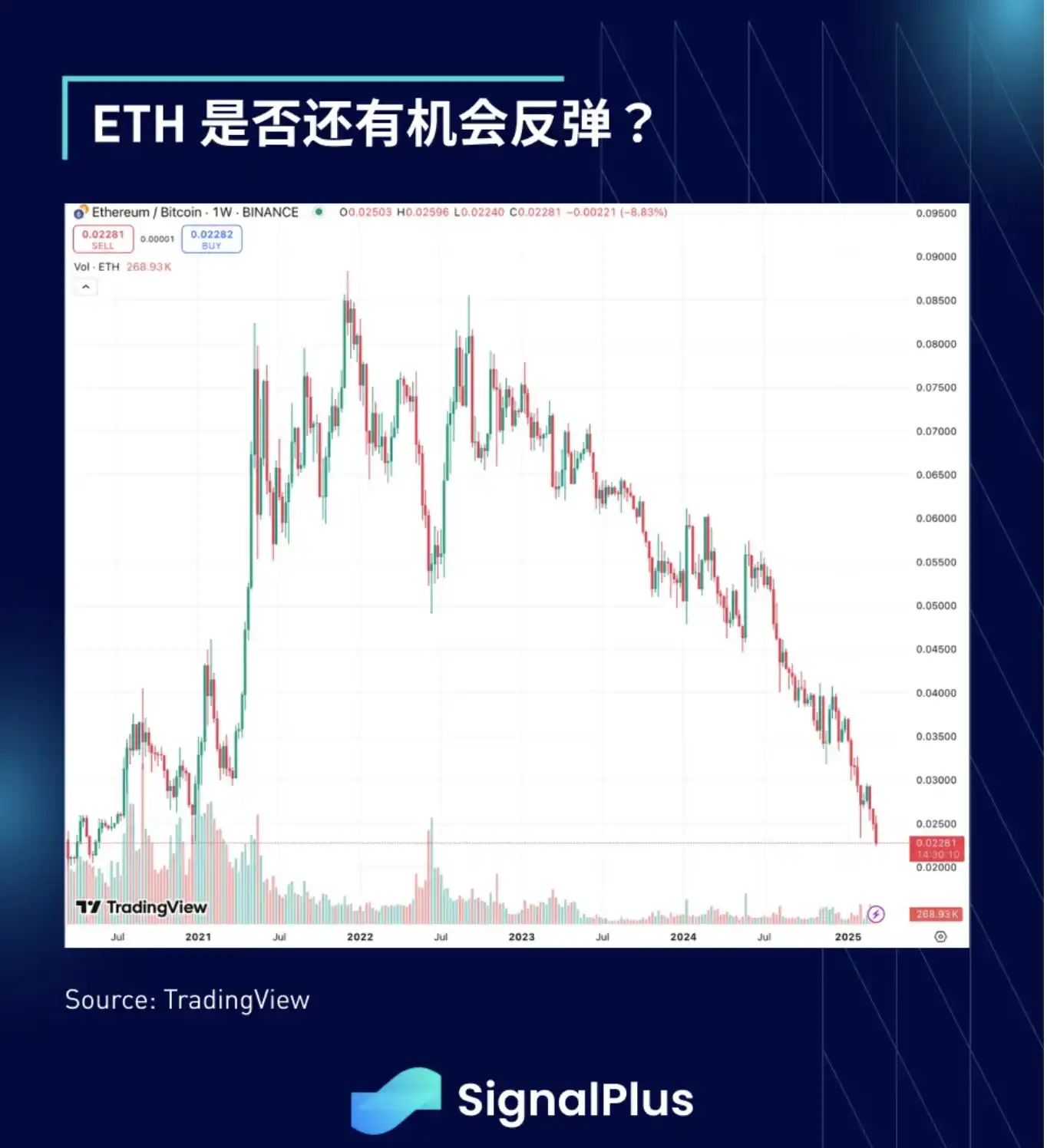
Despite the risk-on sentiment in the market, ETH remains weak, with a weekly loss of 5% extending its underperformance to BTC by about 10%. The BTC/ETH ratio has dropped to 0.023, a level not seen since 2021 when BTC's spot price was only around $35K.
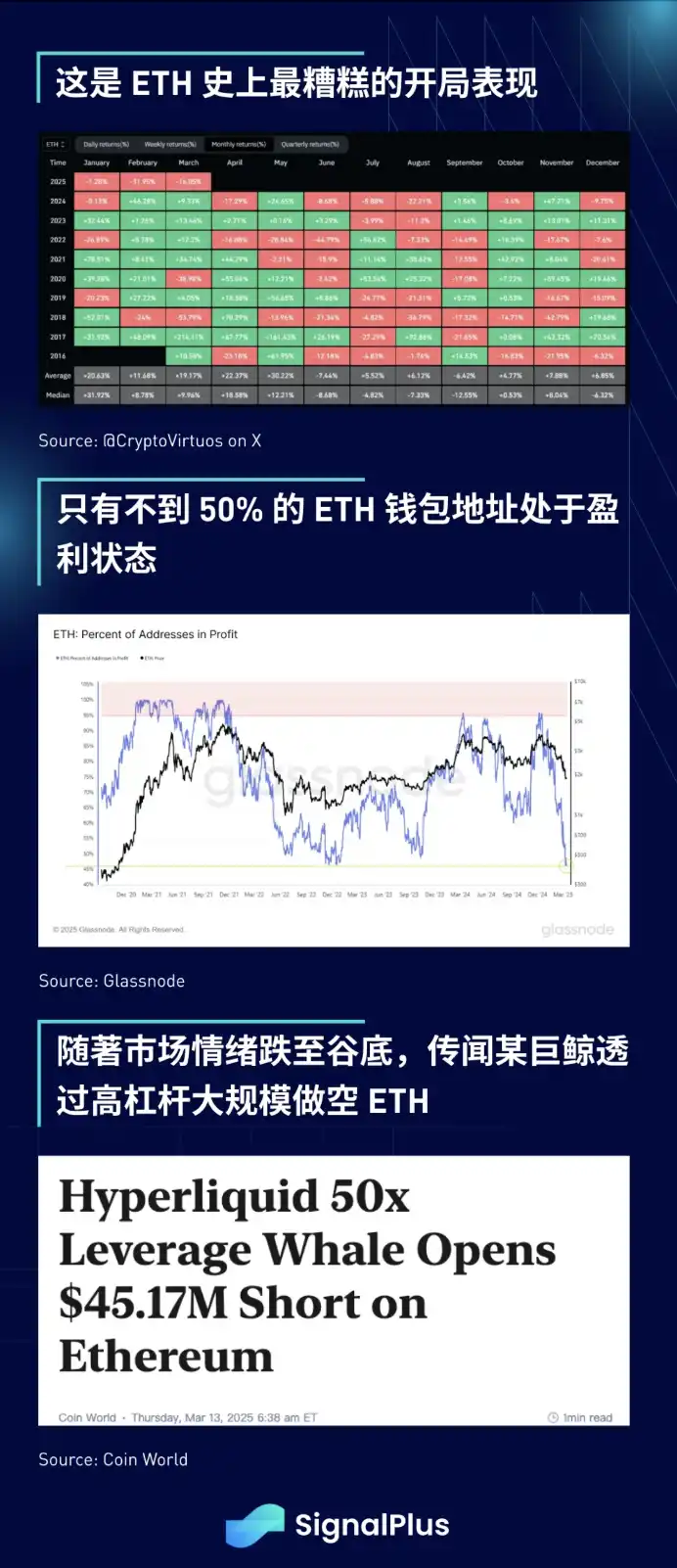
The market sentiment remains tepid, with stop-loss pressure on gains, a lack of new narrative catalysts, and unresolved Layer 2 value proposition issues continuing to drag down ETH's performance. According to CoinGecko data, the total market capitalization of stablecoins ($236 billion) has surpassed that of ETH ($226 billion), as has the total market capitalization of all ERC-20 tokens ($255 billion). Furthermore, this is the first time in ETH's history that it has seen a negative return in the first three months of the new year, with prices down nearly 48% year-to-date. Less than 50% of active wallet addresses are in a profitable state, indicating widespread losses.
Unfortunately, due to Ethereum's current ecosystem's structural issues, it is challenging to expect a quick price recovery, and there are currently no signs that the Ethereum Foundation will make any significant strategic adjustments.
As a popular saying circulating in the market goes, "Keep pounding until morale improves" - a reminder to stay vigilant!
You may also like

February 9th Market Key Intelligence, How Much Did You Miss?

After being questioned by Vitalik, L2s are collectively saying goodbye to the "cheap" era

WEEX AI Trading Hackathon Paris Workshop Reveals: How Retail Crypto Traders Can Outperform Hedge Funds
Witness how WEEX's Paris AI Trading Hackathon revealed AI's edge over human traders. Explore key strategies, live competition results & how to build your own AI trading bot.

U.S. Oil (USOR) Price Prediction 2026–2030
Key Takeaways U.S. Oil (USOR) is a speculative Solana-based crypto project that aims to index the United States…

USOR Surges on Meme Narrative Despite No Real-World Asset Backing
Key Takeaways: USOR, a Solana-based token, has seen a notable surge driven by speculative narratives rather than verifiable…

How to Buy U.S. Oil Reserve (USOR) Cryptocurrency
Key Takeaways U.S. Oil Reserve (USOR) is a Solana-based token primarily traded on decentralized exchanges (DEXs). Claims have…

USOR vs Oil ETFs: Understanding Why the ‘Oil Reserve’ Token Doesn’t Track Crude Prices
Key Takeaways The U.S. Oil Reserve (USOR) token has become noteworthy for its claims, yet it does not…

Trend Research Reduces Ether Holdings After Major Market Turbulence
Key Takeaways: Trend Research has significantly cut down its Ether holdings, moving over 404,000 ETH to exchanges recently.…
Investors Channel $258M into Crypto Startups Despite $2 Trillion Market Sell-Off
Key Takeaways: Investors pumped approximately $258 million into crypto startups in early February, highlighting continued support for blockchain-related…
NBA Star Giannis Antetokounmpo Becomes Shareholder in Prediction Market Kalshi
Key Takeaways: Giannis Antetokounmpo, the NBA’s two-time MVP, invests in the prediction market platform Kalshi as a shareholder.…

Arizona Home Invasion Targets $66 Million in Cryptocurrency: Two Teens Charged
Key Takeaways Two teenagers from California face serious felony charges for allegedly attempting to steal $66 million in…

El Salvador’s Bukele Approval Reaches Record 91.9% Despite Limited Bitcoin Use
Key Takeaways: El Salvador President Nayib Bukele enjoys a record high approval rating of 91.9% from his populace,…

Crypto Price Prediction for February 6: XRP, Dogecoin, and Shiba Inu’s Market Movements
Key Takeaways: The crypto market experienced a notable shift with Bitcoin’s significant surge, impacting altcoins like XRP, Dogecoin,…

China Restricts Unapproved Yuan-Pegged Stablecoins to Maintain Currency Stability
Key Takeaways: China’s central bank and seven government agencies have banned the issuance of yuan-pegged stablecoins abroad without…

Solana Price Prediction: $80 SOL Looks Scary – But Smart Money Just Signaled This Might Be the Bottom
Key Takeaways Despite Solana’s descent to $80, some traders find security as smart money enters the fray, suggesting…

XRP Price Prediction: Major Ledger Upgrade Quietly Activated – Why This Could Be the Most Bullish Signal Yet
Key Takeaways: The activation of the Permissioned Domains amendment on XRPL represents a significant development in XRP’s potential…

Dogecoin Price Prediction: Death Cross Confirmed as DOGE Falls Below $0.10 – Is DOGE Reaching Zero?
Key Takeaways The death cross event signals potential bearish trends for Dogecoin as its price dips under $0.10,…

Stablecoin Inflows Have Doubled to $98B Amid Selling Pressure
Key Takeaways Stablecoin inflows to crypto exchanges have surged to $98 billion, doubling previous levels amidst heightened market…
February 9th Market Key Intelligence, How Much Did You Miss?
After being questioned by Vitalik, L2s are collectively saying goodbye to the "cheap" era
WEEX AI Trading Hackathon Paris Workshop Reveals: How Retail Crypto Traders Can Outperform Hedge Funds
Witness how WEEX's Paris AI Trading Hackathon revealed AI's edge over human traders. Explore key strategies, live competition results & how to build your own AI trading bot.
U.S. Oil (USOR) Price Prediction 2026–2030
Key Takeaways U.S. Oil (USOR) is a speculative Solana-based crypto project that aims to index the United States…
USOR Surges on Meme Narrative Despite No Real-World Asset Backing
Key Takeaways: USOR, a Solana-based token, has seen a notable surge driven by speculative narratives rather than verifiable…
How to Buy U.S. Oil Reserve (USOR) Cryptocurrency
Key Takeaways U.S. Oil Reserve (USOR) is a Solana-based token primarily traded on decentralized exchanges (DEXs). Claims have…


 App
App