
- Buy Crypto
- Markets
 Futures
- Spot
- Copy Trade
- Earn
- More
NEAR ETF in the making: What can investors learn from Bitwise’s S-1 filing?
By: bitcoin ethereum news|2025/05/07 22:15:02
0
Share
Bitwise’s NEAR ETF filing signals rising institutional interest in altcoin-based investment products. Near Protocol aims to solve the blockchain dilemma with scalability, security, and decentralization. Bitwise has taken a significant step toward launching a NEAR Protocol [NEAR] ETF by filing an S-1 registration with the U.S. Securities and Exchange Commission (SEC). If approved, the proposed fund will track NEAR’s price, giving investors regulated access to its market performance. This development signals a bullish outlook for Near Protocol, likely driving higher demand and greater visibility in the crypto space. NEAR joins the ETF race — Details That being said, Bitwise’s latest S-1 filing for a Near Protocol ETF follows its prior registration of the fund in Delaware, signaling the next phase in its push for broader crypto ETF offerings. The firm is expected to file a 19b-4 form through an exchange, initiating the formal approval process required by the SEC to list and trade the product. With this addition, the SEC’s growing 2025 docket now includes over a dozen spot crypto ETF proposals, spanning assets like Solana [SOL], Ripple [XRP], Cardano [ADA], and Dogecoin [DOGE]. In fact recently, Litecoin [LTC] ETF application by Canary Capital also joined the list of pending ETFs. Needless to say, Bitwise, already a key player in the space, has existing filings for DOGE, SOL, and XRP ETFs and currently manages spot Bitcoin [BTC] and Ethereum [ETH] funds on NYSE Arca, which have together seen $2.35 billion in inflows since launch. Impact on NEAR’s price and what lies ahead? However, despite Bitwise’s ETF filing, NEAR Protocol is trading at $2.30, reflecting a modest 0.90% dip over the last 24 hours, according to CoinMarketCap. NEAR’s short-term price movement remains muted, but its long-term narrative continues to be strong. Once considered a potential Ethereum competitor, NEAR aims to solve the blockchain dilemma by balancing decentralization, scalability, and security. With Paul Atkins leading regulatory shifts, the SEC’s growing openness toward clearer crypto policies may create a more favorable environment. This change could benefit protocols like NEAR, which are pushing the boundaries of blockchain innovation. Source: https://ambcrypto.com/near-etf-in-the-making-what-can-investors-learn-from-bitwises-s-1-filing/
You may also like

The migration of settlement rights: B18 and the institutional starting point of on-chain banks
In the traditional system, banks decide the settlement; in the on-chain system, code begins to take over this responsibility.

From Tencent and Circle: Looking at the Simple and Difficult Questions of Investment
The AI narrative continues to ferment, but the recent performance of related stocks varies, with some in the midst of summer and others as if in winter.

The second half of stablecoins no longer belongs to the crypto circle
What Coinbase doesn't want, Mastercard is eager to buy.

Cursor "Shell" Kimi Controversy Reversed: From Copyright Infringement Allegations to Authorized Collaboration, China's Open Source Model Once Again Becomes a Global AI Foundation
Cursor was accused of being based on Kimi K2.5, which sparked controversy, and was later confirmed to be compliant through Fireworks AI due diligence.

The Real Reason Tokens Don't Sell: 90% of Crypto Projects Overlook Investor Relations
Provide an Investor Relations Best Practices Guide for Crypto Projects.

Is the income of pump.fun real, earning a million dollars a day despite the market downturn?
If it can really earn this much, what is the reason for the low price of $PUMP?

The real reason why tokens are not selling: 90% of crypto projects neglect investor relations
Investor Relations Practice Guide for Cryptocurrency Projects.

Who is the true winner of the "Tokenization" narrative?
Virtually everyone benefits, but the reason for the benefit, the timing, and the underlying logic are completely different.

Moss: The Era of AI-Traded by Anyone | Project Introduction
AI Trading Agent is rapidly growing its infrastructure.

Chip Smuggling Case Exposes Regulatory Loophole | Rewire News Evening Update
AI chips have become a strategic asset more sensitive than missiles

How a Structured AI Crypto Trading Bot Won at the WEEX Hackathon
Ritmex demonstrates how disciplined risk control and structured signals can make an AI crypto trading bot more stable and reliable on WEEX, highlighting the importance of combining execution discipline with scalable AI trading systems.

Old Indicator Fails, Three Major New Signals Emerge: BTC True Bottom May Still Be Below $60K
When the grocery shopping auntie on the subway, or Tony the hairdresser, start asking you about BTC, crypto, and cryptocurrency investments, selling immediately will be the only best option.

Meeting OpenClaw Founder at a Hackathon: What Else Can Lobsters Do?
Imperial College London MetaGame: AI Agent × Web3 Landing Three Major Directions.
Huang Renxun's Latest Podcast Transcript: NVIDIA's Future, Embodied Intelligence and Agent Development, Soaring Demand for Inferencing, and AI's PR Crisis
The future of competition is not only about whose model is bigger, whose computing power is stronger, but also about who understands the industry better, who can more deeply integrate AI into real processes, and who can organize these capabilities into a set of executable, scalable systems
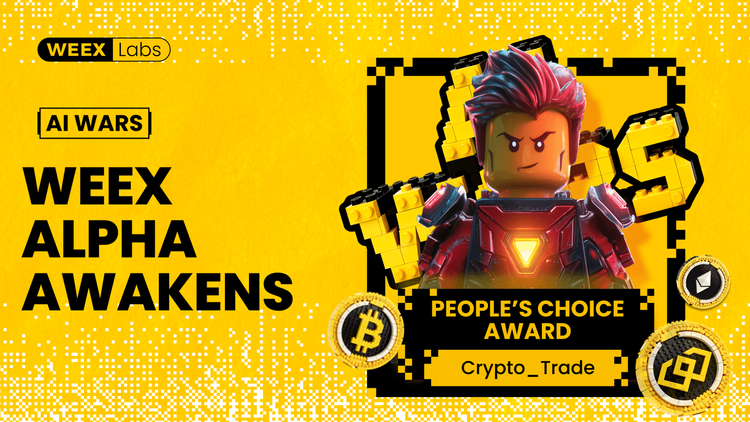
How a Structured AI Crypto Trading Bot Won at the WEEX Hackathon
Crypto_Trade shows how structured inputs and controlled adaptability can build a more stable and reliable AI crypto trading bot within the WEEX AI Trading Hackathon, highlighting a practical path toward scalable AI trading systems.

AI Starts to Devour the Manufacturing Industry | Rewire News Morning Edition
When Bezos starts using AI to buy factories instead of building data centers, it shows that he believes the next wave of AI's value is not inside the box.
When Scaling Meets Speed, Ethereum Foundation Introduces "Hardness" to Safeguard the Base Layer
Hardness is a protocol-level commitment to Ethereum core properties, including censorship resistance, privacy, security, and permissionlessness.
Google, Circle, Stripe Flock Together to Let AI Spend Money: Payment Giants' Joys and Worries in 2026 Q1
The real enemy is no longer each other, but zero cost itself
The migration of settlement rights: B18 and the institutional starting point of on-chain banks
In the traditional system, banks decide the settlement; in the on-chain system, code begins to take over this responsibility.
From Tencent and Circle: Looking at the Simple and Difficult Questions of Investment
The AI narrative continues to ferment, but the recent performance of related stocks varies, with some in the midst of summer and others as if in winter.
The second half of stablecoins no longer belongs to the crypto circle
What Coinbase doesn't want, Mastercard is eager to buy.
Cursor "Shell" Kimi Controversy Reversed: From Copyright Infringement Allegations to Authorized Collaboration, China's Open Source Model Once Again Becomes a Global AI Foundation
Cursor was accused of being based on Kimi K2.5, which sparked controversy, and was later confirmed to be compliant through Fireworks AI due diligence.
The Real Reason Tokens Don't Sell: 90% of Crypto Projects Overlook Investor Relations
Provide an Investor Relations Best Practices Guide for Crypto Projects.
Is the income of pump.fun real, earning a million dollars a day despite the market downturn?
If it can really earn this much, what is the reason for the low price of $PUMP?


 App
App