
 Buy Crypto
- Markets
 Futures
- Spot
- Copy Trade
- Earn
- More
Funding, Users, Retention: A Growth Guide for 2026 Crypto Projects

Original Article Title: Crypto Marketing Trends & Predictions: 2026 and Beyond
Original Article Author: @emilyxlai
Translation: Peggy, BlockBeats
Editor's Note: Marketing in the crypto industry is undergoing a profound transformation: trends have shorter lifecycles, competition is intensifying, and traditional strategies are becoming less effective. For entrepreneurs, growth leaders, and marketing teams, understanding these changes is not only a matter of survival but also a key advantage.
This article, based on a presentation by Emily Lai, Chief Marketing Officer of Hype Partners, systematically outlines the 7 core trends in crypto marketing for 2026, covering recruitment, performance marketing, content creation, channel diversification, event experiences, incentive mechanisms, and AI-driven operations. It also shares industry predictions and a set of forward-thinking frameworks.
The industry is rapidly evolving. How can you seize opportunities and avoid falling behind? This article provides you with the answers.
Below is the original article:
The crypto industry is constantly changing, with attention spans being extremely short, trends emerging and disappearing rapidly, and lifecycles becoming increasingly condensed.
During the g(t)m con1 conference held last Sunday, November 16, I shared my observations and experiences from the past year and made forward-looking judgments for 2026.
The core of this presentation was to share our team's perspective on the future of the industry with entrepreneurs, growth leaders, and marketing experts, discuss what this means for your marketing strategy, and how to stay ahead in the competition.

Ten Months, Enough to Change Many Things
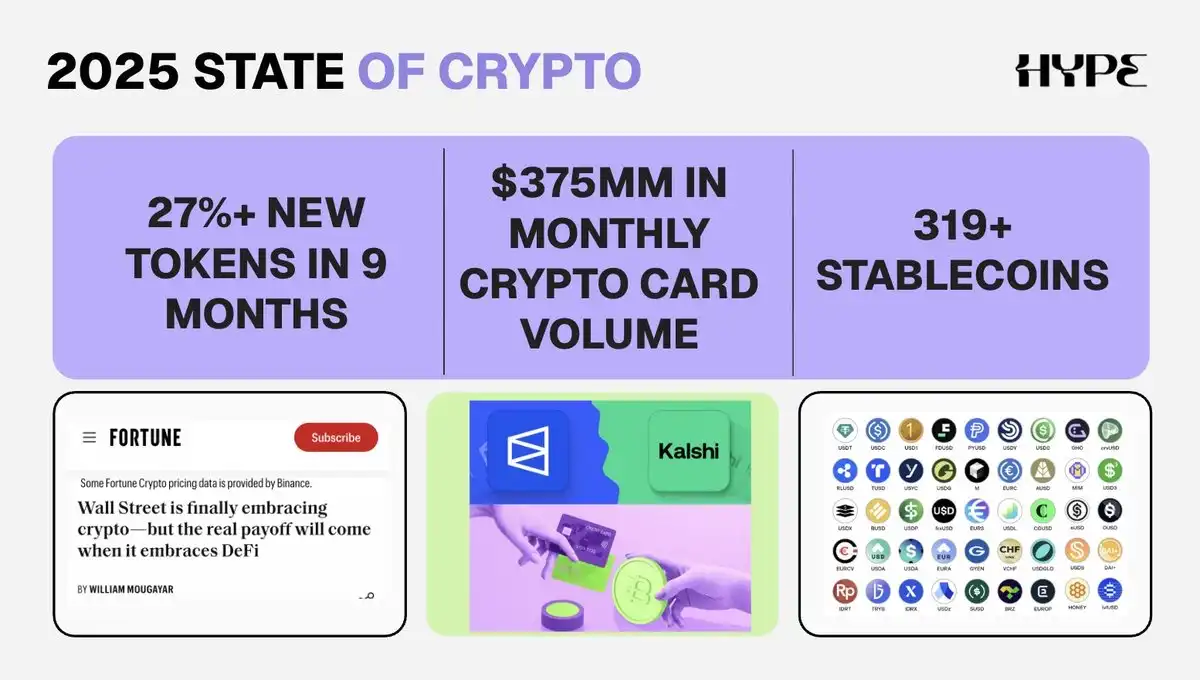
Since my keynote at EthDenver in February 2025, we have witnessed: over 319 new stablecoin launches; institutional and Wall Street entry, including corporate blockchain, DAT, ETFs, and fintech giants adopting stablecoins; a relaxed regulatory environment, with the introduction of the GENIUS Act and the U.S. welcoming a "crypto-friendly" president; a 27% growth in new token issuance, reaching 5.67 billion tokens as of the time of writing; a surge in crypto payment card options, with card transaction volumes on traceable blockchains reaching $375 million in October 2025 alone; prediction markets booming, with @Kalshi and @Polymarket setting new trading volume records and new players entering the space; and the launch of new crypto-native banks and mobile-first financial applications
Crypto in 2024 vs. Today
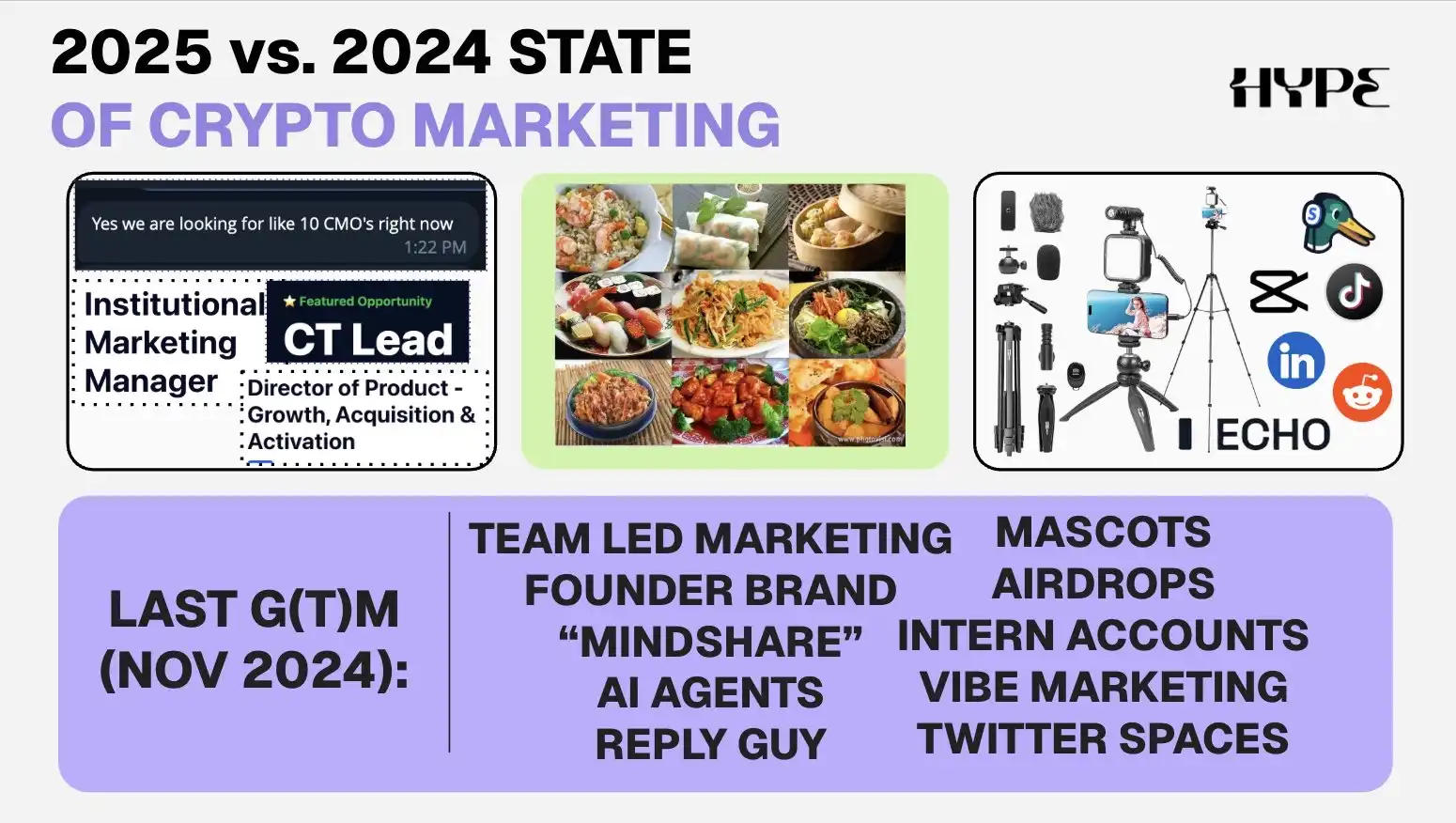
Last November, the first-ever g(t)m con was held in Bangkok. The key trends at the time included: team-led marketing, founder personal branding, AI agents, interactive "reply guys," brand mascots, airdrops, intern accounts, and the mysterious concept of "Mindshare" (brand awareness) put forward by the InfoFi platform.
A year has passed, and the industry landscape has clearly shifted: from a focus on liquidity in the Asia-Pacific region, to the resurgence of ICOs, and now to the rise of "CT Leads," the pace of change in the crypto industry is truly astounding.
User Mindshare ≠ Growth
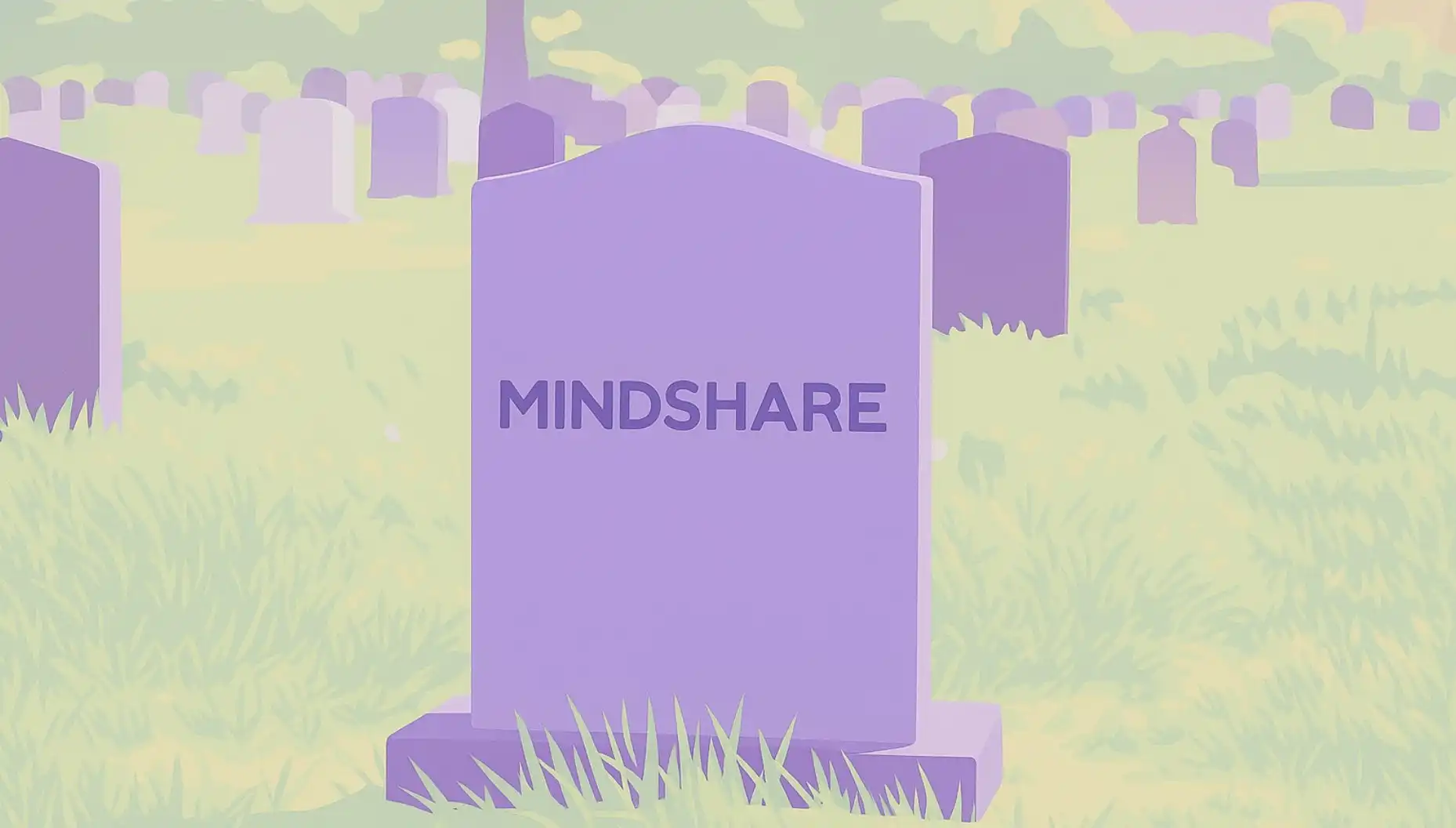
RIP Mindshare
Over the past year, several highly anticipated TGEs (Token Generation Events) have seen weak buying interest despite high visibility, with price performance far below the Twitter (CT) sentiment expectation. From a KPI perspective, the industry is refocusing on user acquisition (encompassing B2B and B2C) and retention.
On the narrative and industry meta-trend level, ecosystems and applications are beginning to strengthen the messaging around "revenue and repurchase" information. Internal discussions are also focusing on token strategy, tokenomics, and incentive design to mitigate selling pressure.
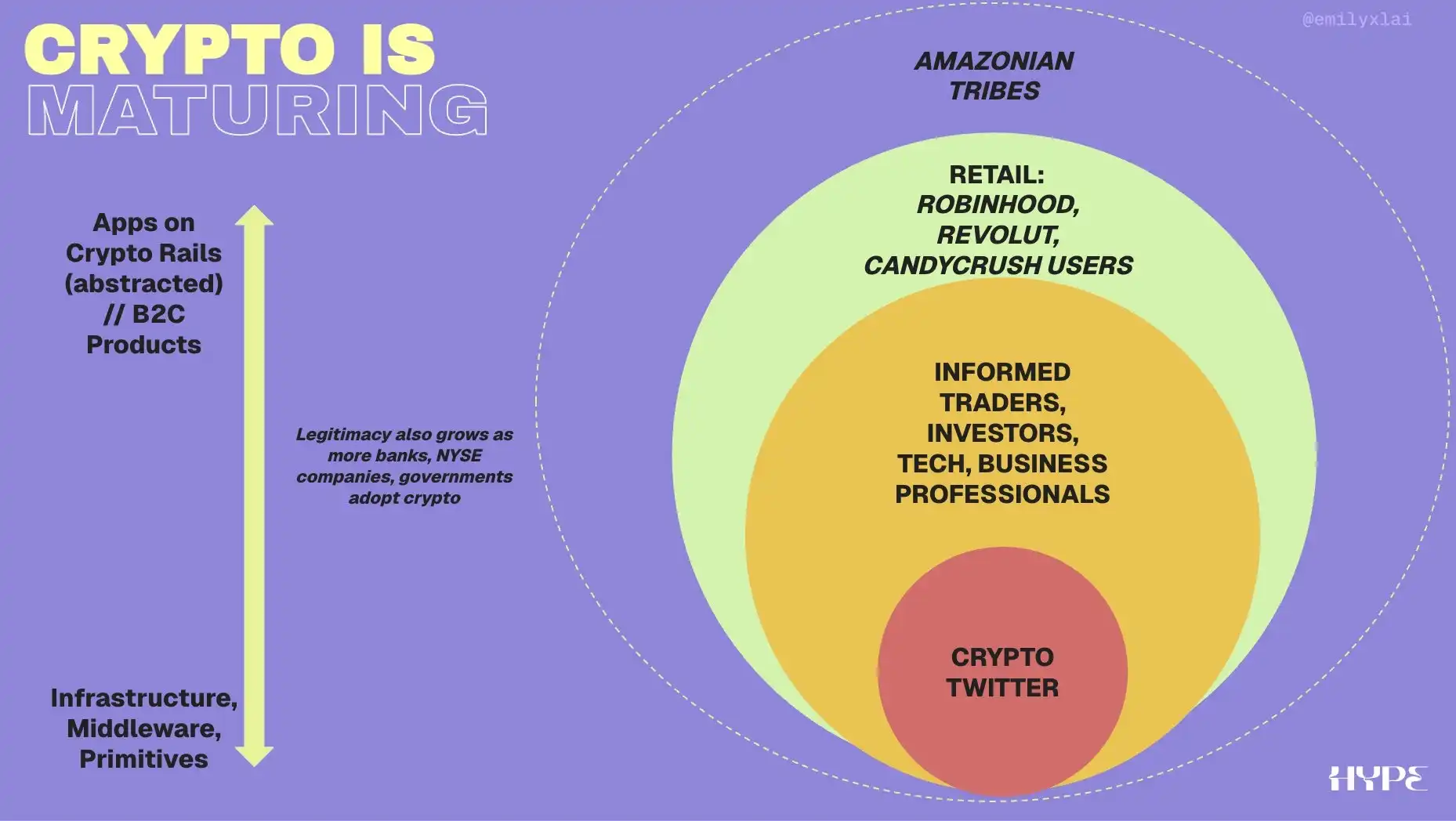
As infrastructure, foundational protocols, and middleware continue to mature, the industry's focus is shifting from chains and ecosystems to applications. With traditional financial institutions beginning to deploy capital and fintech applications with millions of users entering the blockchain space, this not only brings legitimacy to the entire industry but more importantly, allows us to reach new users beyond the CT community.
With improved user experience, the emergence of new applications, and trust being established, the addressable market size and audience for conversion continue to grow. This also means that Web2 user acquisition strategies, once seen as having a negative ROI/ROAS, are now becoming reasonable again.
Hot and Not: Trend Check
Here is a subjective and incomplete "Hot and Not" list. I first compiled my own views, then gathered input from a crypto VC friend, as well as opinions from the crypto marketing community and CT.
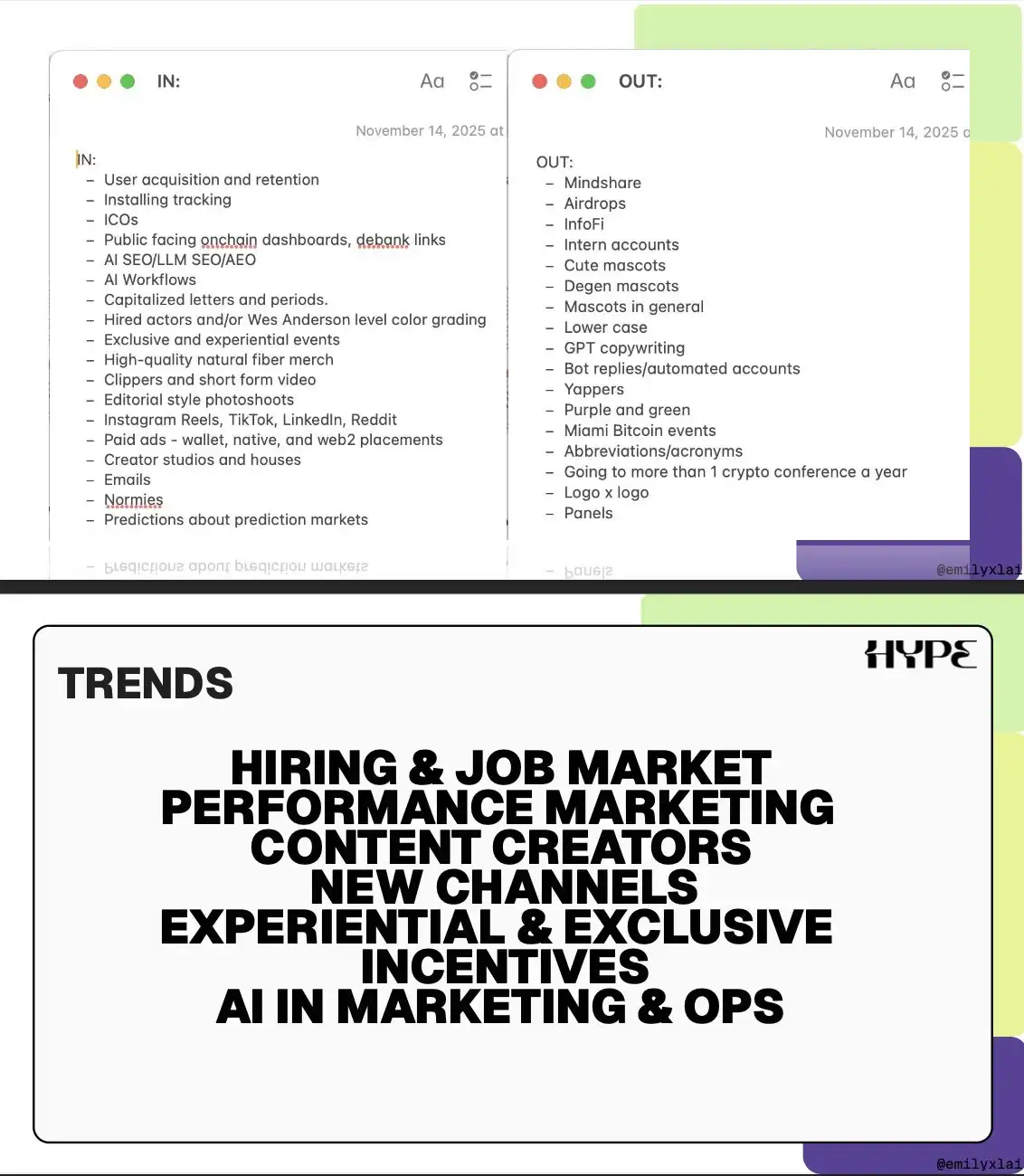
Subsequently, I broke down these trends and observations into 7 main themes, providing a high-level overview and synthesis, summarizing my learnings and observations for the year 2025.
Originally allocated only 25 minutes for my presentation, but thanks to @clairekart's understanding, I was able to share in a "stream of consciousness" style on stage for 45 minutes.
Hiring and Job Market Trends in Growth Positions
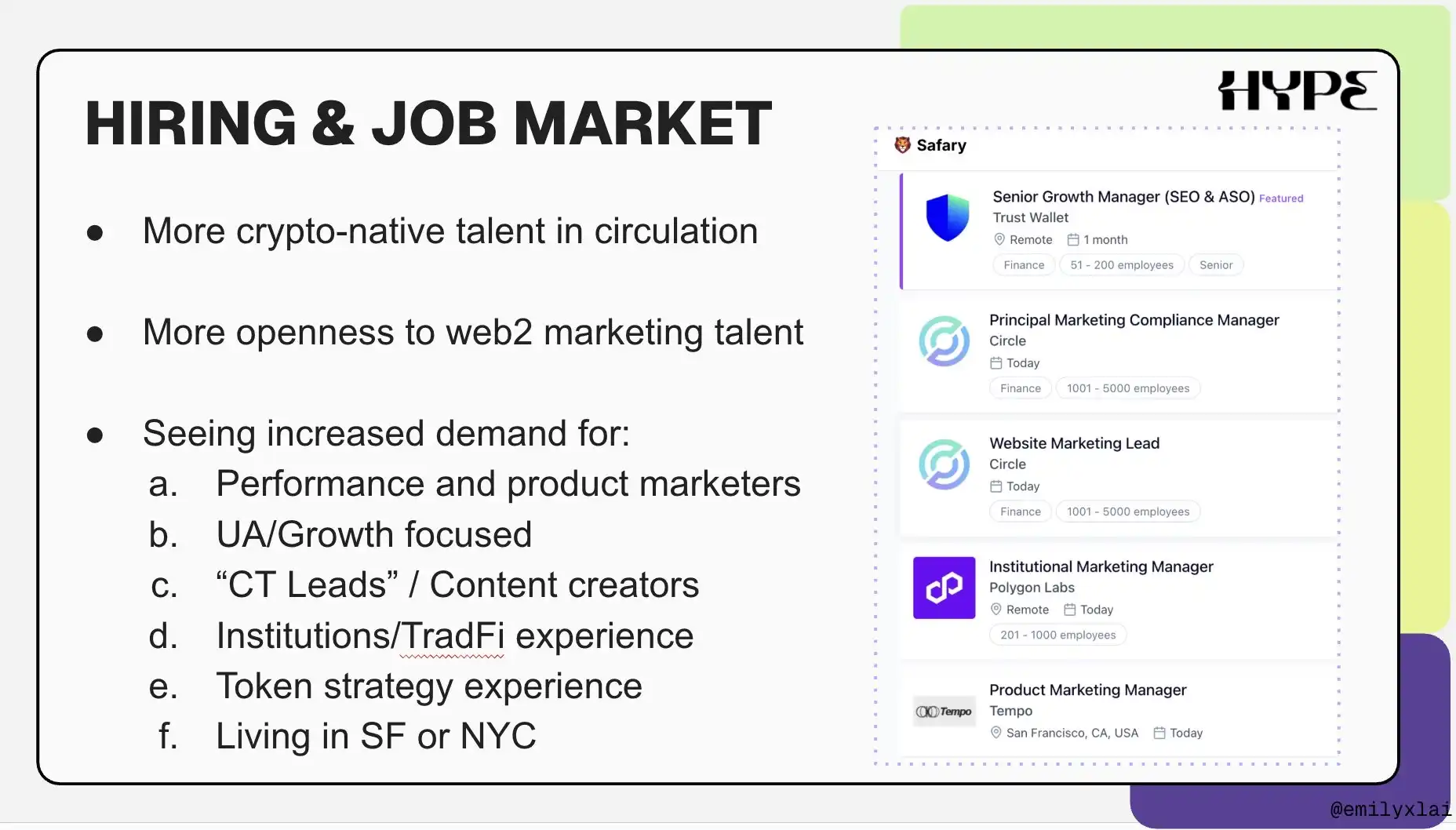
Take a look at @safaryclub's newly launched Marketing Careers section
As the industry matures, we see late-stage companies as well as Web2 enterprises, when recruiting crypto marketing talent, requesting increasingly specialized skills, rather than the traditional "all-around marketing lead." Many recruiters also mentioned a significant increase in demand for senior or executive-level marketing positions (such as CMO), reduced flexibility in remote work, and a higher acceptance of Web2 marketing talent.
For entry-level marketers without Web2 marketing experience, the barrier to entry is higher than ever, as there is a growing number of native crypto talent in the market (think of those failed or lost ecosystems over the past four years).
Performance Marketing
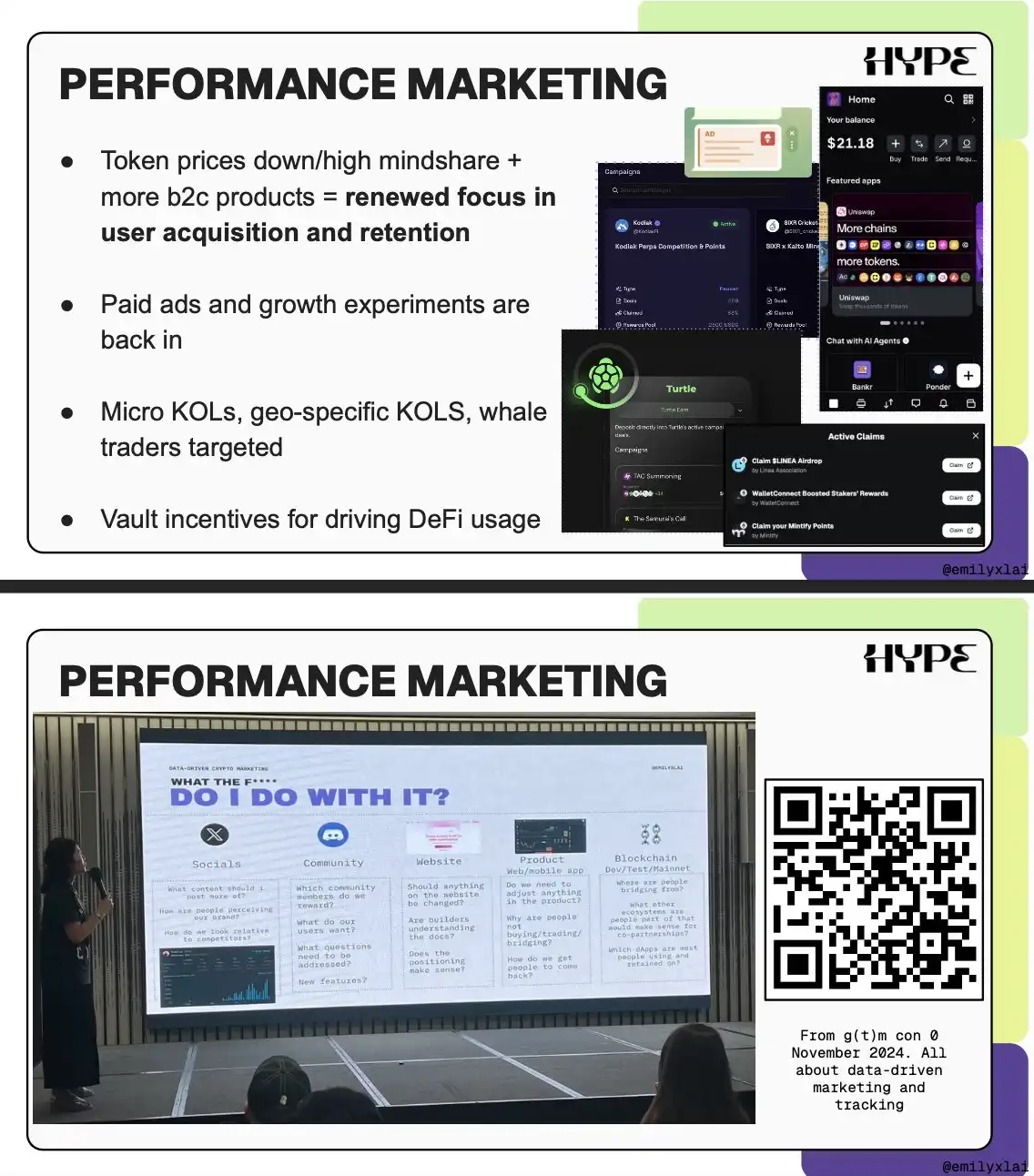
At last year's November g(t)m con in Bangkok, I shared about data-driven marketing, focusing on the funnel model and key metrics. What was important then feels even more relevant now.
Performance marketing is making a comeback, as the industry renews its focus on user acquisition and retention. This means: installation tracking tools (on-chain, product/web, distribution channels); growth experiments; combining paid and organic traffic; transitioning from social tasks to liquidity tasks; precise KOL marketing campaigns, etc.
We see more projects using or inquiring about tools such as:
@spindl_xyz, @gohypelab, @themiracle_io: Used for native wallet airdrop
@tunnl_io, @yapdotmarket: Precision bounty campaigns for micro KOLs
@turtledotxyz, @liquidity_land: Used for liquidity marketing campaigns
Furthermore, there are even more targeted strategies: I've been in touch with some perpetual contract DEXs who employ a "white-glove" user onboarding approach, reaching out even through direct messages to whale users or leveraging Asia-Pacific region transactional KOLs to gain initial liquidity (of course, along with incentives).
Simultaneously, Web2's paid advertising channels are back on the radar, including paid social, search ads, and out-of-home ads (OOH). One underrated channel that still exists is Telegram advertising. In the future, with the development of AI ecosystems like LLM and OpenAI building ad product suites, we will see new advertising deployment scenarios.
Content, Content, Content
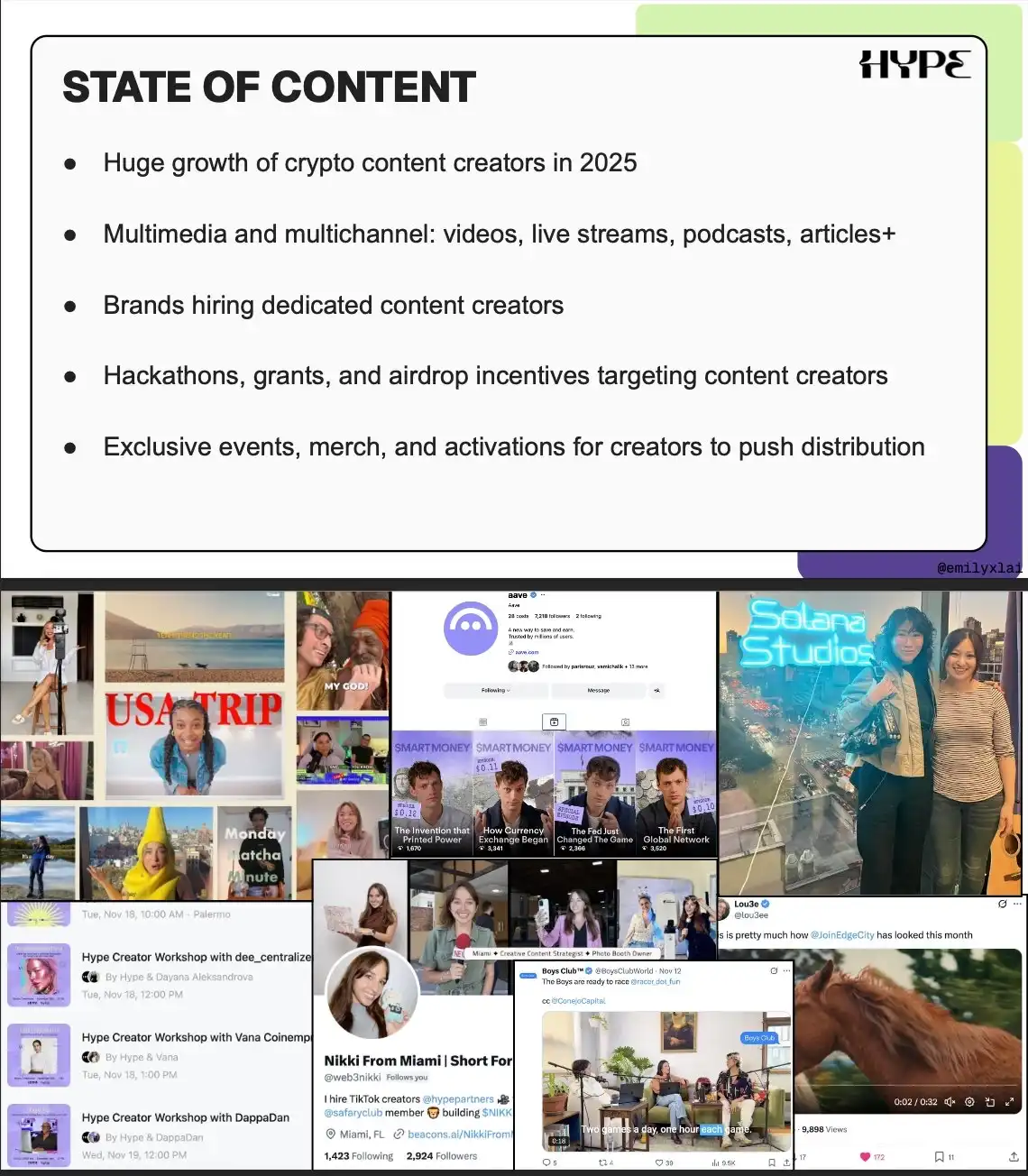
This year, we've seen explosive growth in content creators and videos on social platforms, with timelines inundated with various types of content: from vloggers, short video creators, to technical explanation videos, live streams, and even movie-quality narratives...
Meanwhile, the InfoFi platform has driven the rise of the "brand ambassador" role, where individuals actively post ("yap") to promote projects in hopes of earning rewards. However, I believe this trend will not last, and I've already put "yappers" on the OUT list.
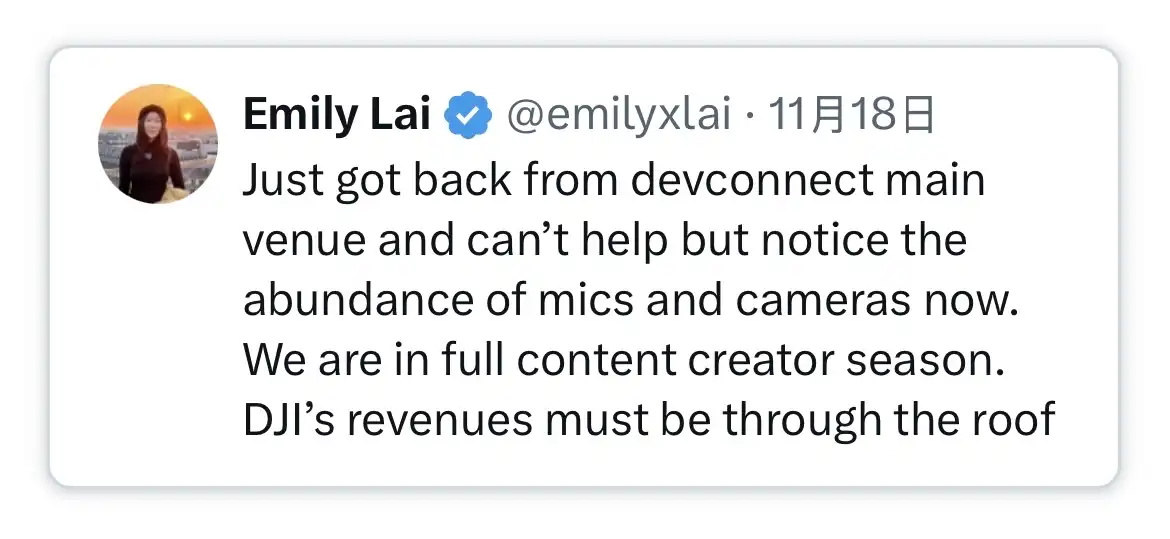
As I jokingly remarked last week when leaving the DevConnect venue: DJI's revenue must be soaring because there were microphones and cameras everywhere on-site. We are in the season of content creators.
Some creators are freelancers, creating content for brands they love, such as @coinempress and @DAppaDanDev. Brands are also starting to hire full-time content creators to produce videos, vlogs, host spaces, and even leverage the creator's personal brand (like CT Leads @alexonchain). @dee_centralized is one of the leaders in short-form video content in the crypto wave.
Six weeks ago, I visited the @solana office in New York City and toured Solana Studio—a content space designed for founders and creators, where individuals like @bangerz and @jakeclaychain produce content.
We also saw brands hiring actors, Hollywood-level studios, and photographers to create high-quality content and advertisements. @aave started focusing on content on Instagram (as a prelude to its retail mobile app, a clever strategy), while @ethereumfnd brought in storytelling creators like @lou3ee.
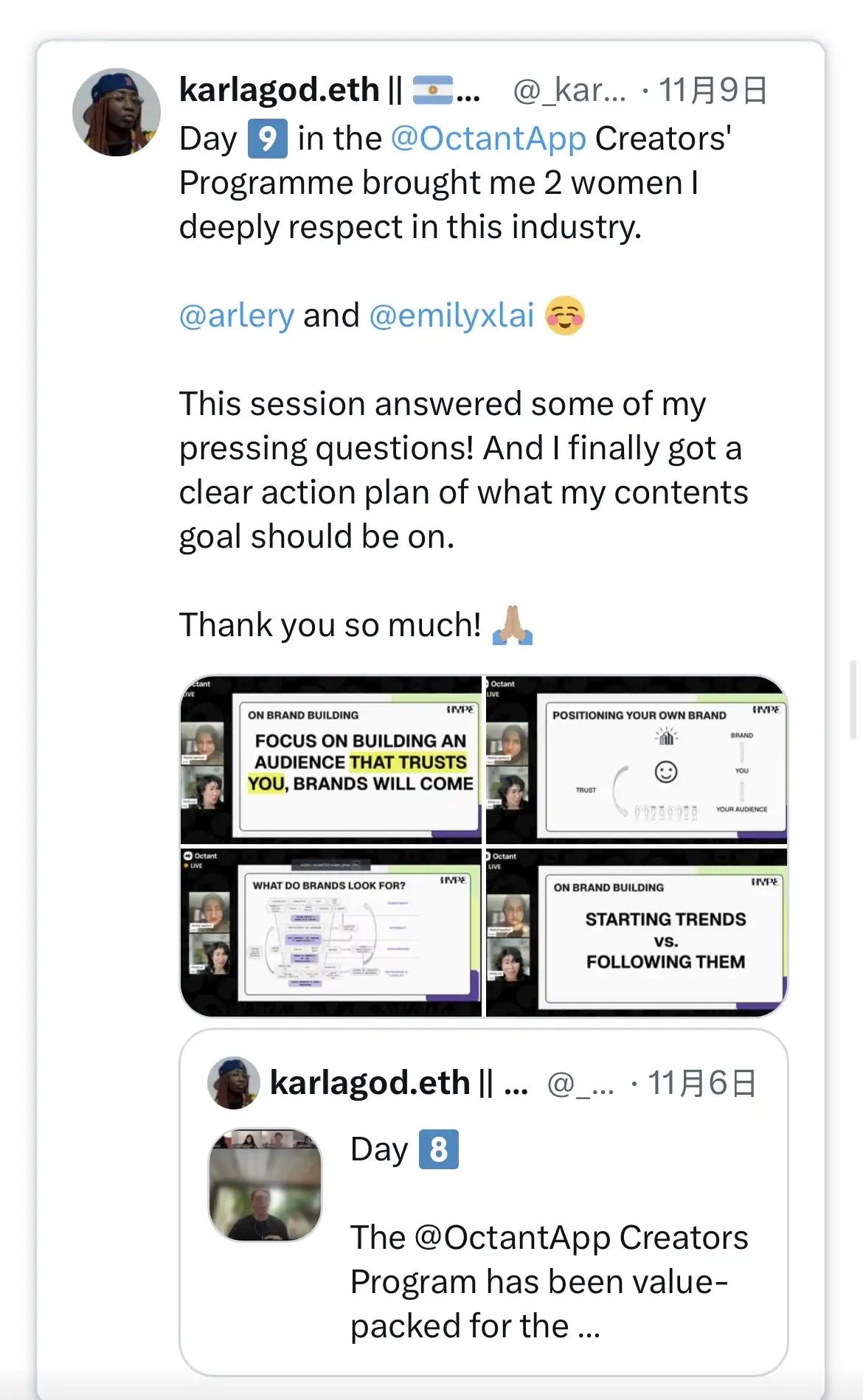
Content formats also vary: in addition to text and video, there are live series (like @boysclubworld), static series, podcasts, short video clips, 3D or AI announcement videos, and more. @OctantApp provides funding for creators, and I recently hosted a workshop explaining the psychological factors that brands value in content creation.
At Hype (@hypepartners), we hosted four content creator workshops during DevConnect Week and introduced @web3nikki in January to lead a new short video department. Content will continue to saturate, with quality, depth, and production level becoming increasingly important. Additionally, moving beyond the crypto community and reaching new users is equally crucial.
Beyond X World
This year at Hype, we have been exploring (and re-exploring) new channels, including YouTube, Reddit, AI SEO (such as Perplexity, GPT), Instagram, and Whop. In my presentation, I specifically focused on LinkedIn and TikTok.
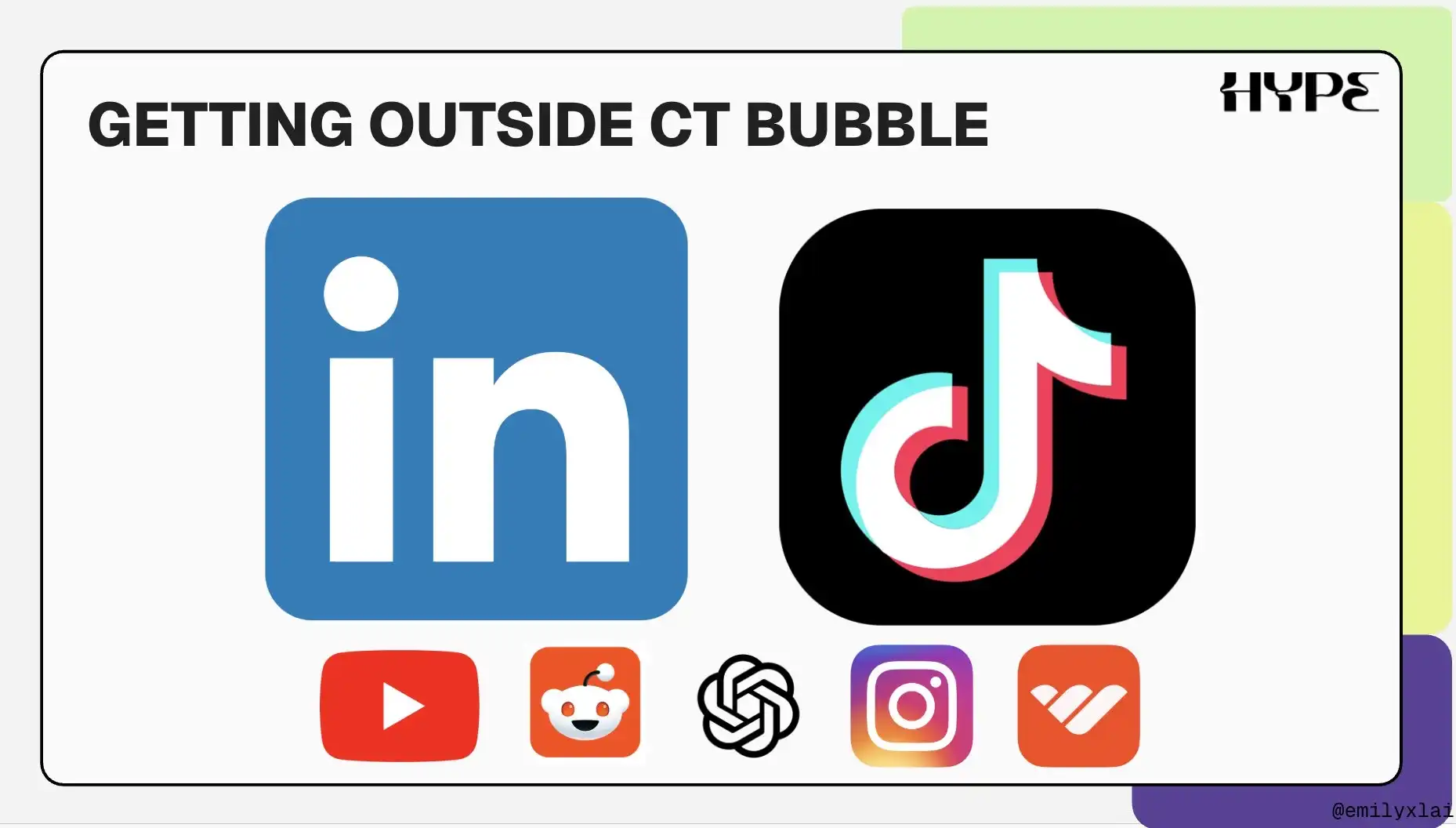
Take, for example, @Scroll_ZKP co-founder @sandypeng: For those not active on LinkedIn, she consistently posted in 2025, growing from zero to 6.3 million impressions and 31,000 followers, sharing her strategy and data (first public disclosure, thanks to Sandy).
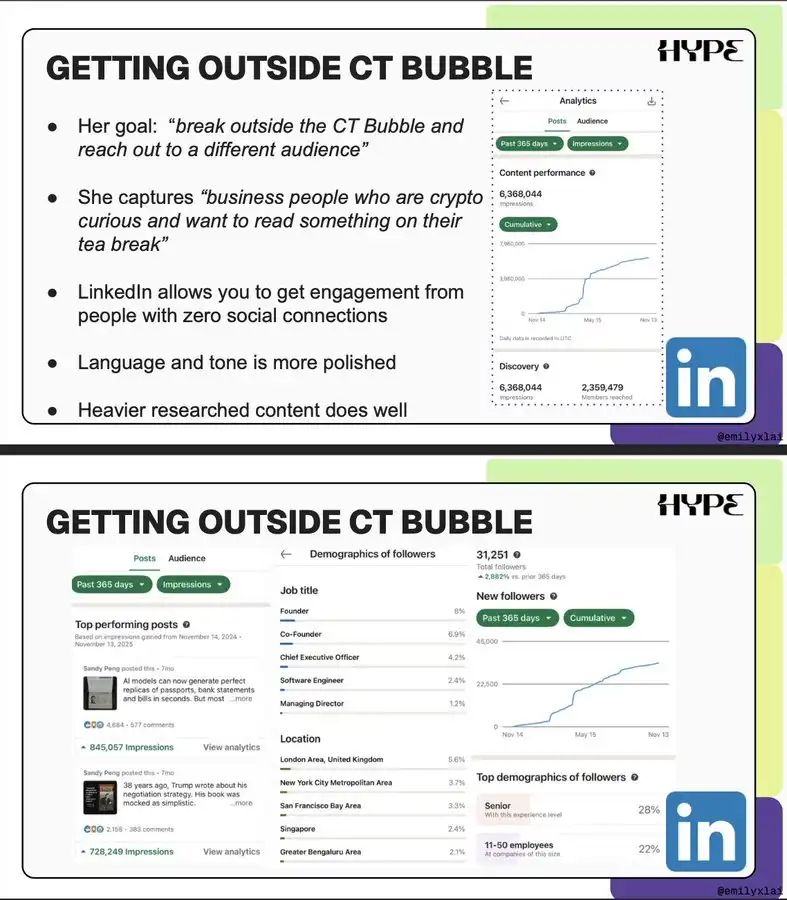
Sandy Peng (co-founder of Scroll)'s Linkedln
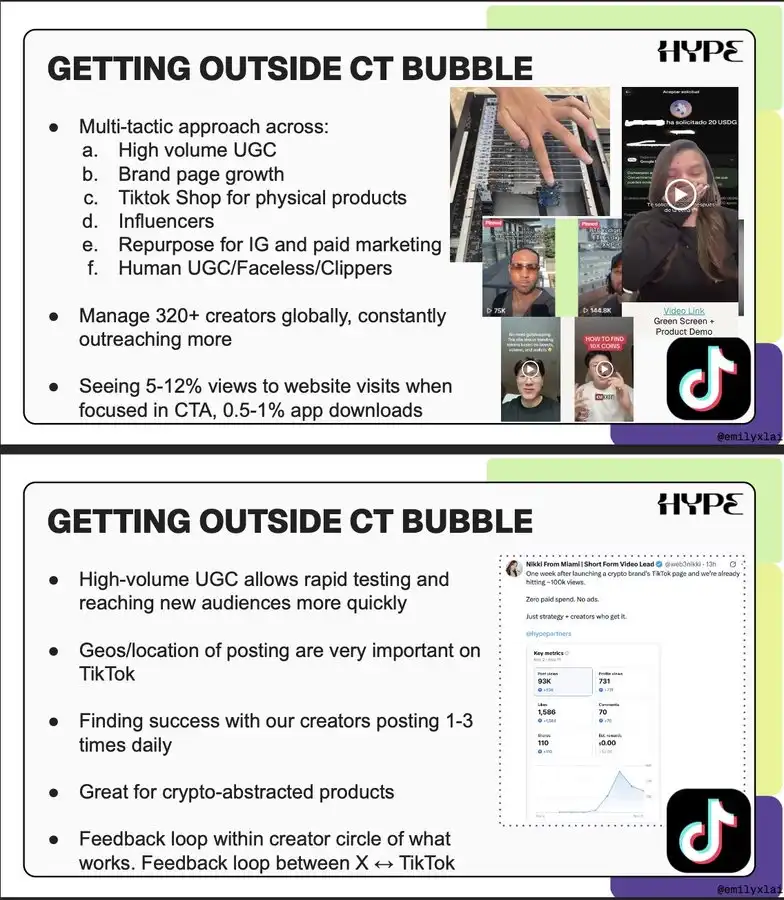
In January of this year, we noticed a significant increase in brands' demand for channels such as Instagram, YouTube, and TikTok. As a result, we brought in @web3nikki and established a short video department focusing on brand growth and user acquisition, with a key emphasis on TikTok. All team members are native TikTok users, familiar with the algorithm, adept at creating viral content, and capable of adjusting content strategy to incorporate a crypto perspective.
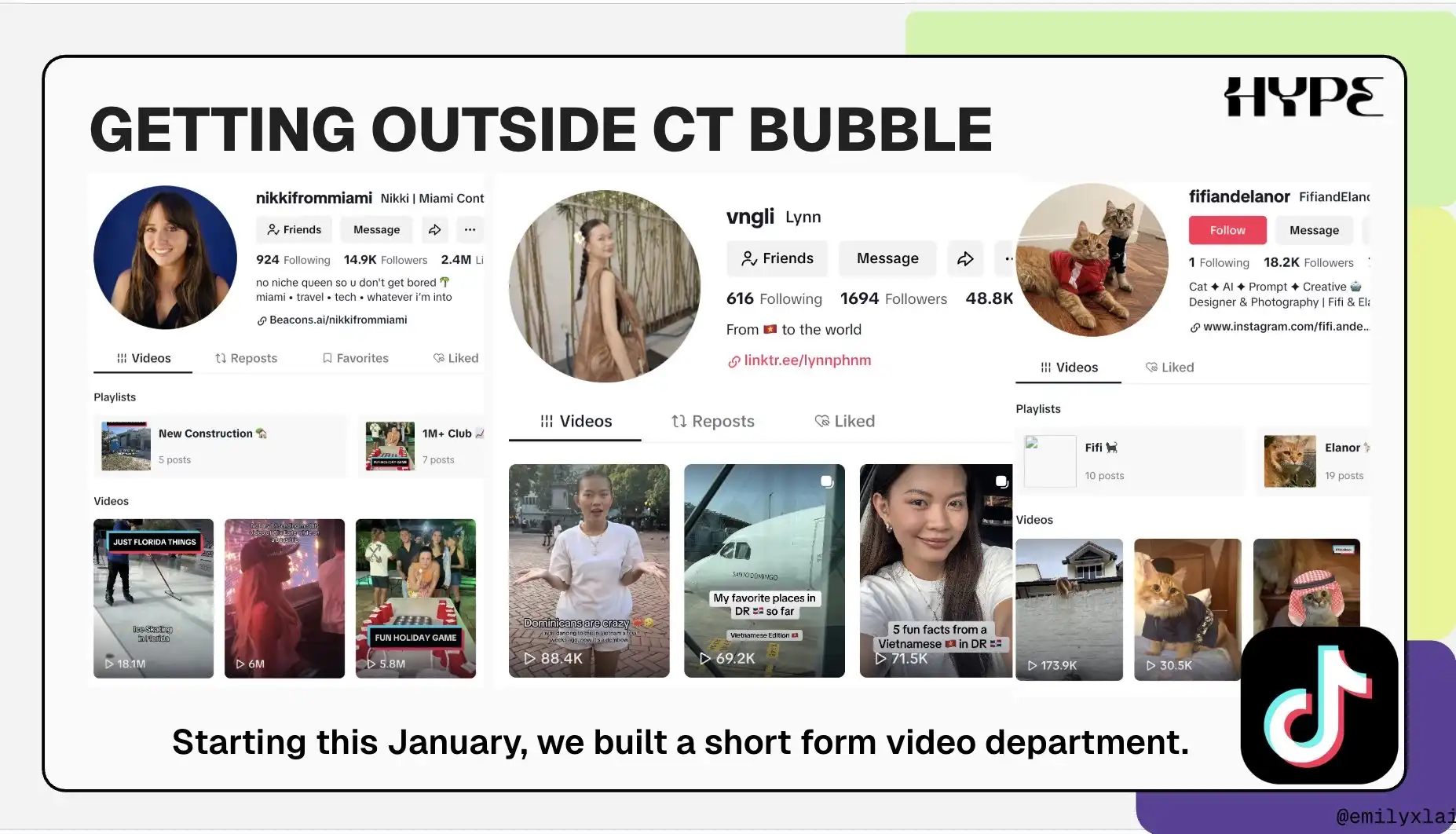
Since the department's inception, we have collaborated with 12 clients, accumulating a wealth of experience and insights.
Events Becoming More Immersive and Exclusive
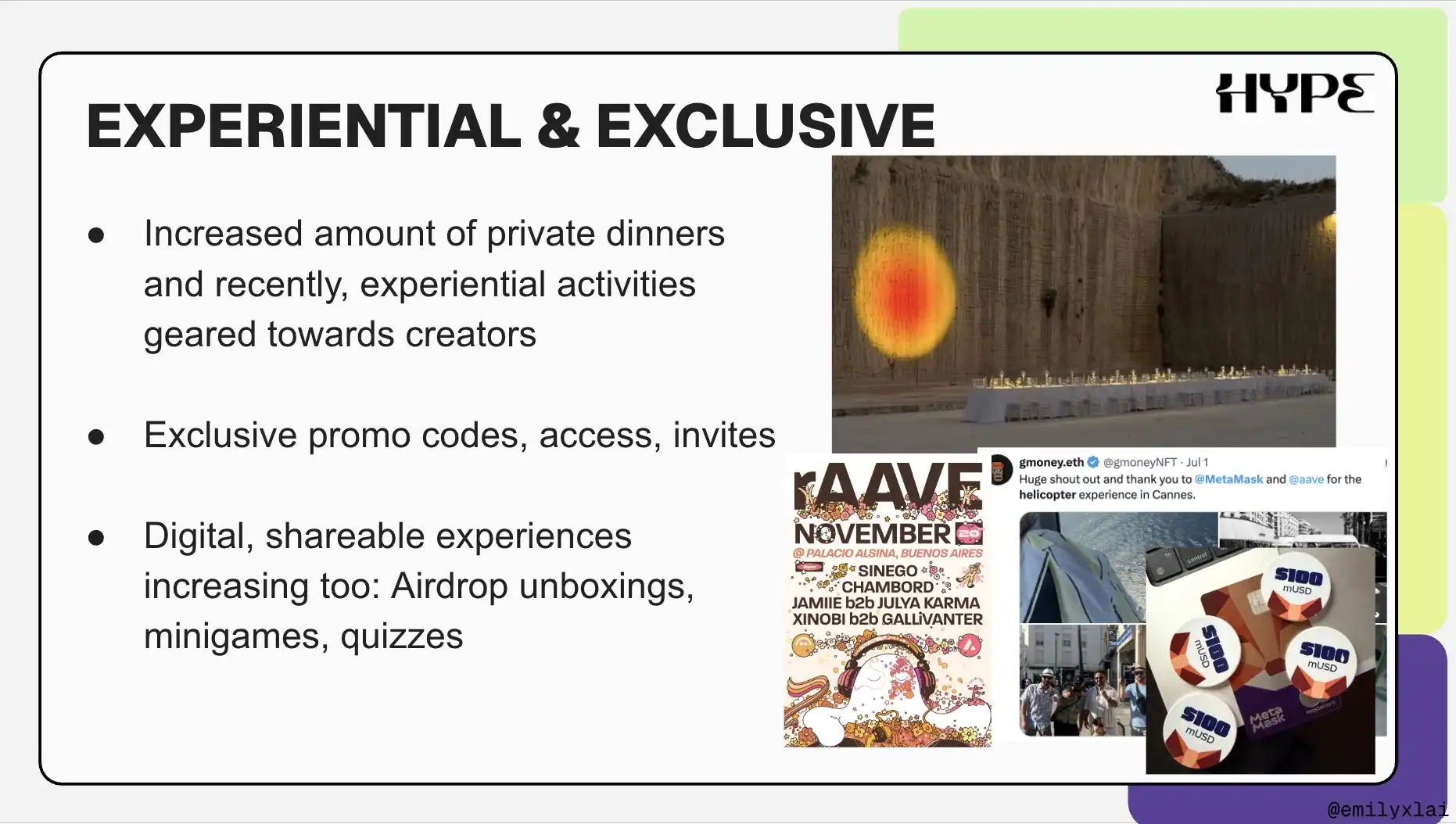
With satellite events around crypto conferences becoming increasingly saturated (often exceeding 500 events in a single week), organizers are facing intense competition to attract participants. This trend has also extended to event swag: higher quality, intricately designed, and exclusively gifted items. This year, we have seen a significant rise in private dinners.
@metamask set a new standard at the July EthCC Cannes event: exclusively for invited guests, featuring boat, helicopter, and plane rides alongside KOLs and content creators.
@raave continues to lead the way in setting the standard for crypto music events, inviting world-class DJs and creating top-notch stage designs. Ticket acquisition methods are tiered, exclusive, and gradually released through a series of marketing activities.
This kind of experiential event is not limited to physical settings but also extends to the digital world: airdrop unboxing, mini-games, Buzzfeed-style personality tests, and other shareable interactive experiences are on the rise. We are seeing more and more inspiration from Web2 brand activations, flash mob concepts, and influencer events being introduced into the crypto space.
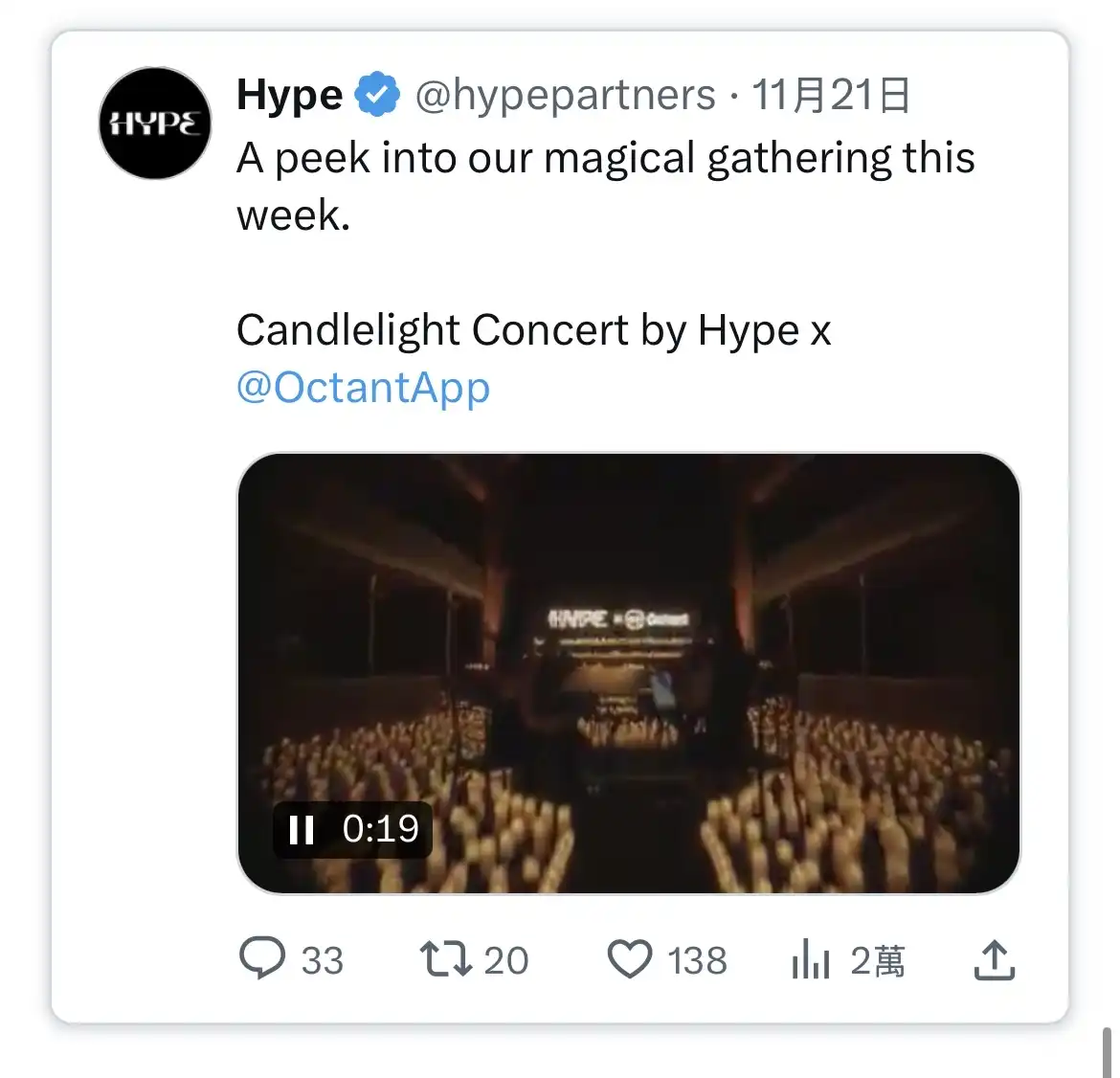
Just last week, we hosted a candlelight concert with @octantapp, and you can see snippets of the live experience here. The event was by invitation only as the venue could not accommodate all 20,000 people. If you wish to attend the next experience, please reach out to @cryptokwueen or me.
Reshaping and Redesigning Incentive Mechanisms
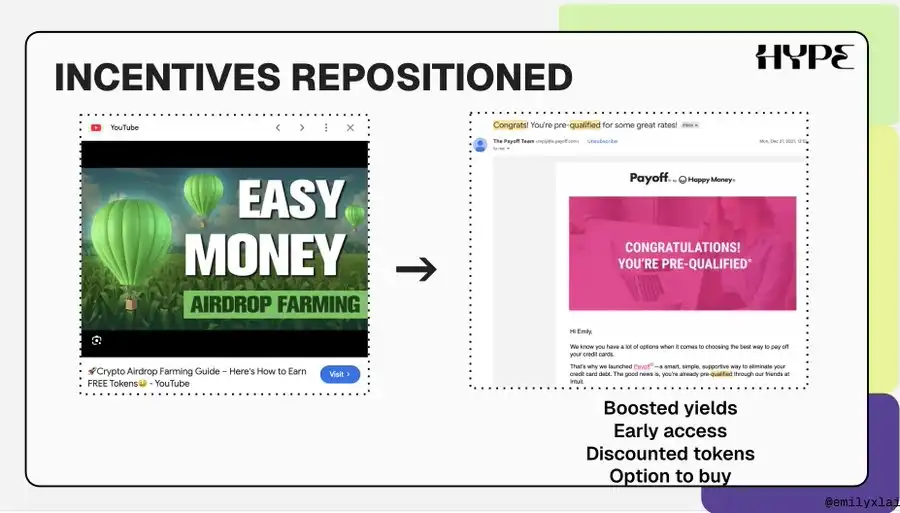
This year, we have seen incentive activities transition from airdrops back to ICOs. Some incentive activities have been repositioned as privileges:
“Being able to buy this token itself is a privilege” (similar to the 2021 NFT whitelist)
“Buy now and receive the privilege of a discounted purchase”
“Stake now and earn higher returns and/or points from multiple protocols”
“To receive the most airdrops, discounts, or points, you must become a top-tier member” (similar to airline and hotel membership tier systems)
All of this reminds me of banks and Web2 fintech companies, packaging product usage and access as a privilege. My Chase emails often say, “Congratulations! You are pre-qualified for a mortgage refinance.”
In the future, we will continue to see incentive programs evolve, moving closer to loyalty and identity tier logic.
Application of AI in Marketing and Operations
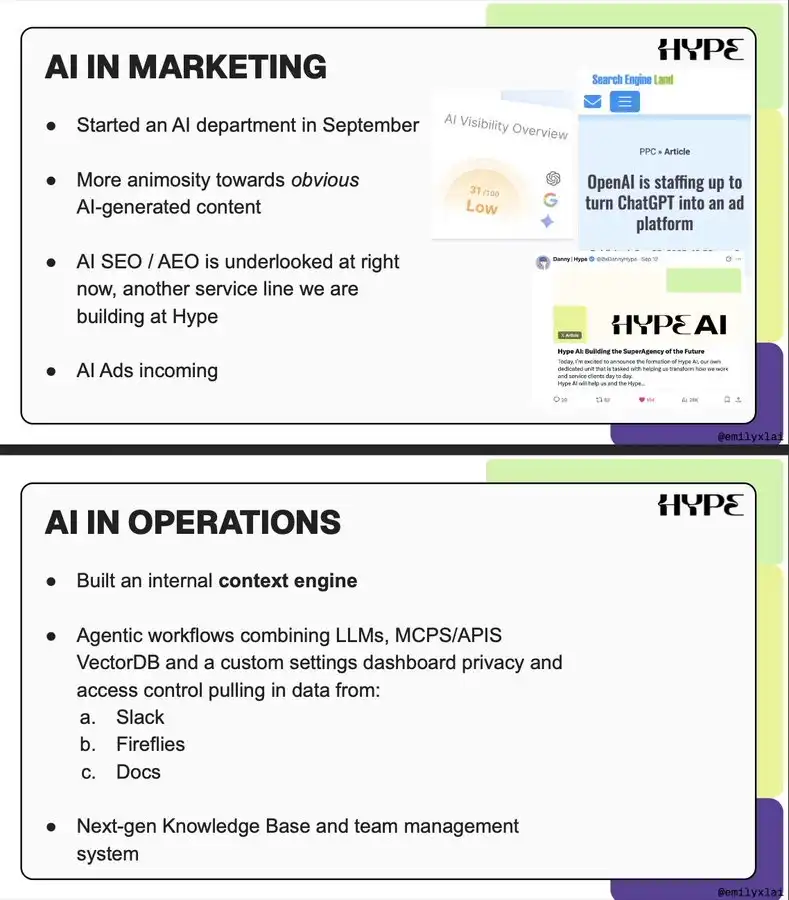
These are the AI trends I have seen in the marketing field and our experience in building an internal operations “context engine” at Hype.
This September, we established the Hype AI department, led by @antefex_moon (our VP of AI). For more details, see the introduction by CEO @0xDannyHype.
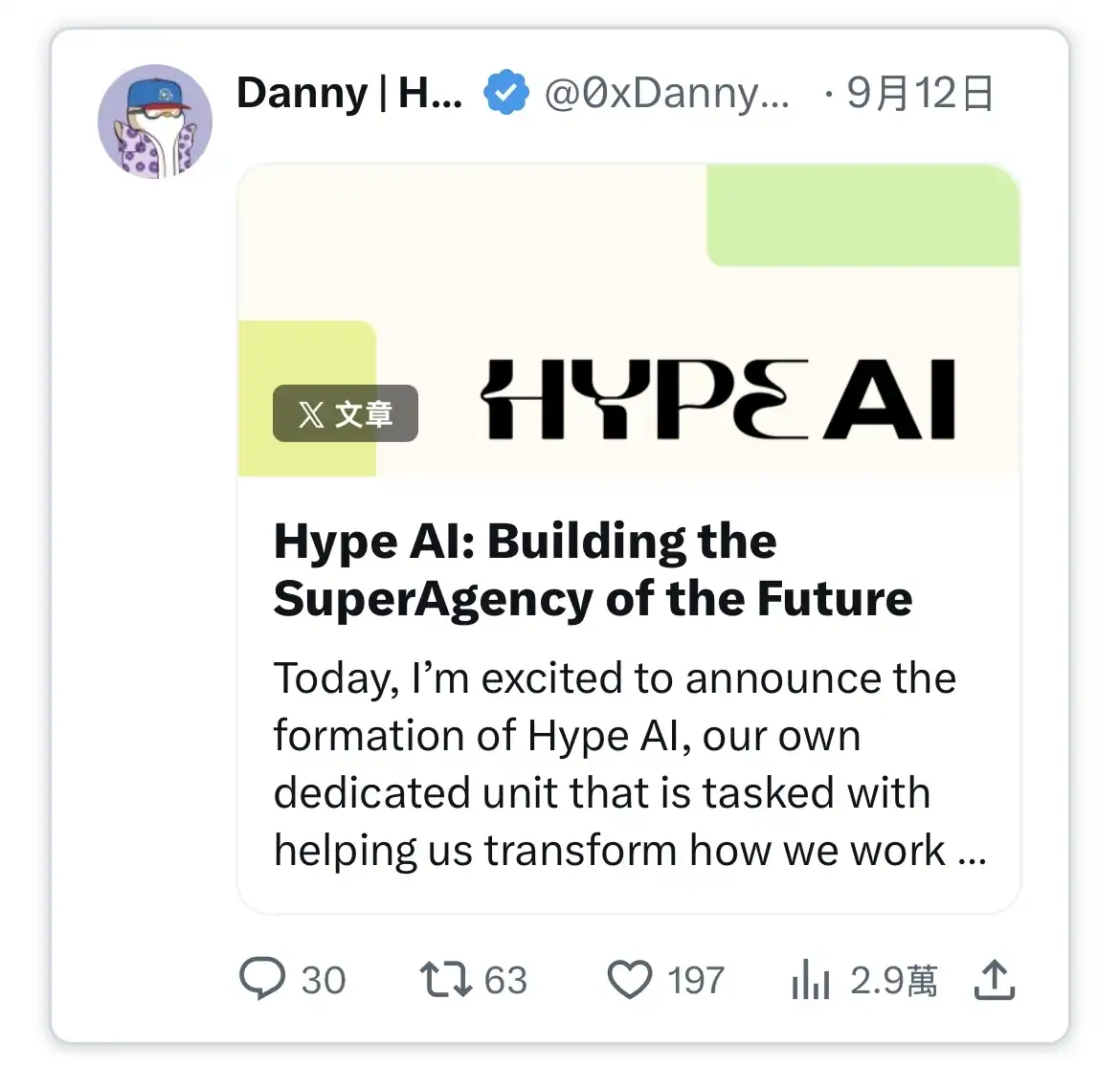
We have extensively tested AI across various aspects to enhance work quality, research, operations, data measurement, and project management. This requires ongoing testing and iteration.
We have also introduced a new service line: AI SEO / LLM SEO, ensuring your company appears in AI prompts based on being in the correct position in the training data. Web2 tools like Ahrefs and SEMrush have started providing AI visibility measurements. Meanwhile, OpenAI has officially announced exploration into ad platforms, bringing new advertising scenarios and marketing strategies.
Other Predictions
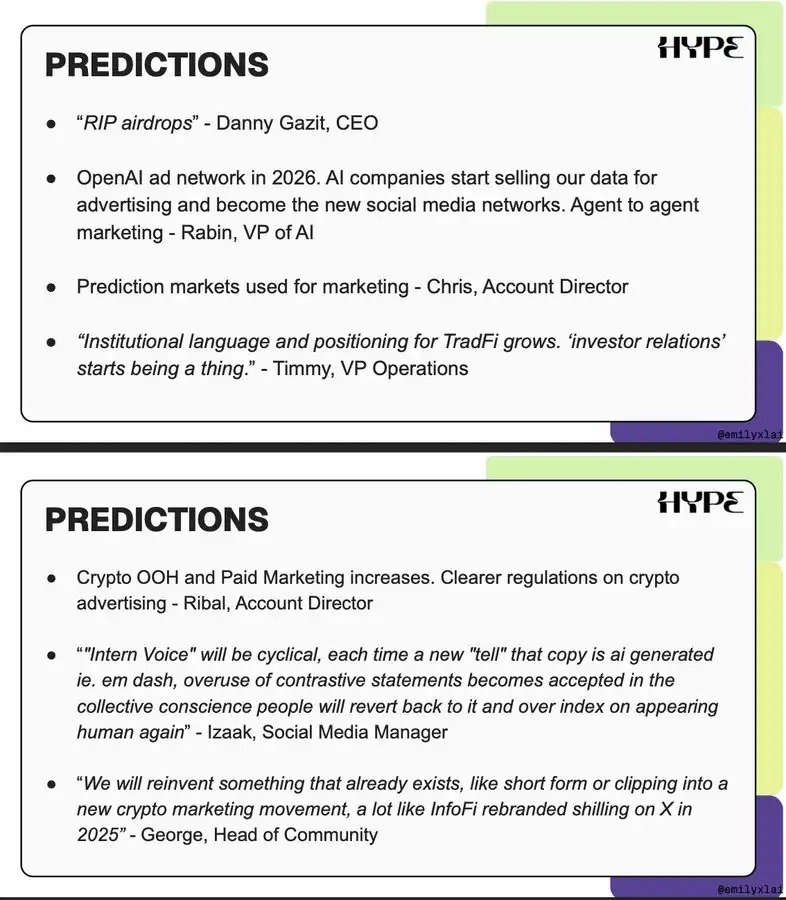
The above trends and observations have directly influenced some of the business and marketing decisions we have made at Hype. Before sharing my "Stay Ahead" framework, I collected predictions from the Hype team regarding crypto marketing. You can read viewpoints from @0xdannyhype, @ChrisRuzArc, @groverGPT, @izaakonx, @Timmbo_Slice, and others:
How to Stay Ahead
The lifecycle of trends is constantly shortening due to:
Diminishing moats (for example, leveraging AI, the internet, and tools has made content creation easier than ever)
The limited size of the crypto industry audience
The continuous emergence of new companies vying for attention every day
Marketing requires continuous innovation, testing, and experimentation. Teams that adopt new strategies early can take advantage of the "novelty" to capture brand awareness until that strategy becomes saturated in the market. You can also retest old strategies and aesthetics to evoke a sense of "freshness" again. It's a constantly looping game.
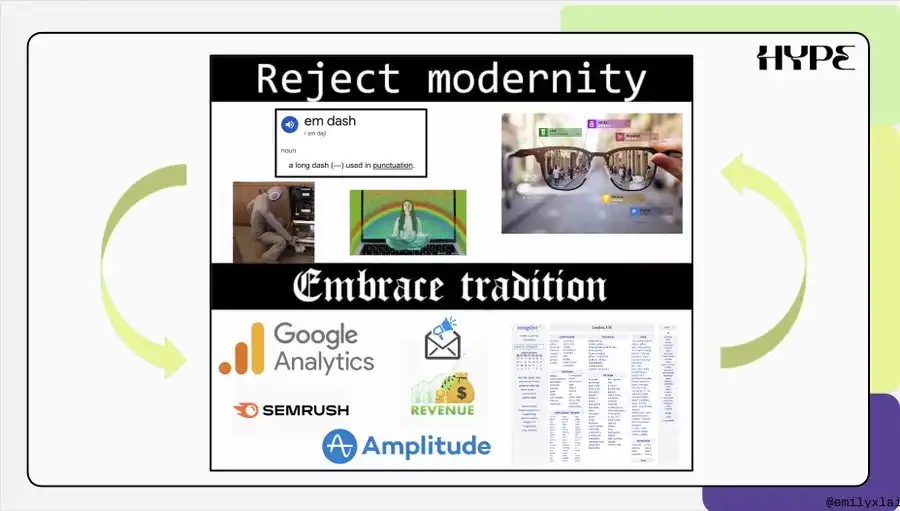
When others turn left, you turn right; when everyone is turning left and right, you sit under the tree, enter a higher dimension, and explore untouched areas. Then repeat this process.
To stay ahead, you must: keep up with industry trends; draw inspiration from outside the crypto industry; think from first principles (this requires brainstorming, deep thinking, and evaluation, not just copying others).
Some questions that can help you define predictions and marketing bets include: Which trends will become obsolete in the next 6-12 months? Which strategies are effective in Web2 or other industries but have not yet been applied in the crypto space? What user behaviors or technological changes will reshape marketing?
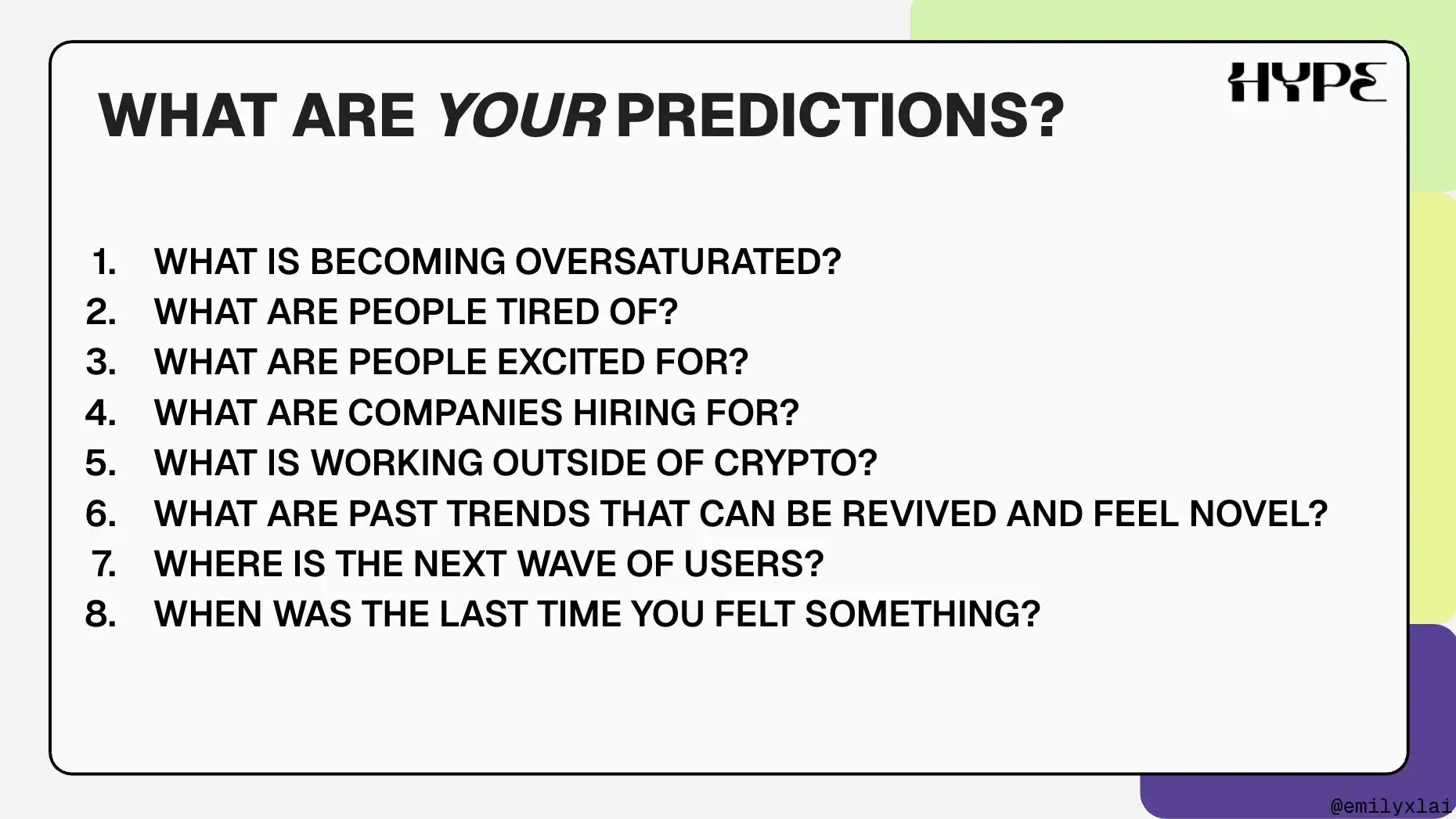
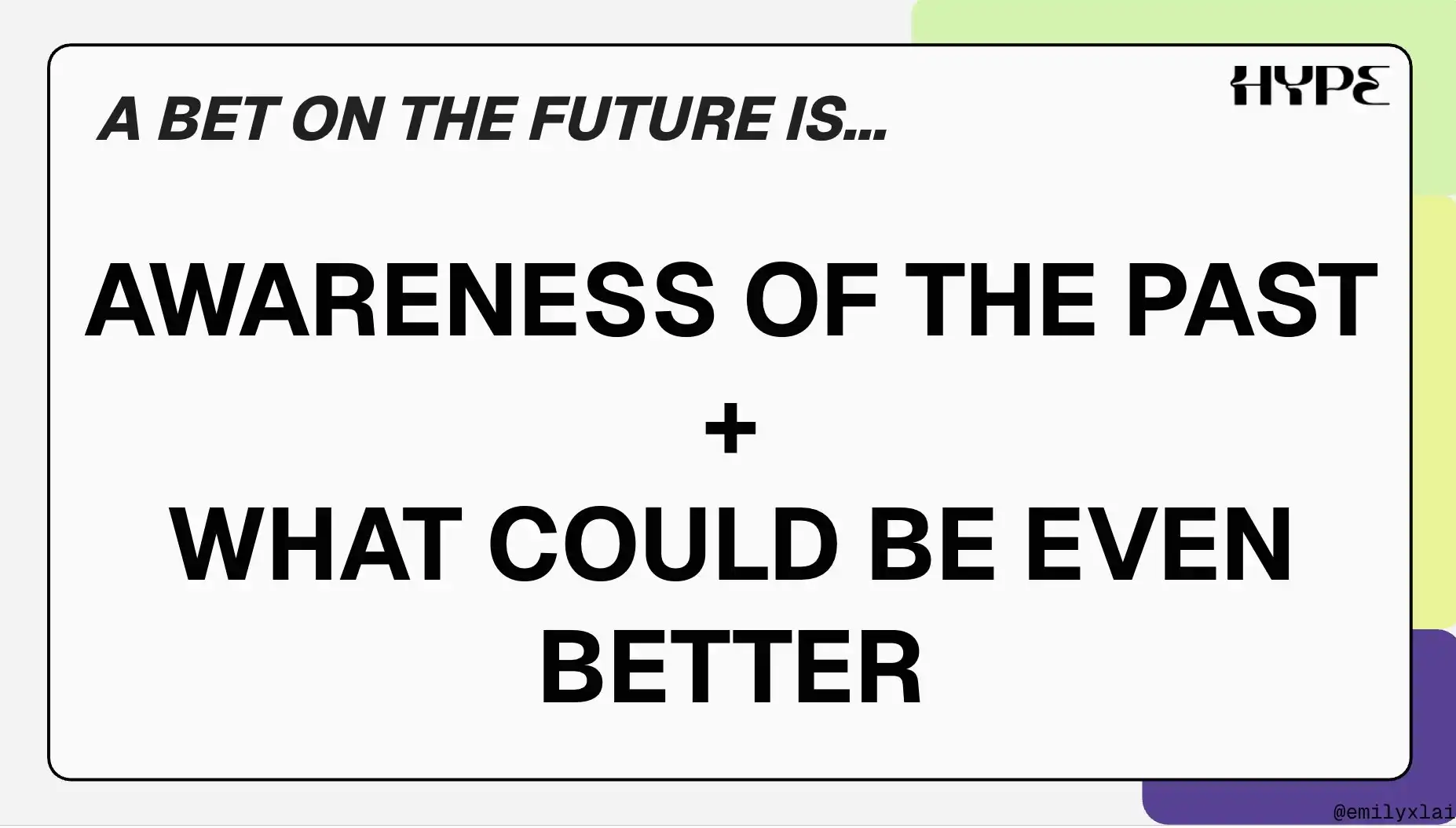
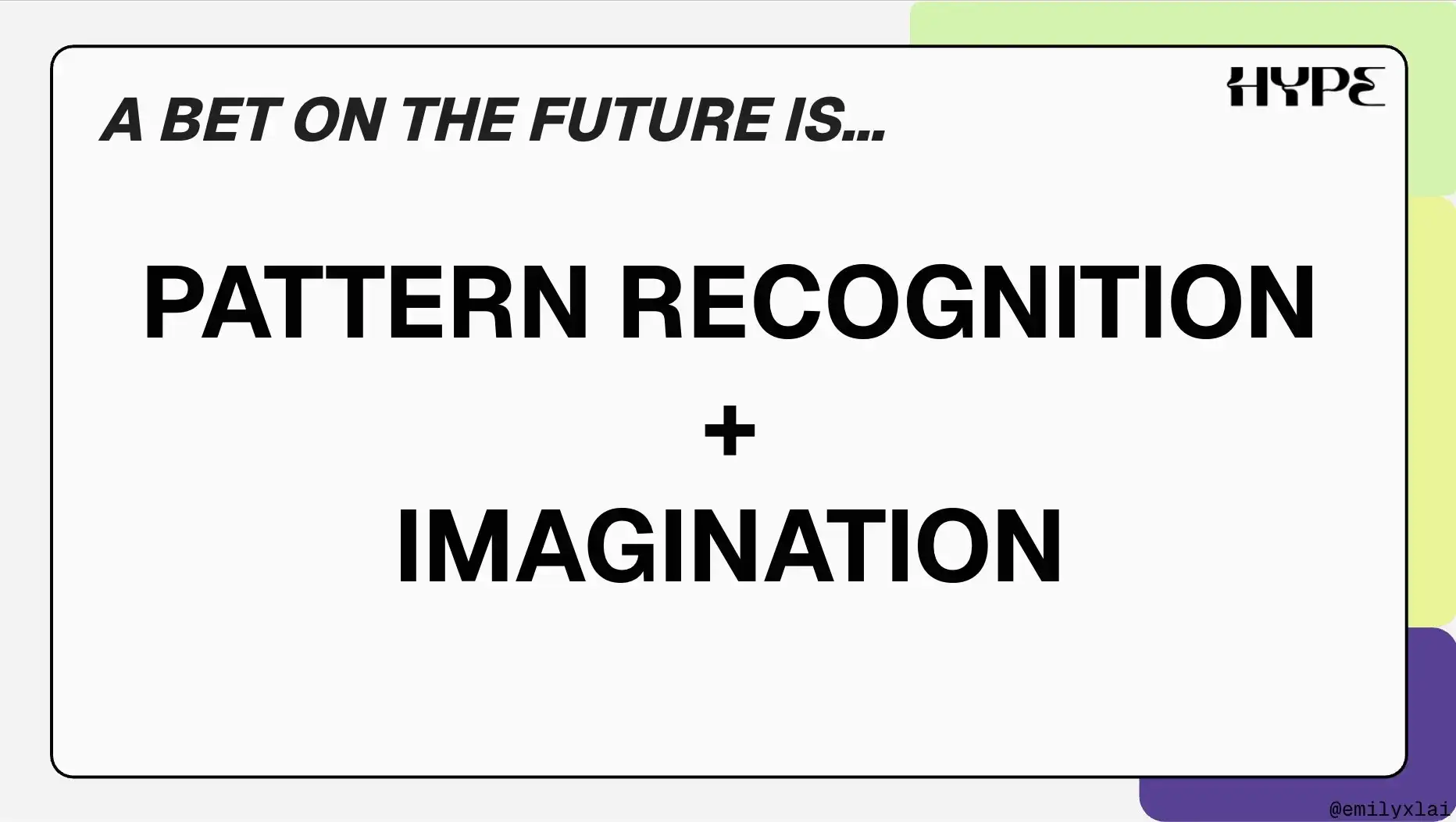
Ultimately, you are betting on the future. And betting on the future relies on seeing patterns clearly and then imagining better possibilities.
Original Post Link
You may also like

1 billion DOTs were minted out of thin air, but the hacker only made 230,000 dollars

After the blockade of the Strait of Hormuz, when will the war end?

Before using Musk's "Western WeChat" X Chat, you need to understand these three questions
The X Chat will be available for download on the App Store this Friday. The media has already covered the feature list, including self-destructing messages, screenshot prevention, 481-person group chats, Grok integration, and registration without a phone number, positioning it as the "Western WeChat." However, there are three questions that have hardly been addressed in any reports.
There is a sentence on X's official help page that is still hanging there: "If malicious insiders or X itself cause encrypted conversations to be exposed through legal processes, both the sender and receiver will be completely unaware."
No. The difference lies in where the keys are stored.
In Signal's end-to-end encryption, the keys never leave your device. X, the court, or any external party does not hold your keys. Signal's servers have nothing to decrypt your messages; even if they were subpoenaed, they could only provide registration timestamps and last connection times, as evidenced by past subpoena records.
X Chat uses the Juicebox protocol. This solution divides the key into three parts, each stored on three servers operated by X. When recovering the key with a PIN code, the system retrieves these three shards from X's servers and recombines them. No matter how complex the PIN code is, X is the actual custodian of the key, not the user.
This is the technical background of the "help page sentence": because the key is on X's servers, X has the ability to respond to legal processes without the user's knowledge. Signal does not have this capability, not because of policy, but because it simply does not have the key.
The following illustration compares the security mechanisms of Signal, WhatsApp, Telegram, and X Chat along six dimensions. X Chat is the only one of the four where the platform holds the key and the only one without Forward Secrecy.
The significance of Forward Secrecy is that even if a key is compromised at a certain point in time, historical messages cannot be decrypted because each message has a unique key. Signal's Double Ratchet protocol automatically updates the key after each message, a mechanism lacking in X Chat.
After analyzing the X Chat architecture in June 2025, Johns Hopkins University cryptology professor Matthew Green commented, "If we judge XChat as an end-to-end encryption scheme, this seems like a pretty game-over type of vulnerability." He later added, "I would not trust this any more than I trust current unencrypted DMs."
From a September 2025 TechCrunch report to being live in April 2026, this architecture saw no changes.
In a February 9, 2026 tweet, Musk pledged to undergo rigorous security tests of X Chat before its launch on X Chat and to open source all the code.
As of the April 17 launch date, no independent third-party audit has been completed, there is no official code repository on GitHub, the App Store's privacy label reveals X Chat collects five or more categories of data including location, contact info, and search history, directly contradicting the marketing claim of "No Ads, No Trackers."
Not continuous monitoring, but a clear access point.
For every message on X Chat, users can long-press and select "Ask Grok." When this button is clicked, the message is delivered to Grok in plaintext, transitioning from encrypted to unencrypted at this stage.
This design is not a vulnerability but a feature. However, X Chat's privacy policy does not state whether this plaintext data will be used for Grok's model training or if Grok will store this conversation content. By actively clicking "Ask Grok," users are voluntarily removing the encryption protection of that message.
There is also a structural issue: How quickly will this button shift from an "optional feature" to a "default habit"? The higher the quality of Grok's replies, the more frequently users will rely on it, leading to an increase in the proportion of messages flowing out of encryption protection. The actual encryption strength of X Chat, in the long run, depends not only on the design of the Juicebox protocol but also on the frequency of user clicks on "Ask Grok."
X Chat's initial release only supports iOS, with the Android version simply stating "coming soon" without a timeline.
In the global smartphone market, Android holds about 73%, while iOS holds about 27% (IDC/Statista, 2025). Of WhatsApp's 3.14 billion monthly active users, 73% are on Android (according to Demand Sage). In India, WhatsApp covers 854 million users, with over 95% Android penetration. In Brazil, there are 148 million users, with 81% on Android, and in Indonesia, there are 112 million users, with 87% on Android.
WhatsApp's dominance in the global communication market is built on Android. Signal, with a monthly active user base of around 85 million, also relies mainly on privacy-conscious users in Android-dominant countries.
X Chat circumvented this battlefield, with two possible interpretations. One is technical debt; X Chat is built with Rust, and achieving cross-platform support is not easy, so prioritizing iOS may be an engineering constraint. The other is a strategic choice; with iOS holding a market share of nearly 55% in the U.S., X's core user base being in the U.S., prioritizing iOS means focusing on their core user base rather than engaging in direct competition with Android-dominated emerging markets and WhatsApp.
These two interpretations are not mutually exclusive, leading to the same result: X Chat's debut saw it willingly forfeit 73% of the global smartphone user base.
This matter has been described by some: X Chat, along with X Money and Grok, forms a trifecta creating a closed-loop data system parallel to the existing infrastructure, similar in concept to the WeChat ecosystem. This assessment is not new, but with X Chat's launch, it's worth revisiting the schematic.
X Chat generates communication metadata, including information on who is talking to whom, for how long, and how frequently. This data flows into X's identity system. Part of the message content goes through the Ask Grok feature and enters Grok's processing chain. Financial transactions are handled by X Money: external public testing was completed in March, opening to the public in April, enabling fiat peer-to-peer transfers via Visa Direct. A senior Fireblocks executive confirmed plans for cryptocurrency payments to go live by the end of the year, holding money transmitter licenses in over 40 U.S. states currently.
Every WeChat feature operates within China's regulatory framework. Musk's system operates within Western regulatory frameworks, but he also serves as the head of the Department of Government Efficiency (DOGE). This is not a WeChat replica; it is a reenactment of the same logic under different political conditions.
The difference is that WeChat has never explicitly claimed to be "end-to-end encrypted" on its main interface, whereas X Chat does. "End-to-end encryption" in user perception means that no one, not even the platform, can see your messages. X Chat's architectural design does not meet this user expectation, but it uses this term.
X Chat consolidates the three data lines of "who this person is, who they are talking to, and where their money comes from and goes to" in one company's hands.
The help page sentence has never been just technical instructions.

Parse Noise's newly launched Beta version, how to "on-chain" this heat?

Is Lobster a Thing of the Past? Unpacking the Hermes Agent Tools that Supercharge Your Throughput to 100x

Declare War on AI? The Doomsday Narrative Behind Ultraman's Residence in Flames
Crypto VCs Are Dead? The Market Extinction Cycle Has Begun

Claude's Journey to Foolishness in Diagrams: The Cost of Thriftiness, or How API Bill Increased 100-Fold

Edge Land Regress: A Rehash Around Maritime Power, Energy, and the Dollar
Arthur Hayes Latest Interview: How Should Retail Investors Navigate the Iran Conflict?
Just now, Sam Altman was attacked again, this time by gunfire

Straits Blockade, Stablecoin Recap | Rewire News Morning Edition

From High Expectations to Controversial Turnaround, Genius Airdrop Triggers Community Backlash
The Xiaomi electric vehicle factory in Beijing's Daxing district has become the new Jerusalem for the American elite

Lean Harness, Fat Skill: The Real Source of 100x AI Productivity

Ultraman is not afraid of his mansion being attacked; he has a fortress.
US-Iran Negotiations Collapse, Bitcoin Faces Battle to Defend $70,000 Level
Reflections and Confusions of a Crypto VC
1 billion DOTs were minted out of thin air, but the hacker only made 230,000 dollars
After the blockade of the Strait of Hormuz, when will the war end?
Before using Musk's "Western WeChat" X Chat, you need to understand these three questions
The X Chat will be available for download on the App Store this Friday. The media has already covered the feature list, including self-destructing messages, screenshot prevention, 481-person group chats, Grok integration, and registration without a phone number, positioning it as the "Western WeChat." However, there are three questions that have hardly been addressed in any reports.
There is a sentence on X's official help page that is still hanging there: "If malicious insiders or X itself cause encrypted conversations to be exposed through legal processes, both the sender and receiver will be completely unaware."
No. The difference lies in where the keys are stored.
In Signal's end-to-end encryption, the keys never leave your device. X, the court, or any external party does not hold your keys. Signal's servers have nothing to decrypt your messages; even if they were subpoenaed, they could only provide registration timestamps and last connection times, as evidenced by past subpoena records.
X Chat uses the Juicebox protocol. This solution divides the key into three parts, each stored on three servers operated by X. When recovering the key with a PIN code, the system retrieves these three shards from X's servers and recombines them. No matter how complex the PIN code is, X is the actual custodian of the key, not the user.
This is the technical background of the "help page sentence": because the key is on X's servers, X has the ability to respond to legal processes without the user's knowledge. Signal does not have this capability, not because of policy, but because it simply does not have the key.
The following illustration compares the security mechanisms of Signal, WhatsApp, Telegram, and X Chat along six dimensions. X Chat is the only one of the four where the platform holds the key and the only one without Forward Secrecy.
The significance of Forward Secrecy is that even if a key is compromised at a certain point in time, historical messages cannot be decrypted because each message has a unique key. Signal's Double Ratchet protocol automatically updates the key after each message, a mechanism lacking in X Chat.
After analyzing the X Chat architecture in June 2025, Johns Hopkins University cryptology professor Matthew Green commented, "If we judge XChat as an end-to-end encryption scheme, this seems like a pretty game-over type of vulnerability." He later added, "I would not trust this any more than I trust current unencrypted DMs."
From a September 2025 TechCrunch report to being live in April 2026, this architecture saw no changes.
In a February 9, 2026 tweet, Musk pledged to undergo rigorous security tests of X Chat before its launch on X Chat and to open source all the code.
As of the April 17 launch date, no independent third-party audit has been completed, there is no official code repository on GitHub, the App Store's privacy label reveals X Chat collects five or more categories of data including location, contact info, and search history, directly contradicting the marketing claim of "No Ads, No Trackers."
Not continuous monitoring, but a clear access point.
For every message on X Chat, users can long-press and select "Ask Grok." When this button is clicked, the message is delivered to Grok in plaintext, transitioning from encrypted to unencrypted at this stage.
This design is not a vulnerability but a feature. However, X Chat's privacy policy does not state whether this plaintext data will be used for Grok's model training or if Grok will store this conversation content. By actively clicking "Ask Grok," users are voluntarily removing the encryption protection of that message.
There is also a structural issue: How quickly will this button shift from an "optional feature" to a "default habit"? The higher the quality of Grok's replies, the more frequently users will rely on it, leading to an increase in the proportion of messages flowing out of encryption protection. The actual encryption strength of X Chat, in the long run, depends not only on the design of the Juicebox protocol but also on the frequency of user clicks on "Ask Grok."
X Chat's initial release only supports iOS, with the Android version simply stating "coming soon" without a timeline.
In the global smartphone market, Android holds about 73%, while iOS holds about 27% (IDC/Statista, 2025). Of WhatsApp's 3.14 billion monthly active users, 73% are on Android (according to Demand Sage). In India, WhatsApp covers 854 million users, with over 95% Android penetration. In Brazil, there are 148 million users, with 81% on Android, and in Indonesia, there are 112 million users, with 87% on Android.
WhatsApp's dominance in the global communication market is built on Android. Signal, with a monthly active user base of around 85 million, also relies mainly on privacy-conscious users in Android-dominant countries.
X Chat circumvented this battlefield, with two possible interpretations. One is technical debt; X Chat is built with Rust, and achieving cross-platform support is not easy, so prioritizing iOS may be an engineering constraint. The other is a strategic choice; with iOS holding a market share of nearly 55% in the U.S., X's core user base being in the U.S., prioritizing iOS means focusing on their core user base rather than engaging in direct competition with Android-dominated emerging markets and WhatsApp.
These two interpretations are not mutually exclusive, leading to the same result: X Chat's debut saw it willingly forfeit 73% of the global smartphone user base.
This matter has been described by some: X Chat, along with X Money and Grok, forms a trifecta creating a closed-loop data system parallel to the existing infrastructure, similar in concept to the WeChat ecosystem. This assessment is not new, but with X Chat's launch, it's worth revisiting the schematic.
X Chat generates communication metadata, including information on who is talking to whom, for how long, and how frequently. This data flows into X's identity system. Part of the message content goes through the Ask Grok feature and enters Grok's processing chain. Financial transactions are handled by X Money: external public testing was completed in March, opening to the public in April, enabling fiat peer-to-peer transfers via Visa Direct. A senior Fireblocks executive confirmed plans for cryptocurrency payments to go live by the end of the year, holding money transmitter licenses in over 40 U.S. states currently.
Every WeChat feature operates within China's regulatory framework. Musk's system operates within Western regulatory frameworks, but he also serves as the head of the Department of Government Efficiency (DOGE). This is not a WeChat replica; it is a reenactment of the same logic under different political conditions.
The difference is that WeChat has never explicitly claimed to be "end-to-end encrypted" on its main interface, whereas X Chat does. "End-to-end encryption" in user perception means that no one, not even the platform, can see your messages. X Chat's architectural design does not meet this user expectation, but it uses this term.
X Chat consolidates the three data lines of "who this person is, who they are talking to, and where their money comes from and goes to" in one company's hands.
The help page sentence has never been just technical instructions.


 App
App