
- Buy Crypto
- Markets
 Futures
- Spot
- Copy Trade
- Earn
- More
EUR/GBP rises above 0.8400, recovers ground due to strong Euro performance
By: bitcoin ethereum news|2025/05/16 15:15:05
0
Share
EUR/GBP remains supported by a stronger Euro, even amid growing expectations of further rate cuts by the ECB. ECB’s Francois Villeroy de Galhau remarked, “We are not currently in a currency war but rather a trade war situation.” The UK’s solid economic performance could lessen the chances of aggressive rate cuts by the Bank of England. EUR/GBP is rebounding from recent losses, trading near 0.8420 during Friday’s Asian session. The currency cross is supported by a stronger Euro (EUR), which is outperforming its risk-sensitive peers despite signals from European Central Bank (ECB) officials suggesting scope for further interest rate cuts due to easing inflationary pressures. On Wednesday, Eurozone Q1 GDP growth was slightly revised down to 0.3% quarter-on-quarter, from the earlier estimate of 0.4%. Year-over-year, GDP grew by 1.2%, matching expectations. However, employment surprised to the upside, rising 0.3% QoQ in Q1, beating the previous and flash estimates of 0.1%. ECB policymaker Francois Villeroy de Galhau stated on Friday, “We are not currently in a currency war but rather a trade war situation,” adding that protectionism and uncertainty are weighing on US economic confidence. Fellow ECB member Martins Kazaks echoed the cautious sentiment, affirming that a “meeting-by-meeting approach is right” amid ongoing uncertainty over global trade policies. Despite the Euro’s strength, gains in the EUR/GBP cross may be capped by stronger-than-expected UK economic data. The UK’s GDP grew by 0.7% in Q1 2025, surpassing forecasts of 0.6%, while annual growth reached 1.3%, slightly above the 1.2% estimate. March GDP also rose by 0.2%, exceeding expectations of no change, though easing from February’s 0.5% gain. The robust performance may reduce the likelihood of aggressive rate cuts by the Bank of England (BoE). Central banks FAQs Central Banks have a key mandate which is making sure that there is price stability in a country or region. Economies are constantly facing inflation or deflation when prices for certain goods and services are fluctuating. Constant rising prices for the same goods means inflation, constant lowered prices for the same goods means deflation. It is the task of the central bank to keep the demand in line by tweaking its policy rate. For the biggest central banks like the US Federal Reserve (Fed), the European Central Bank (ECB) or the Bank of England (BoE), the mandate is to keep inflation close to 2%. A central bank has one important tool at its disposal to get inflation higher or lower, and that is by tweaking its benchmark policy rate, commonly known as interest rate. On pre-communicated moments, the central bank will issue a statement with its policy rate and provide additional reasoning on why it is either remaining or changing (cutting or hiking) it. Local banks will adjust their savings and lending rates accordingly, which in turn will make it either harder or easier for people to earn on their savings or for companies to take out loans and make investments in their businesses. When the central bank hikes interest rates substantially, this is called monetary tightening. When it is cutting its benchmark rate, it is called monetary easing. A central bank is often politically independent. Members of the central bank policy board are passing through a series of panels and hearings before being appointed to a policy board seat. Each member in that board often has a certain conviction on how the central bank should control inflation and the subsequent monetary policy. Members that want a very loose monetary policy, with low rates and cheap lending, to boost the economy substantially while being content to see inflation slightly above 2%, are called ‘doves’. Members that rather want to see higher rates to reward savings and want to keep a lit on inflation at all time are called ‘hawks’ and will not rest until inflation is at or just below 2%. Normally, there is a chairman or president who leads each meeting, needs to create a consensus between the hawks or doves and has his or her final say when it would come down to a vote split to avoid a 50-50 tie on whether the current policy should be adjusted. The chairman will deliver speeches which often can be followed live, where the current monetary stance and outlook is being communicated. A central bank will try to push forward its monetary policy without triggering violent swings in rates, equities, or its currency. All members of the central bank will channel their stance toward the markets in advance of a policy meeting event. A few days before a policy meeting takes place until the new policy has been communicated, members are forbidden to talk publicly. This is called the blackout period. Source: https://www.fxstreet.com/news/eur-gbp-rises-above-08400-recovers-ground-due-to-strong-euro-performance-202505160603
You may also like

Trading Never Sleeps: On-Chain, Crude Oil, and Leverage
The prices in this window are determined by emotions, amplified by leverage, driven by the narrative of war—rather than by the supply and demand of crude oil.

On-chain Yield Panorama: The Evolution from Interest-bearing Stablecoins to Crypto Credit Products
In a bear market, investors tend to prefer more stable returns and lower underlying risks, which has driven the growth of interest-bearing stablecoins.

RootData announced the integration with OpenClaw, and these gameplay features have gone viral
In the era of AI Agents, the value of data lies not in "ownership," but in "connection."

Key Market Intelligence on March 9th, how much did you miss out on?
1. On-chain Funds: $221M flowed into Hyperliquid last week; $186.7M flowed out of Arbitrum
2. Largest Price Swings: $DENT, $UAI
3. Top News: Middle East Conflict Sparks Stagflation Trading, Global Stock Markets Shed Around $6 Trillion

a16z: After AI Superpowers, Where to Next for Humanity?
Cryptocurrency will become the cornerstone of trust in this new era.

Why Does Oil Go Up When Bitcoin Goes Down?
The Impact of Middle Eastern Oil on Bitcoin Price

Decoding 112,000 Polymarket Addresses: The Top 1% Making Money Are Doing These Five Things
Those loss-making addresses are not stupid, just lacking discipline — too many markets involved, overexposure, excessive FOMO, and hardly any post-mortem.

AAVE founder issues a warning: DeFi must never become the exit liquidity for Wall Street private credit
In order for RWA to succeed in DeFi and for DeFi to achieve meaningful scale expansion through real-world assets, the entire industry needs to thoughtfully and cautiously build opportunities that connect TradFi (traditional finance) and on-chain markets.
How To Create A Frequency So Strong It Makes Reality Obey You
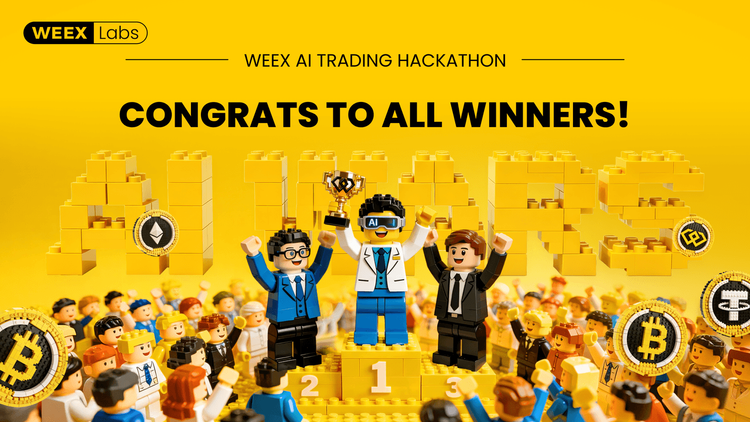
The first-ever WEEX AI Hackathon has concluded, with 10 winners emerging from over 200 global teams. Beyond its $1.8 million prize pool, the event marked a milestone—proving that the future of AI trading belongs to accessible, AI-powered innovation.

The cryptocurrency industry has waited for five and a half years, and what they got is half a ticket
The hand that opens this door is not the rule, but the direction of the wind.

The trend of Ethena reveals what information about the cryptocurrency market
Through Ethena's data insights: the collective hedging and self-protection of VCs and project parties is leading the crypto market into an extreme risk-averse moment of "complete balance between bulls and bears" for the first time in history.

I've been in the crypto industry for five and a half years, and all I got was half a ticket.
The hand that opens this door is not a rule, but a wind.

Crude Oil Surges 25%, Hyperliquid Unfolds On-Chain Showdown
Hyperliquid users now need to keep an eye on the latest developments in the Iran Hormuz Strait, while a DeFi OG is using on-chain derivatives to hedge against war risk.

$20 Billion Valuation, Is Kalshi Engaging in an Arms Race with Polymarket?
US-Iran Conflict + World Cup + Eve of Elections, Predicts Market Key Data Points to Reach New All-Time Highs in 2026.

Will Not Messing with OpenClaw Lead to Obsolescence in the AI Era? | Lobster Fuss Summit
Amazon Web Services On-Site Guidance to Deploy OpenClaw, Low-Cost and User-Friendly

Anticipating the Market's New Challenge to Political Elections
The next US presidential election will depend on the prediction markets

The Shadow Business Empire of Iran's New Supreme Leader: Oil, Real Estate, and Financial Intrigue
From political and military influence to shaping the financial network, Mujataba has secretly laid the groundwork to assume the ultimate leadership position.

Next-Generation Software Built for Trillion-Agent Scale
When the Agent becomes a key user of the software, software design, infrastructure, and business model will all change accordingly
Trading Never Sleeps: On-Chain, Crude Oil, and Leverage
The prices in this window are determined by emotions, amplified by leverage, driven by the narrative of war—rather than by the supply and demand of crude oil.
On-chain Yield Panorama: The Evolution from Interest-bearing Stablecoins to Crypto Credit Products
In a bear market, investors tend to prefer more stable returns and lower underlying risks, which has driven the growth of interest-bearing stablecoins.
RootData announced the integration with OpenClaw, and these gameplay features have gone viral
In the era of AI Agents, the value of data lies not in "ownership," but in "connection."
Key Market Intelligence on March 9th, how much did you miss out on?
1. On-chain Funds: $221M flowed into Hyperliquid last week; $186.7M flowed out of Arbitrum
2. Largest Price Swings: $DENT, $UAI
3. Top News: Middle East Conflict Sparks Stagflation Trading, Global Stock Markets Shed Around $6 Trillion
a16z: After AI Superpowers, Where to Next for Humanity?
Cryptocurrency will become the cornerstone of trust in this new era.
Why Does Oil Go Up When Bitcoin Goes Down?
The Impact of Middle Eastern Oil on Bitcoin Price


 App
App