
 Buy Crypto
- Markets
 Futures
- Spot
- Copy Trade
- Earn
- More
Delaware Divide: Musk and Coinbase's Breakneck Exodus

Original Article Title: "Delaware Schism: Musk and Coinbase's Disjointed Exodus"
Original Article Author: Sleepy.txt, Dynamic Beating
On the map, the United States remains a unified federation; but in the dimension of business logic, we are witnessing the U.S. tearing apart into "two nations."
In the early winter of 2025, the United States' largest cryptocurrency exchange, Coinbase, officially began the process of relocating its headquarters from Delaware to Texas.
In the long narrative of American business history, it is hard to overlook the resolute poignancy behind this decision—a far cry from a mere change of administrative address, it resembles more a spiritual "parricide" and "apostasy."
For the past hundred years, Delaware has been the undisputed "Mecca" of American commercial civilization, the highest totem of the industrial rational era.
The so-called "Mecca" implies that it is not just a geographical coordinate, but also the endpoint of a belief. Within this narrow peninsula of less than two thousand square miles, over 66% of America's Fortune 500 companies reside.
In the traditional narratives of Wall Street and Silicon Valley, a great company may be born in a California garage, but its soul (legal entity) must be domiciled in Delaware.
There lies the oldest and most professional Court of Chancery in America. For the investors and professional managers of that era, Delaware symbolized a near-religious certainty—boasting the most sophisticated trust responsibilities, the most predictable case law, and a sense of security known as the cornerstone of commerce.
But now, this bedrock carrying a century of business faith has revealed a heart-stopping crack.
Coinbase's departure is not an isolated case. If you look at the list of this migration, you will find it filled with some of today's most unruly and wild names.
Elon Musk was the initial catalyst of this exodus.
The spark was lit a year ago. In that world-shaking ruling, a Delaware judge definitively stripped Musk of a $56 billion compensation package he had spent a decade earning. Despite miraculously achieving the performance targets once considered by Wall Street as far-fetched, driving Tesla's market value to a trillion-dollar peak, the judge still, citing "insufficiently independent board," tore up this results-based contract with a single decree.
This ruling completely outraged the new elites of Silicon Valley. Subsequently, this "Iron Man," in a fit of anger, took Tesla and SpaceX and, like the famous Mayflower, resolutely set sail towards the south of Texas. Now, unicorns such as Coinbase and TripAdvisor have also quickly followed suit, joining the breakout.
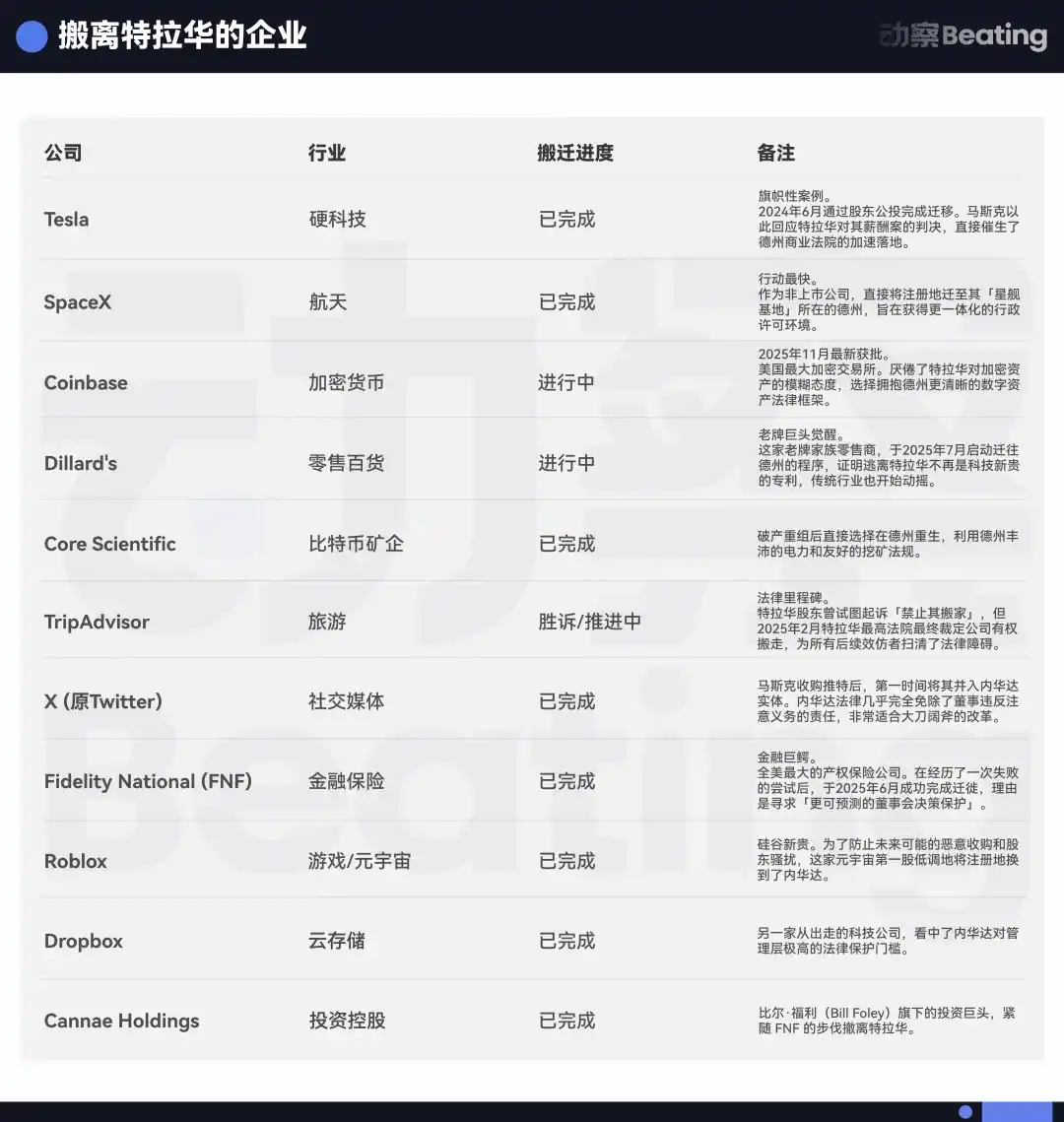
This series of fading figures into the distance heralded the twilight of an old era.
Once, big companies stayed in Delaware to seek protection because it represented the maturity and rationality of the rule of law; now, for survival and rampant growth, the top-tier companies believe they must escape Delaware to be safe.
For Freedom, Blood Must Be Shed
In the ruthless rule of the business world, freedom has never been free. But for Musk and Coinbase, the price of this freedom has become so exorbitant that it is jaw-dropping.
In the general public's perception, a company's change of domicile seems like a simple administrative procedure — fill out a few forms, change an address, and that's it. But in reality, this is not a "moving" that a few thousand dollars in administrative fees can settle; the giants must pay a staggering bill.
First, they must hire top-tier law firms. Firms like Wachtell, Lipton, Rosen & Katz and Sullivan & Cromwell, which are at the top of the pyramid, have already exceeded a $2,000 per hour rate for their partners. Just to draft the hundreds of pages of a Proxy Statement that complies with SEC disclosure requirements, the bill easily surpasses $5 million.
Next are the costly proxy wars. To convince skeptical institutional shareholders like BlackRock and Vanguard, the company needs to hire professional proxy solicitation firms. For a mega-cap stock like Tesla, this "campaign fee" alone can reach millions of dollars, and they must conduct months-long roadshows and lobbying efforts akin to a U.S. presidential campaign.
The most deadly is the potential default risk. The legal team must review tens of thousands of commercial contracts day and night because once the domicile is changed, many "change of control" provisions in bond agreements could be triggered instantly.
To obtain waivers from creditors, companies often have to pay additional fees. According to market norms, this fee typically ranges from 0.25% to 0.5% of the bond amount. For giants with a huge debt inventory, this means instantaneously evaporating tens of millions or even hundreds of millions of dollars of cash flow — what was once precious funds available for research and development or buybacks has now turned into a massive sunk cost.
Since the cost is so high, why would they rather "cut off their arm" and leave?
The answer lies in the shadow beneath Delaware's shiny legal facade.
For today's tech giants, Delaware is no longer a safe harbor but a hunting ground littered with traps. Here, a large, secretive, and greedy group thrives—the Plaintiffs' Bar.
On Wall Street, this is humorously referred to as an "acquisition tax." Statistically, during the peak of the last decade, over 90% of mergers and acquisitions valued over $100 million faced litigation in Delaware. These lawyers do not care about corporate governance; they are like sharks smelling blood. Holding just one share of a company's stock on a regular day, they immediately file class-action lawsuits citing "insufficient disclosure" as soon as a major announcement is made.
This has evolved into a standardized "extortion pipeline": sue, disrupt the transaction, force the company to settle. The vast majority of companies, in order to not delay the transaction process, have to pay this "ransom," which often amounts to tens of millions or even billions of dollars.
Dell, Activision Blizzard, Match Group... Opening Delaware's case law records, countless major companies have been "extorted." Here, corporations are no longer protected clients of the law but fat lambs legally hunted.
This blood-sucking reached a ludicrous peak in the Tesla compensation case.
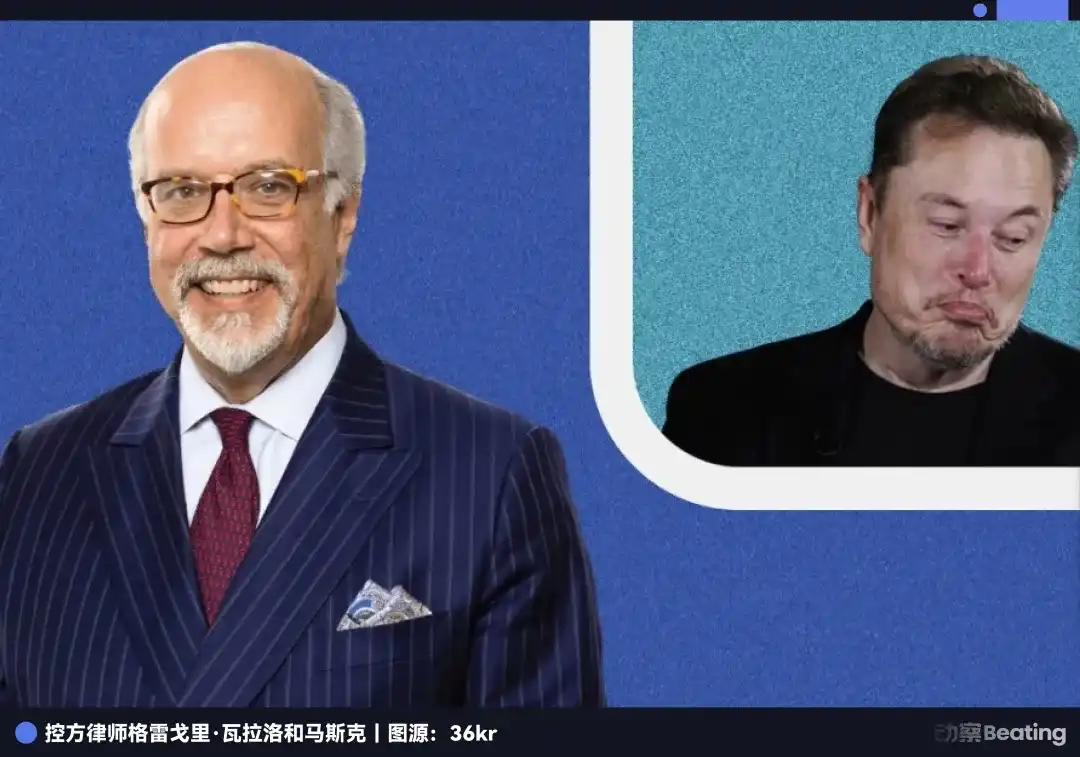
When a Delaware judge ruled Musk's compensation plan invalid, the plaintiff's attorney team shockingly filed an application with the court requesting 29.4 million shares of Tesla stock as a successful litigation reward. At the time, the value of this fee amounted to a staggering $5.6 billion based on the stock price.
$5.6 billion, enough to outright buy America's largest department store chain, Macy's.
At that moment, the jig was up.
This was no longer a demonstration of legal justice; this was a barefaced looting of wealth creators. It was this heavy blow that made Musk give up completely and made Coinbase, who was watching from the sidelines, shudder.
The leadership at Coinbase is well aware that although the knife has not yet fallen on them, staying in this old world full of "professional plaintiffs" and "astronomical legal fees," being harvested is only a matter of time.
The giants did the math; the current legal fees, administrative fees, public relations fees, although often in the tens of millions or even billions, are just a short-term pain. If they continue to stay in Delaware, in such a legal ecosystem, losing control of the company, and being forced to endure endless lawsuit extortion, it would be an irreversible "cancer."
For freedom, blood must be shed.
The ruler of the old world cannot measure the ambition of the new world
If the sky-high "ransom fee" only made Musk and others feel the pain, then the underlying conflict in Delaware's legal logic is the root cause of their suffocation.
This is by no means just a debate over legal terms; it is the ultimate collision of two business civilizations.
Over the past one hundred years, Delaware has been able to firmly hold the throne of commerce because it has forged a tacit Golden Agreement with the American business world—the Business Judgment Rule.
The implication is, as long as the board of directors does not commit embezzlement or break the law, judges will never interfere with how you do business. This is the epitome of respect for the entrepreneurial spirit and also the cornerstone of American commercial prosperity.
However, in recent years, this yardstick has been warped by the erosion of time. With the infinite expansion of institutional investor power, Delaware's legal hammer has increasingly slid towards the other extreme—the Entire Fairness Standard.
This is a term that makes all Silicon Valley founders' scalps tingle. The implication is: "I don't care if you have created a business miracle; as long as the process does not meet my requirements, your success is in vain."
Musk's $56 billion compensation that was dismissed with a stroke of a pen is a casualty of this microscopic judgment.
In that lawsuit, despite Tesla achieving the craziest performance growth in human business history and shareholders making a fortune, Delaware's judge still coldly ruled that Musk's compensation was invalid. The reason was simply that the board members were too close to Musk, and the process was not "perfectly independent."
This "heavy on procedure, light on results" arrogance may be a safety barrier for traditional companies like Coca-Cola managed by career managers; however, for new species like Coinbase and Tesla that rely on founders to drive exponential growth, it is a deadly shackle.
The ruler of the old world can no longer measure the ambition of the new world.
Delaware's judges can read the reports of steel, oil, and railroads, but they find it difficult to understand why Musk's personal intellectual property is worth $500 billion.
While Delaware is absorbed in moral scrutiny, Texas has pragmatically thrown out an ambitious "partnership agreement."
This is not just an empty "Texas welcomes you." In September 2024, the Texas Business Court officially opened its doors. This is not only a new institution, but also a precise strike by Texas against Delaware's pain points.
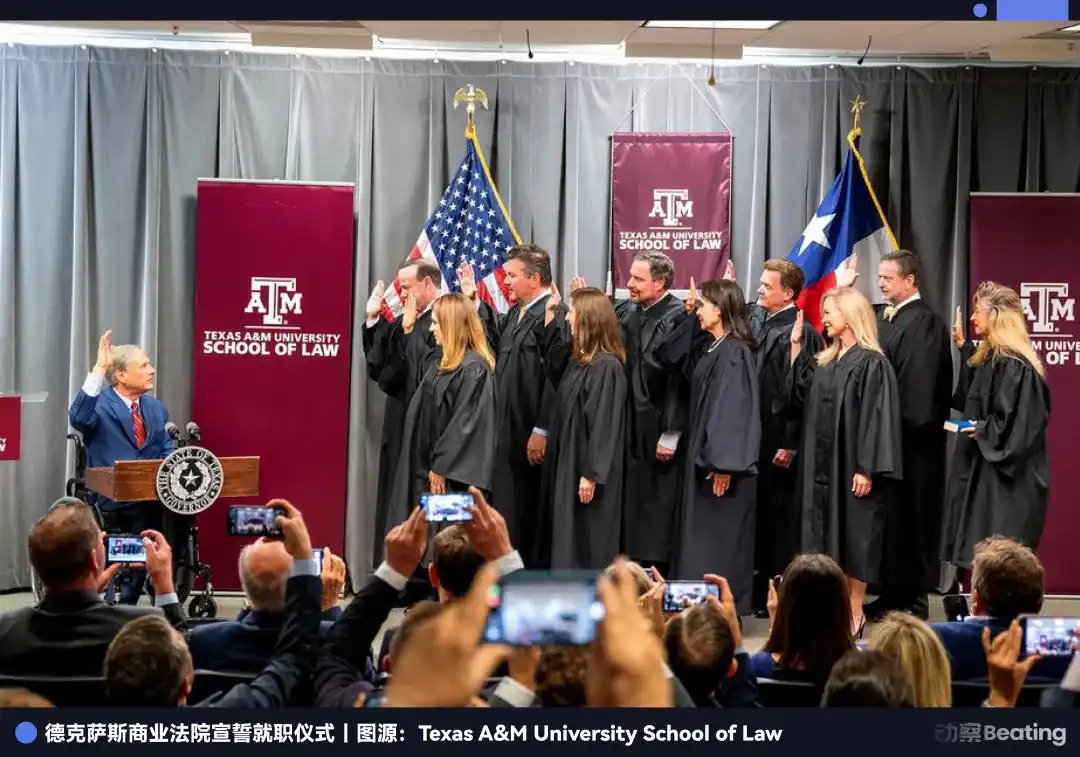
It is only responsible for handling high-value cases. According to the law, this court has exclusive jurisdiction over commercial disputes with a disputed amount exceeding $5 million; and for public companies, only cases with amounts exceeding $10 million are eligible to enter. This means that those small shareholder harassment lawsuits are directly shut out.
More disruptive is the appointment process of the judges. Unlike those long-term, prestigious Supreme Court Justices in Delaware who come from legal families, the judges of the Texas Business Court are directly appointed by Governor Abbott, and their term is only 2 years.
This means that the judiciary and the executive branch have reached an unprecedented tacit agreement on the goal of "boosting the economy." If a judge's ruling is unfavorable to the business environment, he may lose his job in two years. The signal Texas is sending is very clear: "Here, we don't teach you morality, there's no favoritism. We only protect contracts. As long as you can bring jobs and growth, we will protect you."
Coinbase and Musk, representing the "founder model," are no longer willing to bow to the "manager model" represented by Delaware. They are tired of being treated as a beast that must be guarded against. So, they choose to pack up, leave the exquisite yet suffocating greenhouse, and head to the rugged but allowing wild growth wilderness.
American Drift
This may not necessarily mean doomsday for the state of Delaware. For a long time to come, it will still be home to Coca-Cola, Walmart, and General Electric.
For these "old aristocrats" who pursue stable dividends, value ESG ratings, and are accustomed to professional manager governance, Delaware's precise and intricate rules are still the best safety harness.
But for another group of people, the air there has become so thin that it is hard to breathe.
We are witnessing the United States tearing apart into "two nations."
One represented by Delaware and New York. Here, it's all about allocation, balance, and political correctness. It's like a fine museum, orderly, but exuding a stale air.
One represented by Texas and the new frontier. Here, it's all about growth, efficiency, and even a kind of brutal vitality, dangerous yet full of possibilities.
The departure of Coinbase and Musk is just the beginning. They are like canaries in a coal mine, using their most sensitive senses to perceive the tremors from deep within the earth before anyone else.
Of course, this migration is not without risks.
The newly established business court in Texas has not yet undergone a stress test from a major economic crisis, and the power grid there remains fragile in the face of a snowstorm. No one dares to guarantee that the next century's business legend will definitely emerge here.
But this is precisely the most fascinating and cruelest aspect of business—it never promises certainty, only rewards those who dare to bet in uncertainty.
In this daring gamble about the future, capital has cast its most honest vote with its feet. It tells us that when the order of the old world begins to ossify into constraints, the instinct of innovation always drives towards that wild field, even if it may be desolate, but allows for a wild run.
You may also like

TAO is Elon Musk, who invested in OpenAI, and Subnet is Sam Altman

The era of "mass coin distribution" on public chains comes to an end

Soaring 50 times, with an FDV exceeding 10 billion USD, why RaveDAO?

1 billion DOTs were minted out of thin air, but the hacker only made 230,000 dollars

After the blockade of the Strait of Hormuz, when will the war end?

Before using Musk's "Western WeChat" X Chat, you need to understand these three questions
The X Chat will be available for download on the App Store this Friday. The media has already covered the feature list, including self-destructing messages, screenshot prevention, 481-person group chats, Grok integration, and registration without a phone number, positioning it as the "Western WeChat." However, there are three questions that have hardly been addressed in any reports.
There is a sentence on X's official help page that is still hanging there: "If malicious insiders or X itself cause encrypted conversations to be exposed through legal processes, both the sender and receiver will be completely unaware."
No. The difference lies in where the keys are stored.
In Signal's end-to-end encryption, the keys never leave your device. X, the court, or any external party does not hold your keys. Signal's servers have nothing to decrypt your messages; even if they were subpoenaed, they could only provide registration timestamps and last connection times, as evidenced by past subpoena records.
X Chat uses the Juicebox protocol. This solution divides the key into three parts, each stored on three servers operated by X. When recovering the key with a PIN code, the system retrieves these three shards from X's servers and recombines them. No matter how complex the PIN code is, X is the actual custodian of the key, not the user.
This is the technical background of the "help page sentence": because the key is on X's servers, X has the ability to respond to legal processes without the user's knowledge. Signal does not have this capability, not because of policy, but because it simply does not have the key.
The following illustration compares the security mechanisms of Signal, WhatsApp, Telegram, and X Chat along six dimensions. X Chat is the only one of the four where the platform holds the key and the only one without Forward Secrecy.
The significance of Forward Secrecy is that even if a key is compromised at a certain point in time, historical messages cannot be decrypted because each message has a unique key. Signal's Double Ratchet protocol automatically updates the key after each message, a mechanism lacking in X Chat.
After analyzing the X Chat architecture in June 2025, Johns Hopkins University cryptology professor Matthew Green commented, "If we judge XChat as an end-to-end encryption scheme, this seems like a pretty game-over type of vulnerability." He later added, "I would not trust this any more than I trust current unencrypted DMs."
From a September 2025 TechCrunch report to being live in April 2026, this architecture saw no changes.
In a February 9, 2026 tweet, Musk pledged to undergo rigorous security tests of X Chat before its launch on X Chat and to open source all the code.
As of the April 17 launch date, no independent third-party audit has been completed, there is no official code repository on GitHub, the App Store's privacy label reveals X Chat collects five or more categories of data including location, contact info, and search history, directly contradicting the marketing claim of "No Ads, No Trackers."
Not continuous monitoring, but a clear access point.
For every message on X Chat, users can long-press and select "Ask Grok." When this button is clicked, the message is delivered to Grok in plaintext, transitioning from encrypted to unencrypted at this stage.
This design is not a vulnerability but a feature. However, X Chat's privacy policy does not state whether this plaintext data will be used for Grok's model training or if Grok will store this conversation content. By actively clicking "Ask Grok," users are voluntarily removing the encryption protection of that message.
There is also a structural issue: How quickly will this button shift from an "optional feature" to a "default habit"? The higher the quality of Grok's replies, the more frequently users will rely on it, leading to an increase in the proportion of messages flowing out of encryption protection. The actual encryption strength of X Chat, in the long run, depends not only on the design of the Juicebox protocol but also on the frequency of user clicks on "Ask Grok."
X Chat's initial release only supports iOS, with the Android version simply stating "coming soon" without a timeline.
In the global smartphone market, Android holds about 73%, while iOS holds about 27% (IDC/Statista, 2025). Of WhatsApp's 3.14 billion monthly active users, 73% are on Android (according to Demand Sage). In India, WhatsApp covers 854 million users, with over 95% Android penetration. In Brazil, there are 148 million users, with 81% on Android, and in Indonesia, there are 112 million users, with 87% on Android.
WhatsApp's dominance in the global communication market is built on Android. Signal, with a monthly active user base of around 85 million, also relies mainly on privacy-conscious users in Android-dominant countries.
X Chat circumvented this battlefield, with two possible interpretations. One is technical debt; X Chat is built with Rust, and achieving cross-platform support is not easy, so prioritizing iOS may be an engineering constraint. The other is a strategic choice; with iOS holding a market share of nearly 55% in the U.S., X's core user base being in the U.S., prioritizing iOS means focusing on their core user base rather than engaging in direct competition with Android-dominated emerging markets and WhatsApp.
These two interpretations are not mutually exclusive, leading to the same result: X Chat's debut saw it willingly forfeit 73% of the global smartphone user base.
This matter has been described by some: X Chat, along with X Money and Grok, forms a trifecta creating a closed-loop data system parallel to the existing infrastructure, similar in concept to the WeChat ecosystem. This assessment is not new, but with X Chat's launch, it's worth revisiting the schematic.
X Chat generates communication metadata, including information on who is talking to whom, for how long, and how frequently. This data flows into X's identity system. Part of the message content goes through the Ask Grok feature and enters Grok's processing chain. Financial transactions are handled by X Money: external public testing was completed in March, opening to the public in April, enabling fiat peer-to-peer transfers via Visa Direct. A senior Fireblocks executive confirmed plans for cryptocurrency payments to go live by the end of the year, holding money transmitter licenses in over 40 U.S. states currently.
Every WeChat feature operates within China's regulatory framework. Musk's system operates within Western regulatory frameworks, but he also serves as the head of the Department of Government Efficiency (DOGE). This is not a WeChat replica; it is a reenactment of the same logic under different political conditions.
The difference is that WeChat has never explicitly claimed to be "end-to-end encrypted" on its main interface, whereas X Chat does. "End-to-end encryption" in user perception means that no one, not even the platform, can see your messages. X Chat's architectural design does not meet this user expectation, but it uses this term.
X Chat consolidates the three data lines of "who this person is, who they are talking to, and where their money comes from and goes to" in one company's hands.
The help page sentence has never been just technical instructions.
Parse Noise's newly launched Beta version, how to "on-chain" this heat?

Is Lobster a Thing of the Past? Unpacking the Hermes Agent Tools that Supercharge Your Throughput to 100x

Declare War on AI? The Doomsday Narrative Behind Ultraman's Residence in Flames
Crypto VCs Are Dead? The Market Extinction Cycle Has Begun
Claude's Journey to Foolishness in Diagrams: The Cost of Thriftiness, or How API Bill Increased 100-Fold

Edge Land Regress: A Rehash Around Maritime Power, Energy, and the Dollar
Arthur Hayes Latest Interview: How Should Retail Investors Navigate the Iran Conflict?
Just now, Sam Altman was attacked again, this time by gunfire

Straits Blockade, Stablecoin Recap | Rewire News Morning Edition

From High Expectations to Controversial Turnaround, Genius Airdrop Triggers Community Backlash
The Xiaomi electric vehicle factory in Beijing's Daxing district has become the new Jerusalem for the American elite

Lean Harness, Fat Skill: The Real Source of 100x AI Productivity
TAO is Elon Musk, who invested in OpenAI, and Subnet is Sam Altman
The era of "mass coin distribution" on public chains comes to an end
Soaring 50 times, with an FDV exceeding 10 billion USD, why RaveDAO?
1 billion DOTs were minted out of thin air, but the hacker only made 230,000 dollars
After the blockade of the Strait of Hormuz, when will the war end?
Before using Musk's "Western WeChat" X Chat, you need to understand these three questions
The X Chat will be available for download on the App Store this Friday. The media has already covered the feature list, including self-destructing messages, screenshot prevention, 481-person group chats, Grok integration, and registration without a phone number, positioning it as the "Western WeChat." However, there are three questions that have hardly been addressed in any reports.
There is a sentence on X's official help page that is still hanging there: "If malicious insiders or X itself cause encrypted conversations to be exposed through legal processes, both the sender and receiver will be completely unaware."
No. The difference lies in where the keys are stored.
In Signal's end-to-end encryption, the keys never leave your device. X, the court, or any external party does not hold your keys. Signal's servers have nothing to decrypt your messages; even if they were subpoenaed, they could only provide registration timestamps and last connection times, as evidenced by past subpoena records.
X Chat uses the Juicebox protocol. This solution divides the key into three parts, each stored on three servers operated by X. When recovering the key with a PIN code, the system retrieves these three shards from X's servers and recombines them. No matter how complex the PIN code is, X is the actual custodian of the key, not the user.
This is the technical background of the "help page sentence": because the key is on X's servers, X has the ability to respond to legal processes without the user's knowledge. Signal does not have this capability, not because of policy, but because it simply does not have the key.
The following illustration compares the security mechanisms of Signal, WhatsApp, Telegram, and X Chat along six dimensions. X Chat is the only one of the four where the platform holds the key and the only one without Forward Secrecy.
The significance of Forward Secrecy is that even if a key is compromised at a certain point in time, historical messages cannot be decrypted because each message has a unique key. Signal's Double Ratchet protocol automatically updates the key after each message, a mechanism lacking in X Chat.
After analyzing the X Chat architecture in June 2025, Johns Hopkins University cryptology professor Matthew Green commented, "If we judge XChat as an end-to-end encryption scheme, this seems like a pretty game-over type of vulnerability." He later added, "I would not trust this any more than I trust current unencrypted DMs."
From a September 2025 TechCrunch report to being live in April 2026, this architecture saw no changes.
In a February 9, 2026 tweet, Musk pledged to undergo rigorous security tests of X Chat before its launch on X Chat and to open source all the code.
As of the April 17 launch date, no independent third-party audit has been completed, there is no official code repository on GitHub, the App Store's privacy label reveals X Chat collects five or more categories of data including location, contact info, and search history, directly contradicting the marketing claim of "No Ads, No Trackers."
Not continuous monitoring, but a clear access point.
For every message on X Chat, users can long-press and select "Ask Grok." When this button is clicked, the message is delivered to Grok in plaintext, transitioning from encrypted to unencrypted at this stage.
This design is not a vulnerability but a feature. However, X Chat's privacy policy does not state whether this plaintext data will be used for Grok's model training or if Grok will store this conversation content. By actively clicking "Ask Grok," users are voluntarily removing the encryption protection of that message.
There is also a structural issue: How quickly will this button shift from an "optional feature" to a "default habit"? The higher the quality of Grok's replies, the more frequently users will rely on it, leading to an increase in the proportion of messages flowing out of encryption protection. The actual encryption strength of X Chat, in the long run, depends not only on the design of the Juicebox protocol but also on the frequency of user clicks on "Ask Grok."
X Chat's initial release only supports iOS, with the Android version simply stating "coming soon" without a timeline.
In the global smartphone market, Android holds about 73%, while iOS holds about 27% (IDC/Statista, 2025). Of WhatsApp's 3.14 billion monthly active users, 73% are on Android (according to Demand Sage). In India, WhatsApp covers 854 million users, with over 95% Android penetration. In Brazil, there are 148 million users, with 81% on Android, and in Indonesia, there are 112 million users, with 87% on Android.
WhatsApp's dominance in the global communication market is built on Android. Signal, with a monthly active user base of around 85 million, also relies mainly on privacy-conscious users in Android-dominant countries.
X Chat circumvented this battlefield, with two possible interpretations. One is technical debt; X Chat is built with Rust, and achieving cross-platform support is not easy, so prioritizing iOS may be an engineering constraint. The other is a strategic choice; with iOS holding a market share of nearly 55% in the U.S., X's core user base being in the U.S., prioritizing iOS means focusing on their core user base rather than engaging in direct competition with Android-dominated emerging markets and WhatsApp.
These two interpretations are not mutually exclusive, leading to the same result: X Chat's debut saw it willingly forfeit 73% of the global smartphone user base.
This matter has been described by some: X Chat, along with X Money and Grok, forms a trifecta creating a closed-loop data system parallel to the existing infrastructure, similar in concept to the WeChat ecosystem. This assessment is not new, but with X Chat's launch, it's worth revisiting the schematic.
X Chat generates communication metadata, including information on who is talking to whom, for how long, and how frequently. This data flows into X's identity system. Part of the message content goes through the Ask Grok feature and enters Grok's processing chain. Financial transactions are handled by X Money: external public testing was completed in March, opening to the public in April, enabling fiat peer-to-peer transfers via Visa Direct. A senior Fireblocks executive confirmed plans for cryptocurrency payments to go live by the end of the year, holding money transmitter licenses in over 40 U.S. states currently.
Every WeChat feature operates within China's regulatory framework. Musk's system operates within Western regulatory frameworks, but he also serves as the head of the Department of Government Efficiency (DOGE). This is not a WeChat replica; it is a reenactment of the same logic under different political conditions.
The difference is that WeChat has never explicitly claimed to be "end-to-end encrypted" on its main interface, whereas X Chat does. "End-to-end encryption" in user perception means that no one, not even the platform, can see your messages. X Chat's architectural design does not meet this user expectation, but it uses this term.
X Chat consolidates the three data lines of "who this person is, who they are talking to, and where their money comes from and goes to" in one company's hands.
The help page sentence has never been just technical instructions.


 App
App