
- Buy Crypto
- Markets
 Futures
- Spot
- Copy Trade
- Earn
- More
Another new record for BSV
By: bitcoin ethereum news|2025/05/07 22:00:06
0
Share
Homepage > News > Business > 152 million transactions in a day: Another new record for BSV The BSV blockchain is proving once again that it’s the network to beat for transaction throughput. On May 2-3, 2025, BSV processed 152 million transactions in 24 hours. Those transactions were all processed on-chain and at low cost compared to other blockchain networks, secured by proof-of-work (PoW). BSV uses Bitcoin’s original protocol rules for processing transactions, and the network has operated since January 2009. With the upcoming Teranode protocol upgrade promising even greater capacity, BSV shows that on-chain scaling with larger transaction blocks does work. Bitcoin has always been capable of unbounded scalability, rivaling dollar-based digital payment networks without “sidechains” or exotic new processing algorithms. Let’s look at some previous records to put those figures into context. BSV processed 35 million transactions in 24 hours back in September 2022. mintBlue pushed it to 50 million in March 2023, topped by Vaionex with 86 million just two months later. In December 2024, it was 90.8 million. Notably, the average per-transaction fee on BSV around May 2-3, 2025, was US$0.00137. Even that price represented a significant spike compared to other days over the past year. This means that large-volume days don’t present any substantial cost increases for casual users, such as those sending one-off small payments in BSV or stablecoins, or trading non-fungible tokens (NFTs). I have just requested that @GWR @GWRJapan @gwr_es Guinness World Records recognises the phenomenal achievement set by the bsv blockchain in becoming the highest amount of transaction in a 24hour period with over 152 million txts. I would ask others to request this record, and... pic.twitter.com/swY16jieUl — 1 (@369bsv) May 3, 2025 BSV is capable of processing far more data than just payments. It could handle any number of enterprise- and government-tier data applications without them coming at the expense of daily payment usage. Its on-chain records are secure and auditable, and any confidential data in its transactions can be encrypted to stay private. Do you feel stressed? BSV: Not much The high transaction volumes on BSV are likely due to ongoing stress tests by blockchain explorer Bitails. According to co-founder Meysam Rezaei, the purpose of the tests was to push BSV to its capacity limits under current conditions, i.e., with transaction processors running the SV Node protocol software. By stress testing the network using existing resources, Bitails “prioritized performance and cost efficiency to meet deployment needs,” and to identify target areas for more efficiency and performance gains. Bitails found the BSV mempool (transactions waiting to be processed) could sustain around 8,000 transactions per second (TPS) with “some issues.” Further testing will take place at a later date to see if any issues can be resolved. However impressive the results may look now, they’re expected to be temporary—the Teranode upgrade is due for general release soon, which should allow for a marked increase in transaction-processing capacity. Services like GorillaPool use a custom setup, but like most processors (miners) are still working with SV Node. The stress tests taught us a lot. The biggest thing we learned is that we are roughly 3 years ahead of the humans when it comes to connectivity and throughput, but they have a lot more hash power. What does that mean for the network? Well, it means that we provide better,... pic.twitter.com/lFJhW1cMqW — GorillaPool (@MineLikeAnApe) May 5, 2025 As always, critics will claim BSV’s transaction statistics are “not real” since the volumes were test-generated. While early 2025 transactions may not reflect actual daily, sustained use of the network for a diverse range of business tasks, it’s disingenuous to say they’re not real; the transactions themselves were absolutely real, and reflect the true network capabilities. Moreover, unless the network is tested in this realistic way, no one would ever know whether it actually works. Claims will only get you so far; at some point, you need proof to back them up. The best way to get that proof is by real-world testing, before hundreds of other business-critical applications fire up. Watch: Bringing the Metanet to life with Teranode title=”YouTube video player” frameborder=”0′′ allow=”accelerometer; autoplay; clipboard-write; encrypted-media; gyroscope; picture-in-picture; web-share” referrerpolicy=”strict-origin-when-cross-origin” allowfullscreen> Source: https://coingeek.com/152-million-transactions-in-a-day-another-new-record-for-bsv/
You may also like

The migration of settlement rights: B18 and the institutional starting point of on-chain banks
In the traditional system, banks decide the settlement; in the on-chain system, code begins to take over this responsibility.

From Tencent and Circle: Looking at the Simple and Difficult Questions of Investment
The AI narrative continues to ferment, but the recent performance of related stocks varies, with some in the midst of summer and others as if in winter.

The second half of stablecoins no longer belongs to the crypto circle
What Coinbase doesn't want, Mastercard is eager to buy.

Cursor "Shell" Kimi Controversy Reversed: From Copyright Infringement Allegations to Authorized Collaboration, China's Open Source Model Once Again Becomes a Global AI Foundation
Cursor was accused of being based on Kimi K2.5, which sparked controversy, and was later confirmed to be compliant through Fireworks AI due diligence.

The Real Reason Tokens Don't Sell: 90% of Crypto Projects Overlook Investor Relations
Provide an Investor Relations Best Practices Guide for Crypto Projects.

Is the income of pump.fun real, earning a million dollars a day despite the market downturn?
If it can really earn this much, what is the reason for the low price of $PUMP?

The real reason why tokens are not selling: 90% of crypto projects neglect investor relations
Investor Relations Practice Guide for Cryptocurrency Projects.

Who is the true winner of the "Tokenization" narrative?
Virtually everyone benefits, but the reason for the benefit, the timing, and the underlying logic are completely different.

Moss: The Era of AI-Traded by Anyone | Project Introduction
AI Trading Agent is rapidly growing its infrastructure.

Chip Smuggling Case Exposes Regulatory Loophole | Rewire News Evening Update
AI chips have become a strategic asset more sensitive than missiles

How a Structured AI Crypto Trading Bot Won at the WEEX Hackathon
Ritmex demonstrates how disciplined risk control and structured signals can make an AI crypto trading bot more stable and reliable on WEEX, highlighting the importance of combining execution discipline with scalable AI trading systems.

Old Indicator Fails, Three Major New Signals Emerge: BTC True Bottom May Still Be Below $60K
When the grocery shopping auntie on the subway, or Tony the hairdresser, start asking you about BTC, crypto, and cryptocurrency investments, selling immediately will be the only best option.

Meeting OpenClaw Founder at a Hackathon: What Else Can Lobsters Do?
Imperial College London MetaGame: AI Agent × Web3 Landing Three Major Directions.
Huang Renxun's Latest Podcast Transcript: NVIDIA's Future, Embodied Intelligence and Agent Development, Soaring Demand for Inferencing, and AI's PR Crisis
The future of competition is not only about whose model is bigger, whose computing power is stronger, but also about who understands the industry better, who can more deeply integrate AI into real processes, and who can organize these capabilities into a set of executable, scalable systems
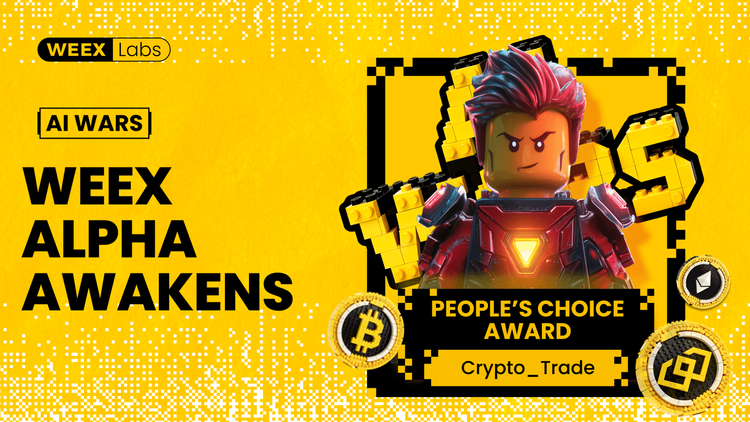
How a Structured AI Crypto Trading Bot Won at the WEEX Hackathon
Crypto_Trade shows how structured inputs and controlled adaptability can build a more stable and reliable AI crypto trading bot within the WEEX AI Trading Hackathon, highlighting a practical path toward scalable AI trading systems.

AI Starts to Devour the Manufacturing Industry | Rewire News Morning Edition
When Bezos starts using AI to buy factories instead of building data centers, it shows that he believes the next wave of AI's value is not inside the box.
When Scaling Meets Speed, Ethereum Foundation Introduces "Hardness" to Safeguard the Base Layer
Hardness is a protocol-level commitment to Ethereum core properties, including censorship resistance, privacy, security, and permissionlessness.
Google, Circle, Stripe Flock Together to Let AI Spend Money: Payment Giants' Joys and Worries in 2026 Q1
The real enemy is no longer each other, but zero cost itself
The migration of settlement rights: B18 and the institutional starting point of on-chain banks
In the traditional system, banks decide the settlement; in the on-chain system, code begins to take over this responsibility.
From Tencent and Circle: Looking at the Simple and Difficult Questions of Investment
The AI narrative continues to ferment, but the recent performance of related stocks varies, with some in the midst of summer and others as if in winter.
The second half of stablecoins no longer belongs to the crypto circle
What Coinbase doesn't want, Mastercard is eager to buy.
Cursor "Shell" Kimi Controversy Reversed: From Copyright Infringement Allegations to Authorized Collaboration, China's Open Source Model Once Again Becomes a Global AI Foundation
Cursor was accused of being based on Kimi K2.5, which sparked controversy, and was later confirmed to be compliant through Fireworks AI due diligence.
The Real Reason Tokens Don't Sell: 90% of Crypto Projects Overlook Investor Relations
Provide an Investor Relations Best Practices Guide for Crypto Projects.
Is the income of pump.fun real, earning a million dollars a day despite the market downturn?
If it can really earn this much, what is the reason for the low price of $PUMP?


 App
App