
- Buy Crypto
- Markets
 Futures
- Spot
- Copy Trade
 Earn
Earn- More
95% of Web3 projects don't tell a story. Have you stepped on any of these landmines?

Original Article Title: 95% of Web3 Fails at Storytelling - Here's The Quick Fix
Original Article Author: @leonabboud_, Founder and CEO of Unfungible
Article Translation: zhouzhou, BlockBeats
Editor's Note: This article emphasizes the importance of Web3 brand storytelling. Firstly, there needs to be high stakes and conflict to create resonance. Secondly, brands should not position themselves as heroes but rather focus on customers or the community as the protagonists of the story. The story should create an emotional connection with the audience, and simple phrases like "I'm sharing this story because..." can help the audience see themselves in the narrative. By combining these three elements, a brand can truly captivate hearts, leave a lasting impression, and foster long-term customer loyalty.
Below is the original content (rearranged for better readability):
95% of Web3 projects fail in storytelling—here's a quick fix.
Imagine a team investing thousands of dollars in content, consistently releasing it for weeks, and spending thousands more on influencer promotions. In the end, after pouring tens of thousands of dollars, the project garnered no attention. The team was in despair.
"Where did everyone go?" the CEO asked the marketing team. The team's only response was, "The market is tough."
Web3 is an ongoing battle for attention. But attention alone is not enough; attention coupled with retention is the real key.
So, how do you improve retention? The secret is—storytelling.
Now, I'll provide you with a crash course in storytelling using three key elements.
High Stakes: Without Conflict, Your Story is Meaningless

Great stories are always built on high stakes. Without these risks, there is no excitement, no challenge to overcome, and no reason for people to care.
Take Walt Disney, for example. In 1928, Walt Disney ran his own creative studio called Laugh-O-Gram and created some of the era's most popular animations, one of them being Oswald the Lucky Rabbit. As Oswald's popularity grew, Walt thought he had succeeded. So, what did he do next? He went to New York to renegotiate for a higher animation budget.
What happened next continues to resonate in the story I'm telling you today. When Walt went to renegotiate the budget, he faced betrayal. Employer Charles Mintz not only rejected his proposal but also weakened Disney's pitch with a lower budget. This meant that Walt would have to work at a loss.
Even worse, Mintz had already secretly signed contracts with all of Walt's animators, inviting them to work for him. This meant Walt lost his team, his business, and his future. In that moment, everything vanished, and Walt left the meeting with a sense of failure.
He boarded a train back to Los Angeles, sent a telegram to his brother, concealing the full extent of the disaster. The telegram read: "Don't worry, everything is fine, I will explain in detail when I arrive." However, when he arrived in Los Angeles, he had already sketched a new character. And this new character was Mickey Mouse.
Why am I sharing this story with you? Walt's story is a case study often explored in advertising copywriting and storytelling because it illustrates a key principle of a good story: high stakes.
All the best stories have the greatest conflicts. If your brand lacks conflict, it lacks purpose. Take Elon Musk, for example—behind each of his brands is a significant conflict. Tesla's mission is "to make electric cars to save the earth," and his mission to Mars is "we are going to Mars to save humanity." If your brand story lacks conflict, it lacks meaning.
You are not the hero of your own story
This is the biggest mistake 95% of Web3 brands make. They position themselves as the hero. This is something I learned from Donald Miller's book, "Building a StoryBrand."

For example, when Pudgy Penguins launched their PENGU token, their marketing campaign was not centered around Luca Nitz or the company's success. Instead, the teaser trailer started by talking about liquidity providers, hinting that many projects appeared as beams of light, but in the coldest of winters, Pudgy Penguins came together, creating light in the darkness.
Who is the hero of the story? Not Pudgy, but the community.
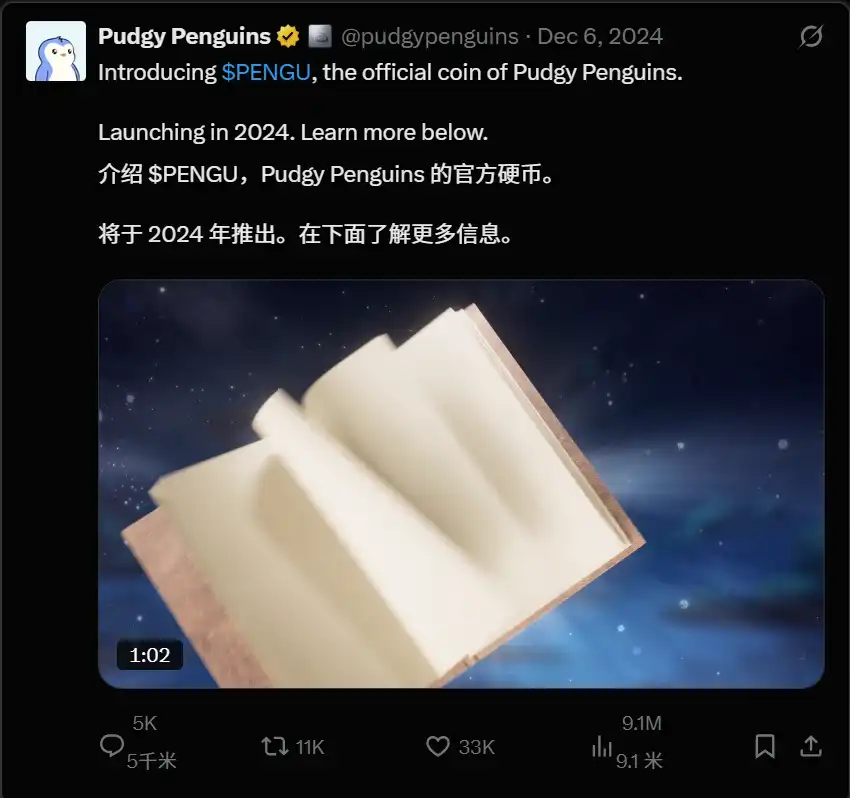
It's the people who persevered in the bear market, the ones who continued to build even when everything was falling apart. Nike actually does this too. "Just Do It" is not about Nike; it's about athletes, about those who overcome obstacles and strive for greatness. Nike is just a facilitator in this story.
Apple's legendary ad "Here's to the Crazy Ones" is no exception. The heroes of the ad are artists, dreamers, rebels—those crazy enough to believe they can change the world. Apple is just a tool to help them do so.
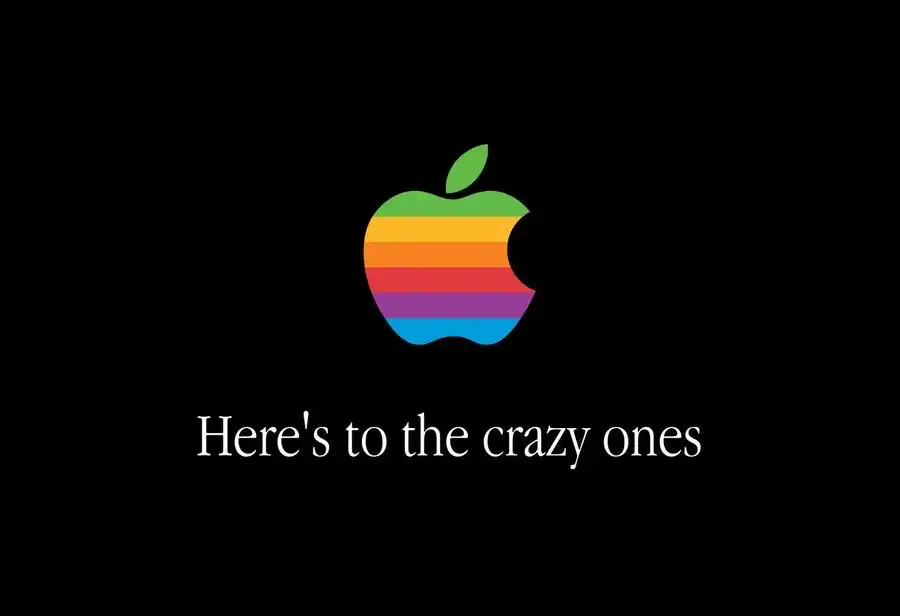
If you're a Web3 founder, your brand is not the hero; your community is. Position them as the driving force of the movement, and you'll have a truly meaningful brand.
Your Story Needs a Personal Resolution
Don't tell a story just for the sake of storytelling.
A great story should come back to the personal. I learned this during my university years through firsthand experience. One day in 2019, a friend invited me to join Toastmasters—a public speaking workshop held at my university.

I walked into this event happening in a rundown basement classroom, not knowing what to expect. Ten minutes later, the organizers started calling people up on stage for impromptu speeches, with each person getting two minutes. No prep, no script.
The first person froze on stage after 30 seconds. The second person spoke for a minute and then went silent for the remaining 60 seconds. It was excruciating to watch.
But what happened next made my heart race. My name was called... it was my turn. I stood up, walked to the front, and started speaking. 25 seconds in, I suddenly blanked on what to say next. Panic set in.
I started rambling to fill the silence, knowing it was the worst two minutes of my life. Finally, my time (thankfully) was up. Adrenaline still coursing through me, I moved to the side of the classroom to watch others give their impromptu speeches.
The following impromptu speeches were reserved for the club's senior members. You could call them the 'OGs.' As they took the stage, I noticed a few things, some of which I still remember to this day.
The best speakers weren't the ones who could improvise a 2-minute speech or tell a good story but rather the ones who could connect that story with the audience.
I recall one person being called up to speak and sharing a story of his mother's battle with cancer. He then miraculously connected this story to the audience, stating that everyone has their own battles and it is in these moments that we need strength and belief the most.
In the "Stage Academy" public speaking course, I learned a simple technique, which is to use the phrase: "The reason I'm sharing this story is...".
This sentence shifts the protagonist of the story from yourself to the audience, suddenly, the protagonist of the story becomes them.
Returning to the story of that OG Toastmaster member, he can connect the story with the audience in this way: "The reason I'm sharing my mother's story is because, just like her, each of us is facing our own challenges...".
This simple sentence links the lesson to the audience's own challenges, struggles, and desires. When the audience can see themselves in your story, you are not just building a brand, you are building emotion and connection.
This is why when you combine these three elements, you have the ability to leave a lasting impression and make them stay.
Summary:
· Your story needs to be high stakes.
· Your customer is the hero of your story, not you.
· Use the simple phrase "The reason I'm sharing this story is..." to connect any story with the audience.
You may also like

February 9th Market Key Intelligence, How Much Did You Miss?

After being questioned by Vitalik, L2s are collectively saying goodbye to the "cheap" era

WEEX AI Trading Hackathon Paris Workshop Reveals: How Retail Crypto Traders Can Outperform Hedge Funds
Witness how WEEX's Paris AI Trading Hackathon revealed AI's edge over human traders. Explore key strategies, live competition results & how to build your own AI trading bot.

U.S. Oil (USOR) Price Prediction 2026–2030
Key Takeaways U.S. Oil (USOR) is a speculative Solana-based crypto project that aims to index the United States…

USOR Surges on Meme Narrative Despite No Real-World Asset Backing
Key Takeaways: USOR, a Solana-based token, has seen a notable surge driven by speculative narratives rather than verifiable…

How to Buy U.S. Oil Reserve (USOR) Cryptocurrency
Key Takeaways U.S. Oil Reserve (USOR) is a Solana-based token primarily traded on decentralized exchanges (DEXs). Claims have…

USOR vs Oil ETFs: Understanding Why the ‘Oil Reserve’ Token Doesn’t Track Crude Prices
Key Takeaways The U.S. Oil Reserve (USOR) token has become noteworthy for its claims, yet it does not…

Trend Research Reduces Ether Holdings After Major Market Turbulence
Key Takeaways: Trend Research has significantly cut down its Ether holdings, moving over 404,000 ETH to exchanges recently.…
Investors Channel $258M into Crypto Startups Despite $2 Trillion Market Sell-Off
Key Takeaways: Investors pumped approximately $258 million into crypto startups in early February, highlighting continued support for blockchain-related…
NBA Star Giannis Antetokounmpo Becomes Shareholder in Prediction Market Kalshi
Key Takeaways: Giannis Antetokounmpo, the NBA’s two-time MVP, invests in the prediction market platform Kalshi as a shareholder.…

Arizona Home Invasion Targets $66 Million in Cryptocurrency: Two Teens Charged
Key Takeaways Two teenagers from California face serious felony charges for allegedly attempting to steal $66 million in…

El Salvador’s Bukele Approval Reaches Record 91.9% Despite Limited Bitcoin Use
Key Takeaways: El Salvador President Nayib Bukele enjoys a record high approval rating of 91.9% from his populace,…

Crypto Price Prediction for February 6: XRP, Dogecoin, and Shiba Inu’s Market Movements
Key Takeaways: The crypto market experienced a notable shift with Bitcoin’s significant surge, impacting altcoins like XRP, Dogecoin,…

China Restricts Unapproved Yuan-Pegged Stablecoins to Maintain Currency Stability
Key Takeaways: China’s central bank and seven government agencies have banned the issuance of yuan-pegged stablecoins abroad without…

Solana Price Prediction: $80 SOL Looks Scary – But Smart Money Just Signaled This Might Be the Bottom
Key Takeaways Despite Solana’s descent to $80, some traders find security as smart money enters the fray, suggesting…

XRP Price Prediction: Major Ledger Upgrade Quietly Activated – Why This Could Be the Most Bullish Signal Yet
Key Takeaways: The activation of the Permissioned Domains amendment on XRPL represents a significant development in XRP’s potential…

Dogecoin Price Prediction: Death Cross Confirmed as DOGE Falls Below $0.10 – Is DOGE Reaching Zero?
Key Takeaways The death cross event signals potential bearish trends for Dogecoin as its price dips under $0.10,…

Stablecoin Inflows Have Doubled to $98B Amid Selling Pressure
Key Takeaways Stablecoin inflows to crypto exchanges have surged to $98 billion, doubling previous levels amidst heightened market…
February 9th Market Key Intelligence, How Much Did You Miss?
After being questioned by Vitalik, L2s are collectively saying goodbye to the "cheap" era
WEEX AI Trading Hackathon Paris Workshop Reveals: How Retail Crypto Traders Can Outperform Hedge Funds
Witness how WEEX's Paris AI Trading Hackathon revealed AI's edge over human traders. Explore key strategies, live competition results & how to build your own AI trading bot.
U.S. Oil (USOR) Price Prediction 2026–2030
Key Takeaways U.S. Oil (USOR) is a speculative Solana-based crypto project that aims to index the United States…
USOR Surges on Meme Narrative Despite No Real-World Asset Backing
Key Takeaways: USOR, a Solana-based token, has seen a notable surge driven by speculative narratives rather than verifiable…
How to Buy U.S. Oil Reserve (USOR) Cryptocurrency
Key Takeaways U.S. Oil Reserve (USOR) is a Solana-based token primarily traded on decentralized exchanges (DEXs). Claims have…


 App
App